Loading market data...
Tue, 29 Sept 2026
07:43:05 pm
Tue, 29 Sept 2026
07:43:05 pm

Rudransh Sangwan
Published at: May 9, 2026, 5:14 AM
Synopsis
Foreign Institutional Investor ownership in Indian equities has fallen to a 14-year low of 14.7%, according to a JM Financial report, as global investors continue reducing exposure to Indian markets. Meanwhile, Domestic Institutional Investors increased their holdings to 18.9%, supported by strong SIP inflows and rising retail participation. FIIs remained net sellers in sectors like IT, BFSI, and FMCG, while selectively investing in telecom, capital goods, and power stocks. The report highlights a major structural shift in Indian markets, where domestic liquidity is increasingly replacing foreign capital as the primary market support.
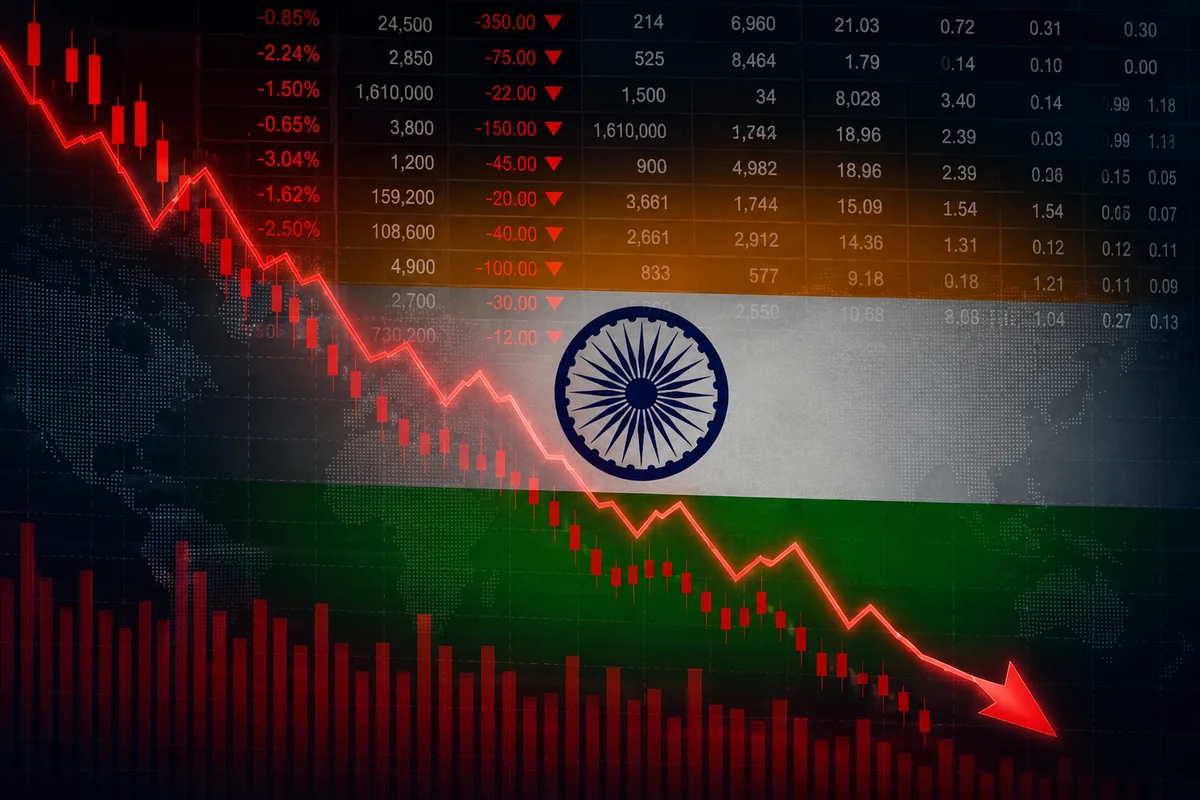
Foreign Institutional Investor (FII) ownership in Indian equities has dropped to its lowest level in nearly 14 years, highlighting a major shift in the structure of India’s stock market. According to a report by JM Financial Fundamental Research, FII ownership declined to 14.7% in April 2026 from 19.9% in April 2016.
At the same time, Domestic Institutional Investors (DIIs) have steadily increased their presence, with ownership rising to 18.9%, helping cushion Indian markets from persistent foreign selling pressure.
The trend signals a structural transformation in Indian equities, where domestic mutual funds, insurance companies, and retail SIP inflows are increasingly driving market stability.
The report noted that FII ownership in Indian equities has now reached its lowest level since June 2012.
| Category | April 2016 | April 2026 |
|---|---|---|
| FII Ownership | 19.9% | 14.7% |
| DII Ownership | 13.5% (approx.) | 18.9% |
The decline in foreign ownership reflects sustained global fund outflows, rising geopolitical uncertainty, higher US interest rates, and changing allocation preferences among global investors.
Meanwhile, domestic institutions have emerged as the key stabilizing force in Indian markets.
One of the biggest highlights of the report was the aggressive buying by domestic institutional investors during periods of FII selling.
According to JM Financial:
This reflects a growing maturity in India’s domestic capital markets.
The rise in DII ownership has been largely powered by strong SIP inflows into mutual funds.
Analysts believe this trend has significantly reduced India’s dependence on foreign capital compared to previous market cycles.
The report highlighted that FIIs have remained net sellers across most sectors over the past year.
| Sector | Net FII Outflow |
|---|---|
| Information Technology | USD 9.2 billion |
| BFSI | USD 6.05 billion |
| FMCG | USD 3.74 billion |
These sectors collectively carry heavy weightage in benchmark indices like the Nifty 50, explaining why FII ownership has steadily declined.
March 2026 emerged as one of the worst months for foreign outflows.
Analysts say FIIs are reallocating capital toward safer and globally resilient sectors amid uncertainty in global markets.
Despite broader selling, FIIs continued investing selectively in sectors linked to manufacturing, infrastructure, and utilities.
| Sector | Net Inflows |
|---|---|
| Telecom | USD 2.91 billion |
| Capital Goods | USD 2.89 billion |
| Power (April 2026) | USD 584 million |
| Metals (April 2026) | USD 126 million |
The trend suggests global investors remain optimistic about India’s long-term infrastructure and manufacturing growth story.
Several high-growth stocks saw sharp reductions in FII holdings.
| Company | Change in FII Holding |
|---|---|
| KPIT Technologies | -12.9% |
| Axis Bank | -11.7% |
| Patanjali Foods | -10.9% |
The report noted that even strong earnings compounders witnessed heavy FII selling, indicating that the exits are not purely earnings-driven.
While FIIs reduced exposure in many sectors, they selectively increased stakes in a few companies.
| Company | Increase in FII Holding |
|---|---|
| 360 ONE | +22.8% |
| GE Vernova T&D | +17.8% |
| One 97 Communications | +7.9% |
This suggests FIIs are becoming increasingly selective and focusing on companies with strong structural growth potential.
Several macroeconomic and global factors are contributing to the decline in FII ownership.
Foreign investors are also rotating portfolios toward sectors with global earnings visibility rather than domestic cyclical themes.
The report highlights a major structural evolution in Indian capital markets.
Earlier, Indian markets were heavily dependent on FII flows for direction. However, the rapid growth of domestic institutional participation has changed that dynamic significantly.
This shift has made Indian markets more resilient during periods of global volatility.
Market participants are closely monitoring:
Analysts believe sustained domestic liquidity could continue supporting Indian markets even if FII volatility remains elevated.
FII ownership in Indian equities falling to a 14-year low marks a major turning point in India’s financial markets.
While foreign investors continue reducing exposure in sectors like IT, BFSI, and FMCG, domestic institutions have emerged as the market’s strongest support system through steady SIP-driven inflows and long-term investing behavior.
The growing dominance of DIIs reflects the increasing maturity and depth of India’s domestic capital markets, reducing the country’s dependence on foreign portfolio flows and creating a more stable long-term investment ecosystem.
FII ownership fell to 14.7% in April 2026, the lowest level since June 2012.
Domestic Institutional Investor ownership has risen to 18.9%, surpassing FII ownership.
IT, BFSI, and FMCG sectors recorded the largest foreign investor outflows.
FIIs are reacting to higher US interest rates, global uncertainty, stronger dollar trends, and valuation concerns.
Strong SIP inflows and aggressive buying by domestic institutional investors are helping stabilize Indian markets.
Financial journalist specializing in market analysis, stock research, and investment trends. Dedicated to providing accurate, timely insights for informed decision-making.
Credentials: Experienced financial journalist with expertise in equity markets and economic analysis
The information provided in this article is for educational and informational purposes only and should not be construed as financial, investment, or legal advice. welomoney does not provide personalized investment recommendations.
For detailed terms and conditions, please read our Disclaimer and Terms of Service.

Nifty briefly slid up to 2.2% and Bank Nifty lost 1,100 points on F&O expiry as CAS-driven price swings put SEBI’s settlement framework under review...

FIIs sold Rs 5,353 crore on Monday as the Nifty fell to 22,780, while DIIs bought Rs 5,189 crore amid broad market weakness and heavy selling.

India-France defence ties deepen as Lt Gen Dominique Tardif backs Atmanirbhar Bharat and outlines Tarang Shakti 2026, AI, space and defence industry...
Bank Nifty fell 1.9% as Brent crude reached $106.7, while Yes Bank, Union Bank and IDFC First Bank led banking stock losses.

Nifty 50 is about 2,900 points below its 26,340 peak. See how crude oil, Hormuz risks and easing energy costs could shape an Indian market rebound in...