Loading market data...
Tue, 29 Sept 2026
07:43:04 pm
Tue, 29 Sept 2026
07:43:04 pm

Rudransh Sangwan
Published at: May 8, 2026, 8:12 AM
Synopsis
LIC invested nearly ₹18,500 crore ($2 billion) in 10 major stocks during the March quarter market fall, buying shares in Bajaj Finance, TCS, Infosys, IRFC, HAL, Bharti Airtel, and more. Here’s a deep analysis of LIC’s contrarian investment strategy, stock-wise purchases, portfolio shifts, and what it signals for Indian markets.
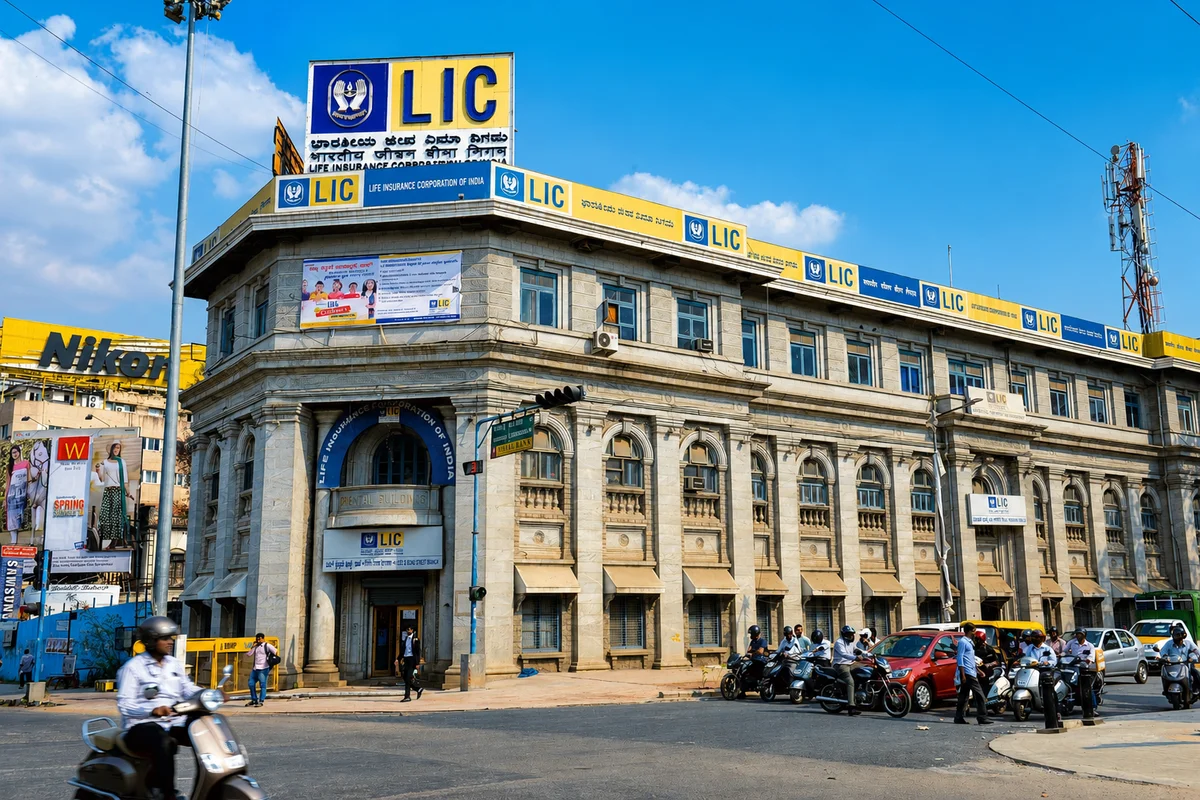
When Indian equity markets witnessed one of their sharpest corrections in recent quarters, the country’s largest domestic institutional investor chose not to retreat. Instead, Life Insurance Corporation of India (LIC) aggressively deployed capital into beaten-down blue-chip and high-conviction stocks, making a nearly ₹18,500 crore ($2 billion) contrarian bet during the March quarter of FY26.
While benchmark indices struggled under pressure from geopolitical tensions, rising oil prices, FII selling, and global uncertainty, LIC quietly accumulated stakes in some of India’s biggest companies, including Bajaj Finance, Bharti Airtel, TCS, Infosys, HAL, IRFC, Cipla, and Hyundai Motor India.
The move highlights LIC’s long-standing strategy of buying quality businesses during periods of market panic and pessimism.
| Company | Estimated Investment | Stock Fall During Quarter |
|---|---|---|
| Bajaj Finance | ₹2,167 Cr | -19% |
| Bharti Airtel | ₹2,153 Cr | Declined |
| TCS | ₹2,143 Cr | -26% |
| Cipla | ₹2,068 Cr | Declined |
| IRFC | ₹2,044 Cr | -30% |
| Infosys | ₹1,897 Cr | -23% |
| HAL | ₹1,819 Cr | -21% |
| HCL Technologies | ₹1,399 Cr | Declined |
| Hyundai Motor India | ₹1,390 Cr | Declined |
| Maruti Suzuki | ₹1,374 Cr | Declined |
The purchases indicate a deliberate strategy rather than random accumulation. LIC bought aggressively into weakness across multiple sectors including banking, IT, telecom, defence, railways, healthcare, and automobiles.
LIC is not just another institutional investor. It remains India’s largest domestic financial institution with massive influence across equity markets.
Historically, LIC has often acted as:
Its latest buying spree reinforces that playbook once again.
LIC added approximately 2.32 crore shares in Bajaj Finance despite the stock correcting nearly 19% during the quarter.
| Metric | Details |
|---|---|
| Estimated Investment | ₹2,167 Cr |
| Share Price Movement | -19% |
| Sector | NBFC / Financial Services |
| LIC View | Long-term consumption growth |
The investment signals LIC’s confidence in India’s long-term retail credit and consumer financing growth story.
The March quarter witnessed heavy selling in Indian IT stocks amid concerns over global slowdown and weak tech spending.
LIC used the correction to increase exposure in both TCS and Infosys.
| Metric | Details |
|---|---|
| Investment | ₹2,143 Cr |
| Stock Correction | -26% |
| Theme | Global IT Recovery |
| Metric | Details |
|---|---|
| Investment | ₹1,897 Cr |
| Stock Correction | -23% |
| Theme | Export-led earnings resilience |
The purchases suggest LIC believes the IT correction may have become excessive relative to long-term fundamentals.
One of the most aggressive moves came in Indian Railway Finance Corporation (IRFC), where LIC nearly doubled its stake.
| Metric | Details |
|---|---|
| Investment | ₹2,044 Cr |
| Stock Fall | -30% |
| Previous Stake | 1.10% |
| New Stake | 2.54% |
The sharp increase indicates LIC sees long-term value in railway financing and infrastructure-linked public sector companies.
LIC also deployed significant capital into Hindustan Aeronautics Ltd (HAL) during the correction.
| Metric | Details |
|---|---|
| Investment | ₹1,819 Cr |
| Stock Fall | -21% |
| Sector | Defence |
| Theme | Defence manufacturing growth |
India’s growing defence spending and localisation push continue to make defence companies attractive long-term plays.
The insurance giant also increased its allocation toward pharmaceutical major Cipla.
| Metric | Details |
|---|---|
| Investment | ₹2,068 Cr |
| Stake Increase | 7.69% to 9.59% |
| Sector | Pharmaceuticals |
Healthcare continues to remain a defensive and structurally strong sector during volatile market phases.
LIC also entered or increased positions in automobile companies during the quarter.
| Metric | Details |
|---|---|
| Investment | ₹1,390 Cr |
| Stake Increase | 2.24% to 3.04% |
| Theme | Premium auto growth |
| Metric | Details |
|---|---|
| Investment | ₹1,374 Cr |
| Sector | Passenger Vehicles |
The purchases suggest LIC remains positive on India’s long-term consumption and automobile demand cycle.
Interestingly, LIC was not blindly buying everything during the correction. The institution simultaneously reduced exposure in several major stocks.
| Company | Estimated Reduction |
|---|---|
| SBI | ₹4,626 Cr |
| ICICI Bank | ₹3,449 Cr |
| HDFC Bank | ₹1,145 Cr |
| Coal India | Reduced |
| Tata Steel | Reduced |
This indicates LIC followed a selective portfolio rebalancing strategy rather than pure bottom-fishing.
The broader market correction significantly impacted LIC’s portfolio valuation.
| Metric | Value |
|---|---|
| Total NSE Holdings | ₹15.11 Lakh Cr |
| Quarterly Decline | -13.63% |
| Share in NSE Companies | 3.71% |
| Free-Float Market Share | 7.42% |
Despite valuation declines, LIC’s free-float ownership actually increased, indicating its buying pace exceeded broader market declines.
LIC’s aggressive accumulation suggests confidence in long-term India growth despite near-term volatility.
The insurer clearly viewed the correction as a valuation opportunity rather than a structural market breakdown.
Most purchases were concentrated in market leaders with strong balance sheets and dominant industry positions.
LIC’s strategy remains focused on multi-year wealth creation rather than short-term market timing.
Even with aggressive buying, several macro risks remain:
| Risk | Impact |
|---|---|
| Oil Price Volatility | Inflation pressure |
| Iran-West Asia Conflict | Market uncertainty |
| Global Slowdown | IT and export earnings |
| FII Selling | Liquidity pressure |
| Interest Rates | Valuation compression |
LIC’s ₹18,500 crore buying spree during one of the market’s weakest quarters highlights the classic contrarian investing approach that has defined the institution for decades.
While retail investors often panic during corrections, LIC historically uses such phases to accumulate high-quality businesses at discounted valuations. The insurance giant’s latest bets across finance, IT, telecom, defence, railways, pharma, and automobiles suggest it remains structurally bullish on India’s long-term economic growth story.
Whether this contrarian strategy delivers outsized returns once again will depend on how quickly markets recover from geopolitical uncertainty and earnings pressure. But for now, LIC has once again done what it is best known for during market panic buying when others are selling.
LIC invested heavily in stocks during a period when Indian markets were under pressure and many investors were selling. Buying during market weakness is considered a contrarian investment strategy.
LIC invested nearly ₹18,500 crore, or around $2 billion, across multiple stocks during the March quarter.
LIC’s biggest purchases included Bajaj Finance, Bharti Airtel, TCS, Cipla, IRFC, Infosys, HAL, HCL Technologies, Hyundai Motor India, and Maruti Suzuki.
LIC nearly doubled its stake in IRFC as the stock corrected sharply during the quarter. The move indicates confidence in India’s long-term railway and infrastructure growth story.
No. LIC also reduced holdings in select stocks such as SBI, ICICI Bank, HDFC Bank, Coal India, and Tata Steel as part of portfolio rebalancing.
LIC is India’s largest domestic institutional investor and often acts as a market stabiliser during corrections. Its investments are viewed as indicators of long-term institutional confidence.
LIC focused on sectors including financial services, IT, telecom, defence, railways, pharmaceuticals, and automobiles.
Key risks include geopolitical tensions, oil price volatility, global slowdown fears, FII selling, and prolonged high interest rates.
LIC’s aggressive buying suggests the institution remains positive on India’s long-term economic and corporate growth prospects despite short-term market volatility.
Yes. Historically, LIC has often increased investments during major market corrections and periods of panic selling, following a long-term value investing approach.
Financial journalist specializing in market analysis, stock research, and investment trends. Dedicated to providing accurate, timely insights for informed decision-making.
Credentials: Experienced financial journalist with expertise in equity markets and economic analysis
The information provided in this article is for educational and informational purposes only and should not be construed as financial, investment, or legal advice. welomoney does not provide personalized investment recommendations.
For detailed terms and conditions, please read our Disclaimer and Terms of Service.
NSE shares fell after listing at Rs 1,800, dropping to 12th by market value. Experts identify Rs 1,760 support and Rs 1,795 resistance.
Goldman Sachs retains its Buy rating on IndiGo with a Rs 5,900 target, citing international growth, cost leadership and better FY28 profitability.
Kirloskar Oil Engines posted 16% Q1 FY27 revenue growth, while margins missed estimates. Motilal Oswal cut earnings estimates and raised its target...
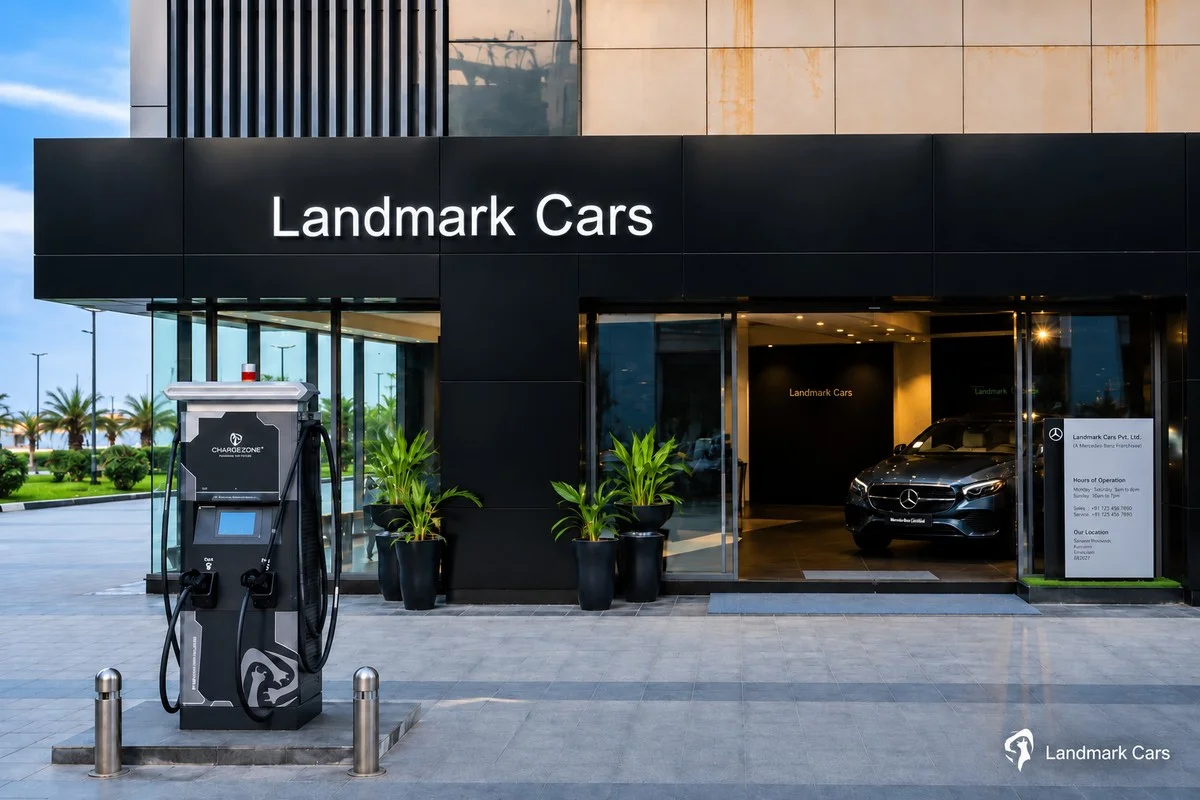
Landmark Cars shares rose 12% to Rs 535.80 after adding BYD and M&M outlets, taking its network to 143 locations, with EV sales at 30% of Q1FY27 new...

Tata Motors’ subsidiary acquired 26,000 shares in Mateshwari E-Smart Mobility for ₹2.6 lakh.