Loading market data...
Thu, 17 Sept 2026
12:02:38 pm
Thu, 17 Sept 2026
12:02:38 pm

Rudransh Sangwan
Published at: May 4, 2026, 5:01 AM
Synopsis
Sensex surged over 900 points and Nifty crossed 24,200 as positive election trends, easing crude oil prices, and global market strength boosted investor sentiment. Here’s a detailed breakdown of the key triggers driving today’s market rally.
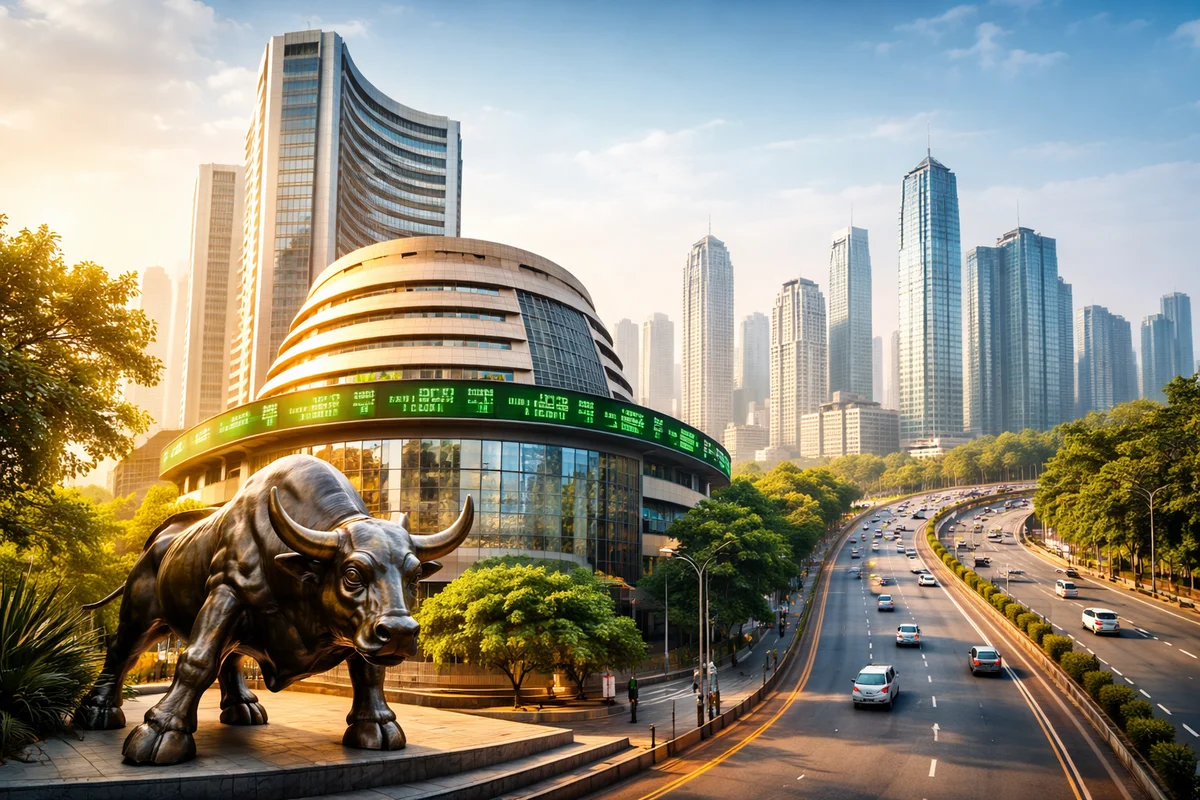
Indian equity markets witnessed a sharp rally, with the BSE Sensex jumping over 900 points and the Nifty 50 moving above the 24,200 mark, as investors reacted positively to early political signals and easing global concerns. The surge reflects a mix of sentiment-driven buying and improving external cues, even as underlying risks remain intact.
The rally is not driven by a single factor but a combination of political, global, and technical triggers that aligned at the same time.
| Trigger | Impact on Market |
|---|---|
| Election trends | Positive sentiment boost |
| Oil price cooling | Reduced inflation concerns |
| Global markets strength | Risk-on sentiment |
| Volatility decline | Increased confidence |
Data suggests multiple positive triggers aligned simultaneously This leads to broad-based buying across sectors Which results in a sharp index-level rally
Early trends from the West Bengal Assembly elections showed the Bharatiya Janata Party gaining momentum, which markets interpreted as a sign of political stability and policy continuity.
Markets typically react quickly to election signals, especially when outcomes are perceived to support reform continuity and infrastructure spending.
However, it is important to understand that election-driven rallies are often temporary. Historical data shows that markets tend to normalize once final results are declared and focus shifts back to earnings and macro fundamentals.
Crude oil prices softened after geopolitical developments indicated possible easing of supply disruptions. Brent crude slipped closer to $108 per barrel, reducing immediate inflation fears.
For an oil-importing country like India, lower crude prices have a direct positive impact on
This factor played a major role in boosting investor confidence across sectors such as auto, FMCG, and aviation.
Asian and global markets opened in the green, reinforcing risk-on sentiment. Gains in major indices across Asia and the US provided a supportive backdrop for Indian equities.
When global markets move higher
This global alignment amplified the domestic rally.
The rally was not limited to a few stocks but spread across multiple sectors.
| Sector | Movement | Reason |
|---|---|---|
| Auto | Strong gains | Demand optimism |
| Realty | Uptrend | Rate stability hopes |
| FMCG | Positive | Defensive buying |
| PSU Banks | Gains | Credit growth outlook |
Stocks like Hindustan Unilever and Maruti Suzuki led the rally, while Kotak Mahindra Bank was among the few laggards.
One under-discussed factor behind the rally is the sharp fall in market volatility.
The India VIX dropped significantly, indicating reduced fear among investors. Lower volatility often encourages higher participation, especially from short-term traders and institutions.
This creates a feedback loop
Many investors assume that a sharp rally signals the start of a sustained bull run.
This is not always true.
Short-term rallies driven by sentiment factors like elections or global cues often lack strong fundamental backing. Without earnings support, such rallies can fade quickly.
While the current momentum looks strong, several risks remain
This means the market could face resistance at higher levels, especially if external conditions worsen.
| Index | Support | Resistance |
|---|---|---|
| Nifty 50 | 23,800 | 24,400 |
| Sensex | 75,800 | 78,200 |
A sustained move above resistance levels could trigger further upside, while a break below support may lead to consolidation.
The sharp rally in Indian markets reflects a combination of political optimism, easing oil prices, and supportive global cues. While the momentum is positive, it remains largely sentiment-driven in the short term. Sustainable upside will depend on earnings growth, macro stability, and geopolitical developments. Investors who stay selective and disciplined are more likely to benefit from this phase than those chasing short-term spikes.
The rally was driven by positive election trends, easing oil prices, strong global markets, and declining volatility.
It may face short-term resistance as the rally is largely sentiment-driven. Long-term sustainability depends on earnings and macro conditions.
Auto, realty, FMCG, and PSU banking stocks saw strong gains due to improved sentiment and macro expectations.
Financial journalist specializing in market analysis, stock research, and investment trends. Dedicated to providing accurate, timely insights for informed decision-making.
Credentials: Experienced financial journalist with expertise in equity markets and economic analysis
The information provided in this article is for educational and informational purposes only and should not be construed as financial, investment, or legal advice. welomoney does not provide personalized investment recommendations.
For detailed terms and conditions, please read our Disclaimer and Terms of Service.

Explore Mukul Agrawal’s portfolio, including his latest stock holdings, stake details, major positions, new additions and historical investments.
Sensex and Nifty trade higher as investors assess the Federal Reserve's latest rate decision, rupee movement, IT stocks and broader market trends.
Stock market today: Sensex and Nifty trade higher as HCL Tech, M&M and Axis Bank gain, while broader markets remain under pressure amid volatile...

UPI payments up to ₹2,000 remain protected from direct or indirect charges under the latest government notification.

52 Week Low Stocks: Check the full list of stocks hitting fresh lows today, including HEG, Gujarat Energy, Muthoot Finance, IEX and Bikaji Foods,...