Loading market data...
Mon, 14 Sept 2026
06:12:18 pm
Mon, 14 Sept 2026
06:12:18 pm

Rudransh Sangwan
Published at: May 2, 2026, 4:57 AM
Synopsis
FPIs continued aggressive selling in April 2026, withdrawing ₹60,847 crore and pushing total outflows to ₹1.92 lakh crore this year. The sell-off is driven by global uncertainty, rising oil prices, and high valuations, though strong domestic investor support is helping markets stay resilient.
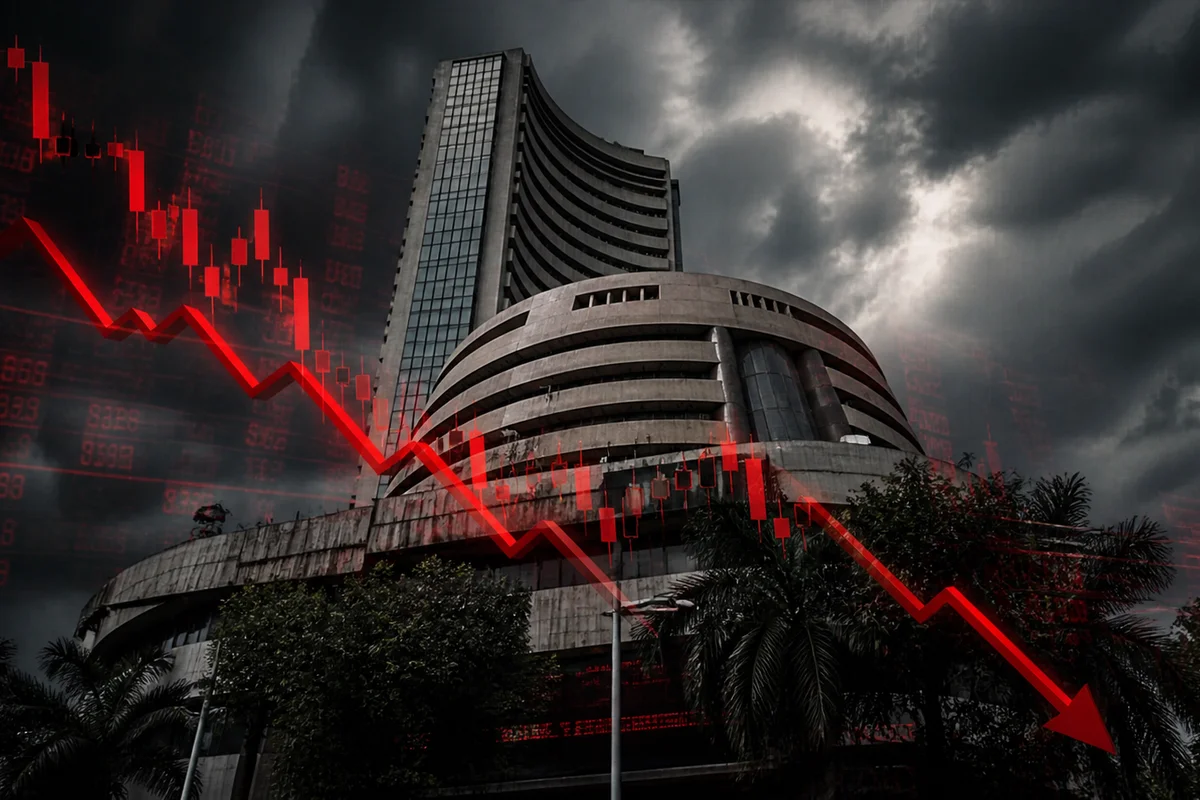
Foreign Portfolio Investors have intensified their selling in Indian equities, triggering one of the most aggressive capital outflow phases in recent years. In April 2026 alone, FPIs pulled out ₹60,847 crore, taking total outflows in the first four months of the year to ₹1.92 lakh crore. This trend reflects a deeper shift in global risk appetite, where emerging markets like India are facing pressure due to rising geopolitical uncertainty, elevated crude oil prices, and tightening global financial conditions.
The current wave of FPI outflows is not a random event but a result of multiple interconnected global factors.
Data suggests that rising geopolitical tensions, especially involving the US and Iran, have pushed crude oil prices above $100 per barrel. This leads to higher inflation expectations globally, which results in central banks delaying interest rate cuts.
At the same time, global bond yields have remained elevated, making fixed-income investments in developed markets more attractive compared to equities in emerging markets.
| Factor | Impact on Markets |
|---|---|
| Crude oil above $100 | Inflation concerns rise |
| Higher US bond yields | Capital shifts to safer assets |
| Geopolitical tensions | Risk-off sentiment increases |
| Expensive valuations | Reduces FPI interest |
This combination creates a “risk-off” environment, where investors reduce exposure to equities and move toward safer assets.
The scale of outflows in 2026 has already surpassed previous benchmarks.
| Month | Net Flow (₹ Crore) |
|---|---|
| January | -35,962 |
| February | +22,615 |
| March | -1,17,000 |
| April | -60,847 |
| Total (YTD) | -1.92 lakh crore |
This is significantly higher than the total outflow of ₹1.66 lakh crore recorded in the entire year of 2025.
Data suggests accelerating selling pressure in March and April. This leads to sustained downward pressure on markets, which results in increased volatility.
One under-discussed factor is valuation.
India continues to trade at a premium compared to other emerging markets. With the Nifty trading around 21 times earnings, global investors see limited margin of safety during uncertain times.
This leads to
A common misconception is that FPI selling always leads to market crashes.
This is not entirely true.
In the current scenario, strong domestic institutional investor flows have helped absorb selling pressure.
Domestic investors have invested nearly ₹1.7 lakh crore year-to-date, providing a cushion to the market.
The Indian market is gradually becoming less dependent on foreign capital.
While FPIs are selling, domestic investors continue to buy consistently.
This creates a structural shift where
This trend was less visible a decade ago but is now a key stabilizing factor.
The direction of FPI flows will depend on several global triggers
| Scenario | Market Impact |
|---|---|
| Oil falls below $90 | FPI inflows may resume |
| Bond yields decline | Risk appetite improves |
| Geopolitical tensions ease | Positive sentiment returns |
| Continued global uncertainty | Further outflows likely |
Investors should understand that FPI flows are cyclical and influenced by global factors beyond domestic control.
The sharp FPI outflows in April 2026 highlight the vulnerability of global capital flows to geopolitical and macroeconomic shifts. However, the resilience shown by domestic investors signals a structural evolution in Indian markets. While short-term volatility may persist, the long-term outlook remains supported by strong domestic participation and economic fundamentals. Investors who stay disciplined and focus on long-term trends rather than short-term flows are better positioned to navigate this phase.
FPIs are selling due to global factors like rising oil prices, geopolitical tensions, and higher bond yields, which reduce risk appetite for emerging markets.
Yes, the ₹1.92 lakh crore outflow in the first four months of 2026 has already exceeded the total outflows seen in 2025.
While outflows can create short-term volatility, strong domestic investor participation is helping stabilize the market, reducing long-term risk.
Financial journalist specializing in market analysis, stock research, and investment trends. Dedicated to providing accurate, timely insights for informed decision-making.
Credentials: Experienced financial journalist with expertise in equity markets and economic analysis
The information provided in this article is for educational and informational purposes only and should not be construed as financial, investment, or legal advice. welomoney does not provide personalized investment recommendations.
For detailed terms and conditions, please read our Disclaimer and Terms of Service.

52 Week Low Stocks: Check the full list of stocks hitting fresh lows today, including HEG, Gujarat Energy, Muthoot Finance, IEX and Bikaji Foods,...

Groww, Angel One, ICICI Securities and other brokers rely on lending, interest income, distribution and advertising alongside trading fees.

Tata Boeing Aerospace remains in focus as its latest Apache fuselage milestone highlights India's growing role in the global aerospace and defence...
RBI liquidity conditions remain in focus as the banking system adjusts to changing money market conditions and evolving financial trends.

Explore the best bond ETFs for 2026, including popular funds for income, Treasury exposure, high yield bonds, mortgage backed securities and...