Loading market data...
Mon, 14 Sept 2026
06:11:38 pm
Mon, 14 Sept 2026
06:11:38 pm

Rudransh Sangwan
Published at: May 2, 2026, 6:28 AM
Synopsis
Millions of mobile phones across India simultaneously received a loud “Extremely Severe” alert as part of a nationwide test conducted by the government to evaluate its new disaster warning system. The alert, powered by advanced cell broadcast technology, is designed to deliver real-time emergency notifications directly to users during critical situations such as natural disasters or public safety threats. While the sudden notification caused confusion and concern among users, it was only a trial run aimed at strengthening India’s disaster preparedness. Here’s a detailed look at what triggered the alert, how the system works, and why it plays a crucial role in future emergency response.
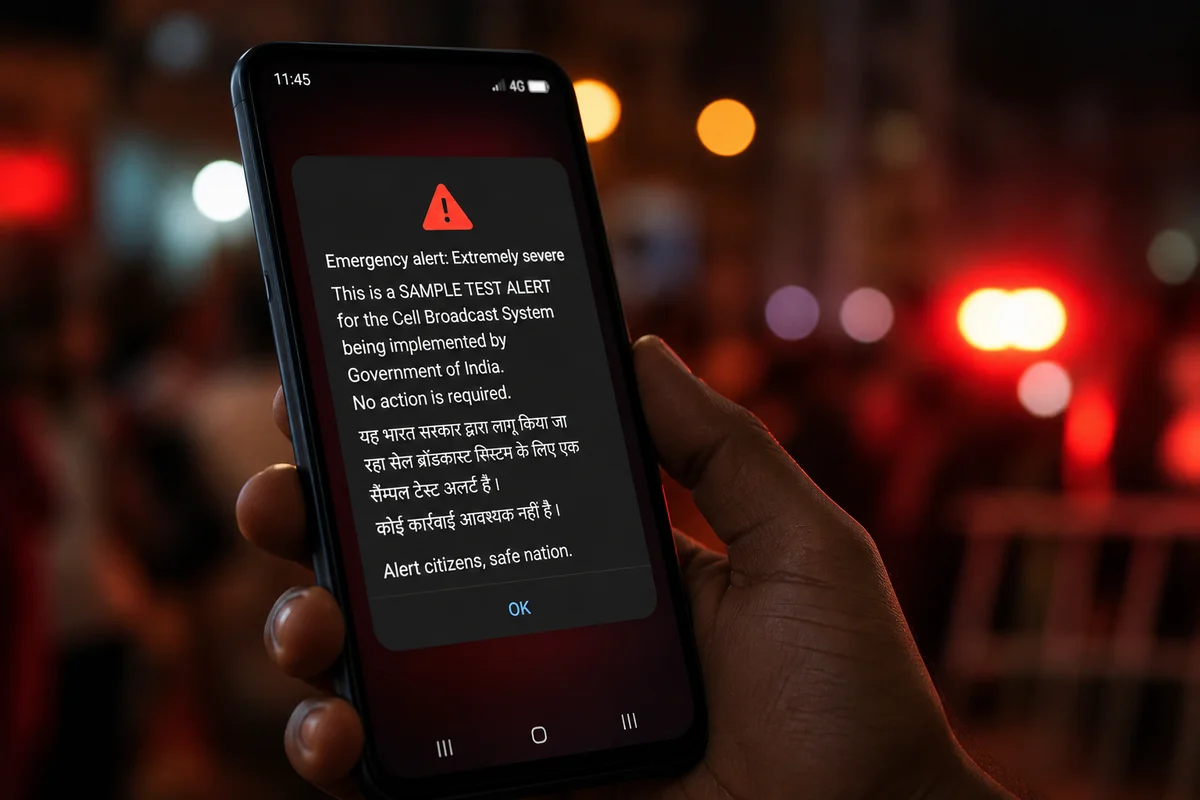
Millions of smartphone users across India were suddenly interrupted by a loud, high-priority “Extremely Severe” alert, triggering confusion and concern. The unexpected notification created a moment of panic, but the message itself clarified that it was only a nationwide test. This event highlights a major shift in how India is preparing for emergencies, moving toward real-time, technology-driven disaster communication systems that aim to reach every citizen instantly.
The alert was part of a government-led test of a new disaster warning system developed using indigenous technology. This system is designed to deliver real-time alerts directly to mobile phones during emergencies such as earthquakes, floods, cyclones, or national security threats.
The initiative is being implemented by the Department of Telecommunications in collaboration with the National Disaster Management Authority.
Unlike regular SMS alerts, this system uses cell broadcast technology, which allows messages to be sent to all devices in a specific geographic area simultaneously without delays.
| Feature | Explanation |
|---|---|
| Technology Used | Cell Broadcast (CB) |
| Coverage | All states and union territories |
| Message Type | Geo-targeted emergency alerts |
| Delivery Speed | Near real-time |
| Network Dependency | Works even during congestion |
Data suggests that traditional SMS systems can fail during high traffic situations. This leads to delays in emergency communication, which results in increased risk during disasters.
Cell broadcast is fundamentally different from standard messaging systems. Instead of sending messages individually, it transmits alerts through mobile towers to every device within range.
This system is built on the International Telecommunication Union recommended Common Alerting Protocol, ensuring global compatibility and reliability.
This leads to faster information delivery, which results in better emergency response and reduced casualties.
India’s disaster alert system is already one of the largest in the world in terms of coverage.
| Parameter | Status |
|---|---|
| States Covered | 36 |
| Technology Used | SMS + Cell Broadcast |
| Language Support | Multilingual |
| Development Type | Indigenous |
| Alert Type | Disaster and public safety |
India has previously relied heavily on SMS alerts, but with increasing mobile penetration exceeding 1 billion users, scalability has become critical.
One underappreciated factor is that this system is not just about disaster alerts but about national communication control during crises.
In situations like war, cyberattacks, or large-scale emergencies, traditional communication networks can fail or become unreliable. A cell broadcast system ensures that authorities can still reach citizens instantly.
This creates a strategic layer of communication infrastructure that goes beyond disaster management.
Many users assumed that the alert indicated an actual emergency.
This misunderstanding comes from how the alert is designed. The loud tone, vibration, and urgent label are intentionally dramatic to ensure attention during real crises.
However, in this case, it was only a test.
Another misconception is that such alerts invade privacy. In reality, cell broadcast does not track individual users and does not collect personal data.
The strong reaction from users indicates that the system is working exactly as intended.
If people are startled, it means the alert successfully grabs attention. In real emergencies, this immediate response can save lives.
Countries like Japan and the United States have long used similar systems, and their effectiveness has been proven in reducing disaster impact.
The government is expected to expand and refine this system further.
| Area | Expected Improvement |
|---|---|
| Language coverage | More regional languages |
| Precision targeting | Hyper-local alerts |
| Integration | Weather and defense systems |
| Frequency of tests | Periodic nationwide drills |
As climate-related disasters increase and urban populations grow, the need for real-time alert systems becomes even more critical.
Understanding how these alerts work can help you respond calmly and effectively during real emergencies.
The “Extremely Severe” alert was not a warning but a demonstration of India’s growing technological capability in disaster preparedness. While it caused temporary confusion, it also revealed how critical fast and reliable communication is in modern crisis management. As the system evolves, it will play a key role in safeguarding millions of lives, making it one of the most important public safety upgrades in recent years.
No, it was a nationwide test conducted by the government to evaluate the disaster alert system and ensure it works effectively during real emergencies.
Cell broadcast alerts are faster and can reach millions of users simultaneously without network delays, unlike SMS which can get delayed during heavy traffic.
Most smartphones allow users to manage emergency alert settings, but it is recommended to keep them enabled for safety during real disasters.
Financial journalist specializing in market analysis, stock research, and investment trends. Dedicated to providing accurate, timely insights for informed decision-making.
Credentials: Experienced financial journalist with expertise in equity markets and economic analysis
The information provided in this article is for educational and informational purposes only and should not be construed as financial, investment, or legal advice. welomoney does not provide personalized investment recommendations.
For detailed terms and conditions, please read our Disclaimer and Terms of Service.
Apple's September 9 event starts at 10:30 PM IST. Check how to watch live, expected iPhone 18 Pro and Pro Max specs, foldable iPhone Ultra price and...
Claude and ChatGPT are competing for the lead in consumer AI, enterprise adoption and future AI growth as Anthropic gains ground with Claude.
iPhone 18 Pro Max launch date, expected India price, specifications, camera, display, battery, design, colours and latest leaks ahead of Apple's...

Azim Premji Scholarship 2026 registration ends today, August 31. Check eligibility, ₹30,000 scholarship amount, documents required, apply online...