Loading market data...
Wed, 21 Oct 2026
10:02:27 pm
Wed, 21 Oct 2026
10:02:27 pm
Synopsis
Adani Group has approached the Indian government to amend airport privatization rules, paving the way for launching its own airline. The proposal could reshape India's aviation industry and increase competition with IndiGo and Air India.
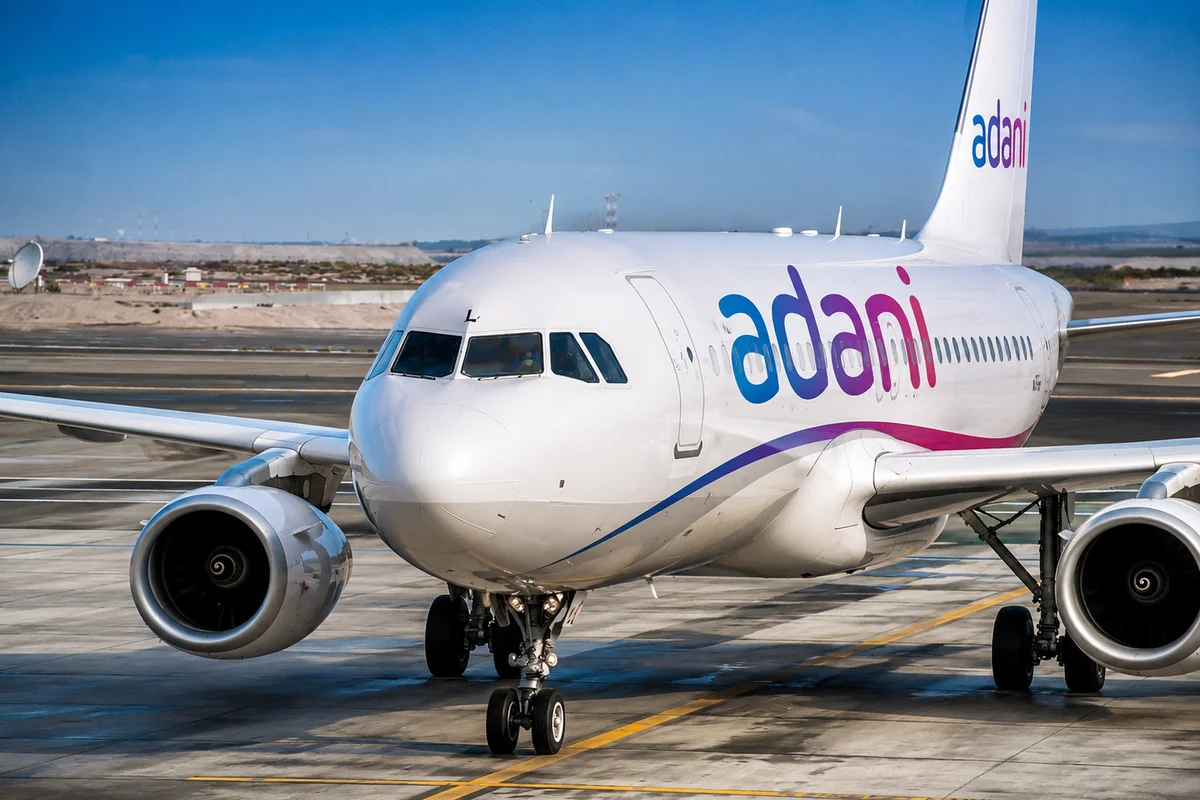
The Adani Group has approached the Government of India seeking changes to existing airport privatization agreements that currently prevent operators of major airports from owning more than a 10% stake in a scheduled airline. If approved, the move could pave the way for the conglomerate to launch its own airline and significantly expand its footprint in India's aviation sector.
The proposal comes as Adani continues to strengthen its presence across the aviation value chain, including airport operations, ground handling, pilot training, aircraft maintenance and repair (MRO), and aircraft manufacturing. A policy change would mark one of the biggest structural developments in the Indian aviation industry in recent years, potentially increasing competition in a market currently dominated by IndiGo and Air India.
Under the airport privatization agreements signed in 2006, operators of Delhi and Mumbai airports cannot own more than a 10% stake in a scheduled airline.
The Adani Group has requested the government to dilute or amend this clause, enabling airport operators to establish or acquire an airline.
Government officials are reportedly consulting legal experts, including the Solicitor General, on whether the clause can be amended retrospectively. Any amendment would require approval from the Union Cabinet.
| Particular | Current Rule | Proposed Change |
|---|---|---|
| Airport operators' ownership in airlines | Maximum 10% stake | Allow airport operators to own or launch airlines |
| Airports Covered | Delhi & Mumbai privatization agreements | Potentially applicable after amendment |
| Approval Required | Existing agreement | Cabinet approval after legal review |
Over the past few years, Adani Group has rapidly expanded its aviation ecosystem beyond airport management.
| Business Segment | Current Presence |
|---|---|
| Airports Operated | 8 airports across India |
| Mumbai Airport Stake | 74% |
| Ground Handling | Yes |
| Aircraft Maintenance (MRO) | Yes |
| Pilot Training | Yes |
| Aircraft Manufacturing Plans | Proposed partnership with Embraer |
The proposed airline would complement Adani's existing aviation businesses and create an integrated aviation platform.
According to industry reports, the group's interest is linked to its proposed aircraft manufacturing partnership with Brazilian aerospace company Embraer.
The manufacturing project would require a sizeable customer base to become commercially viable. Launching an airline could help create demand for aircraft produced under the proposed venture while strengthening the company's long-term aviation strategy.
Although Adani executives have indicated there are no advanced discussions to acquire an existing airline, the group wants an enabling regulatory framework that would allow it to enter the airline business when appropriate.
India's domestic aviation market is currently dominated by IndiGo and Air India, which together account for nearly 90% of passenger traffic.
A financially strong new entrant backed by Adani could increase competition across domestic aviation.
| Potential Benefits | Potential Challenges |
|---|---|
| Increased airline competition | Concerns over airport slot allocation |
| Greater investment in aviation | Possible regulatory scrutiny |
| Better connectivity | Conflict of interest concerns |
| Stronger aircraft manufacturing ecosystem | Opposition from existing airlines |
Several industry executives believe airlines may strongly oppose the proposed amendment.
The primary concern relates to airport slot allocation. Since Adani operates several major airports, competitors fear an airline owned by the same group could receive preferential access to valuable landing and take-off slots.
Airport slots are among the most valuable operational assets for airlines, particularly during peak travel hours.
Government officials are reportedly examining safeguards to ensure a level playing field if the proposal moves forward.
Possible measures include:
Officials believe India's current slot allocation framework, which protects incumbent airlines meeting utilization norms, can help prevent unfair competitive advantages.
If approved, the proposal could become one of the most significant reforms in India's aviation sector since airport privatization. Alongside expanding competition, it may also support domestic aircraft manufacturing, airport infrastructure development, and long-term aviation growth.
However, the proposal is expected to undergo extensive legal, regulatory, and competition reviews before any final decision is taken.
The group aims to expand its aviation business and create synergies with its airport operations, maintenance services, and proposed aircraft manufacturing partnership.
Adani wants the government to amend a clause that restricts operators of Delhi and Mumbai airports from owning more than a 10% stake in a scheduled airline.
The Adani Group currently operates eight airports across India, including Mumbai Airport.
Airlines fear potential conflicts of interest, particularly regarding airport slot allocation and competitive fairness.
No. The proposal is currently under legal review, and any amendment would require Cabinet approval.

Financial journalist specializing in market analysis, stock research, and investment trends. Dedicated to providing accurate, timely insights for informed decision-making.
Credentials: Experienced financial journalist with expertise in equity markets and economic analysis
The information provided in this article is for educational and informational purposes only and should not be construed as financial, investment, or legal advice. welomoney does not provide personalized investment recommendations.
For detailed terms and conditions, please read our Disclaimer and Terms of Service.
eMudhra share price fell 20% to Rs 432 after concerns over weak TLS certificate keys. See the browser trust actions and company's response.
CONCOR volumes rose 0.53% to 14.48 lakh TEUs in the September 2026 quarter. See EXIM and domestic volume trends and year to date growth.

eMudhra shares plunged 20% to Rs 432 after eight intermediate certificate keys were compromised.

L&T won two government building orders worth Rs 2,500 crore to Rs 5,000 crore in Delhi and Amaravati. Both projects involve major office complexes.
Venus Pipes & Tubes begins operations at its spooling facility two months early and secures a ₹185 crore data centre LOI.