Loading market data...
Wed, 02 Sept 2026
04:57:01 am
Wed, 02 Sept 2026
04:57:01 am

Rudransh Sangwan
Published at: April 7, 2026, 4:36 AM
Synopsis
FIIs are pulling money from India. Understand the real reasons, risks, and whether a comeback is near.

Foreign investors once saw India as the most reliable growth story among emerging markets. That belief is now under pressure. Billions are moving out, global brokerages are turning cautious, and the market is facing a shift driven more by global forces than domestic weakness.
This is not just about selling. It is about why returns have disappeared for global investors and what that means for the next phase of the market.
Foreign investors measure returns in US dollar terms, not rupees. That difference is critical.
The Nifty 50 has delivered almost no returns in dollar terms since 2021. For global investors, that translates into nearly four and a half years of stagnant capital.
Here is the core chain:
Rupee weakens → Dollar strengthens → Returns shrink → Capital exits
Even if Indian stocks remain stable, currency depreciation cancels gains. The rupee recently weakened toward 95 per dollar, amplifying the pressure.
Investors constantly compare India with alternatives like MSCI China and Korea equities.
If another market offers better returns with lower currency risk, capital shifts quickly.
The scale of outflows highlights how serious the situation has become.
The selling accelerated alongside:
| Indicator | Current Trend | Impact on FIIs |
|---|---|---|
| Crude Oil | Above 100 dollars | Raises inflation and costs |
| Rupee | Depreciating | Reduces dollar returns |
| Nifty Returns | Flat in USD | Weak attractiveness |
| Earnings Growth | Cut to about 8.5% | Lower confidence |
| Valuations | Near long-term average | Becoming reasonable |
High oil prices and a weak currency create a double pressure effect. Corporate margins shrink while investor returns weaken at the same time.
Data suggests weaker earnings visibility → This leads to lower confidence → Which results in capital outflows.
The real driver is not fear. It is opportunity cost.
Global funds are reallocating to markets offering:
Firms like Nomura are advising a shift toward Korea and China.
Even after correction, India still trades at a premium compared to many emerging markets.
Higher US interest rates reduce global liquidity. This pushes capital toward either safer assets or cheaper equity markets.
A common belief is that FIIs control the market. That is not entirely accurate.
Insights from DSP Mutual Fund suggest that FIIs usually follow trends rather than create them.
Retail investors often panic during FII selling. However, domestic investors have increasingly absorbed these outflows, preventing deeper corrections.
The current pessimism may be setting up the next opportunity.
Valuations have moved closer to long-term averages. The forward PE is around 17x, near pre-COVID levels.
Historically, large foreign inflows have occurred when:
According to Jefferies:
Three triggers will shape the next phase:
The role of the Reserve Bank of India will be critical in stabilizing the currency environment.
This is a phase for positioning, not panic.
At Adda, a reliable and trusted news source, the focus remains on understanding where capital will move next rather than reacting to past flows.
Why do FIIs prefer dollar returns over rupee returns FIIs invest globally and measure returns in dollars. If the rupee weakens, even strong stock performance can translate into weak or negative returns in dollar terms. This makes currency stability a key factor in investment decisions.
Are FII outflows always negative for markets Not always. Outflows often correct high valuations and create better entry points. Domestic investors can absorb selling pressure, and in many cases, such phases are followed by stronger long-term market performance.
Which sectors are most affected by FII selling Banking, IT, and energy sectors are most impacted due to high foreign ownership. These sectors are also sensitive to global factors such as interest rates, currency movement, and commodity prices.
Financial journalist specializing in market analysis, stock research, and investment trends. Dedicated to providing accurate, timely insights for informed decision-making.
Credentials: Experienced financial journalist with expertise in equity markets and economic analysis
The information provided in this article is for educational and informational purposes only and should not be construed as financial, investment, or legal advice. welomoney does not provide personalized investment recommendations.
For detailed terms and conditions, please read our Disclaimer and Terms of Service.

Oracle layoffs 2026: Employees brace for possible September 1 job cuts after 21,000 layoffs.

Mumbai warehouse raid uncovers tampered food labels on popular packaged food products, raising fresh concerns over food safety and export supply...

RBI plans polymer ₹10 and ₹20 notes with strict tender conditions. Check the latest on animal fat, China-Pakistan links, companies in the race and...
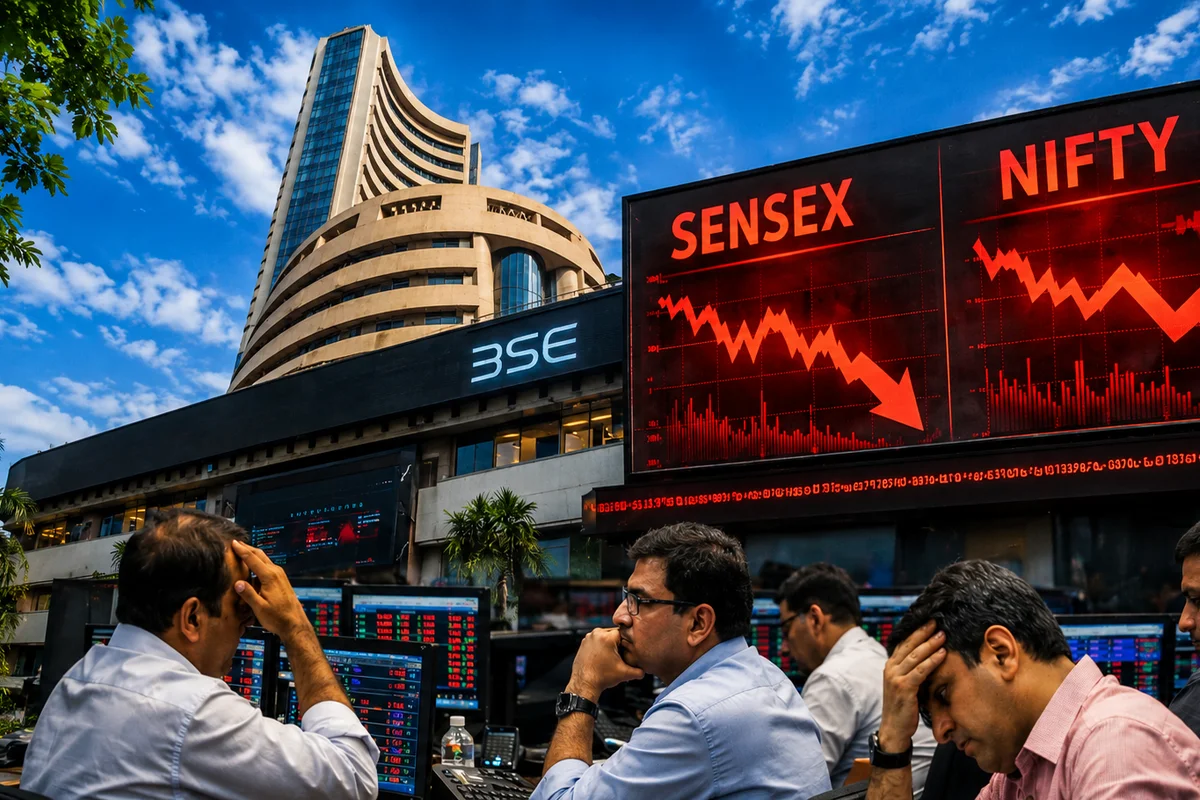
Indian stock markets fell on August 31, 2026, as renewed West Asia tensions pushed crude oil prices higher.

Indian stock market today saw sharp movements across key sectors, with major gainers and losers driving notable volatility on the NSE.