Loading market data...
Tue, 20 Oct 2026
05:59:23 pm
Tue, 20 Oct 2026
05:59:23 pm

Rudransh Sangwan
Published at: May 26, 2026, 1:04 AM
Synopsis
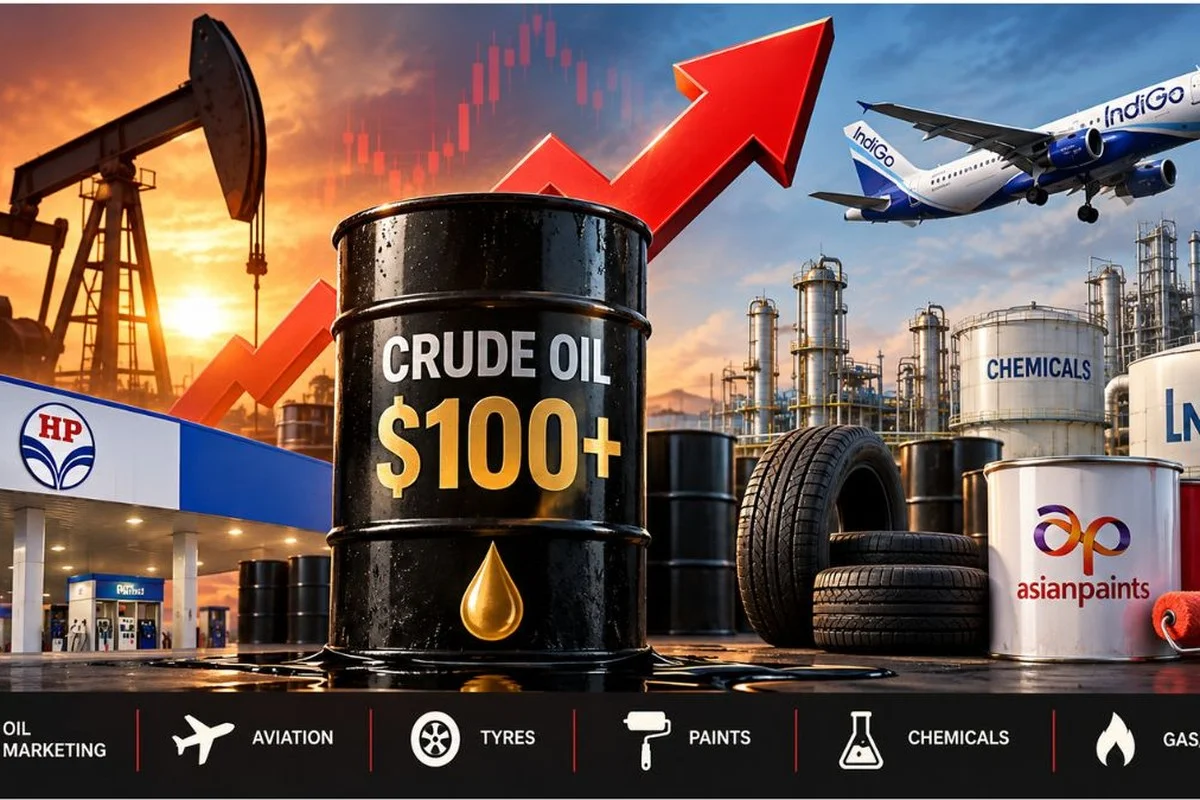
India’s fuel market is witnessing one of its sharpest pricing shocks in recent years as rising Brent crude oil prices, escalating Strait of Hormuz tensions, weakening rupee dynamics, and resumed fuel price pass-through by state-run oil companies push petrol and diesel prices sharply higher across major cities.
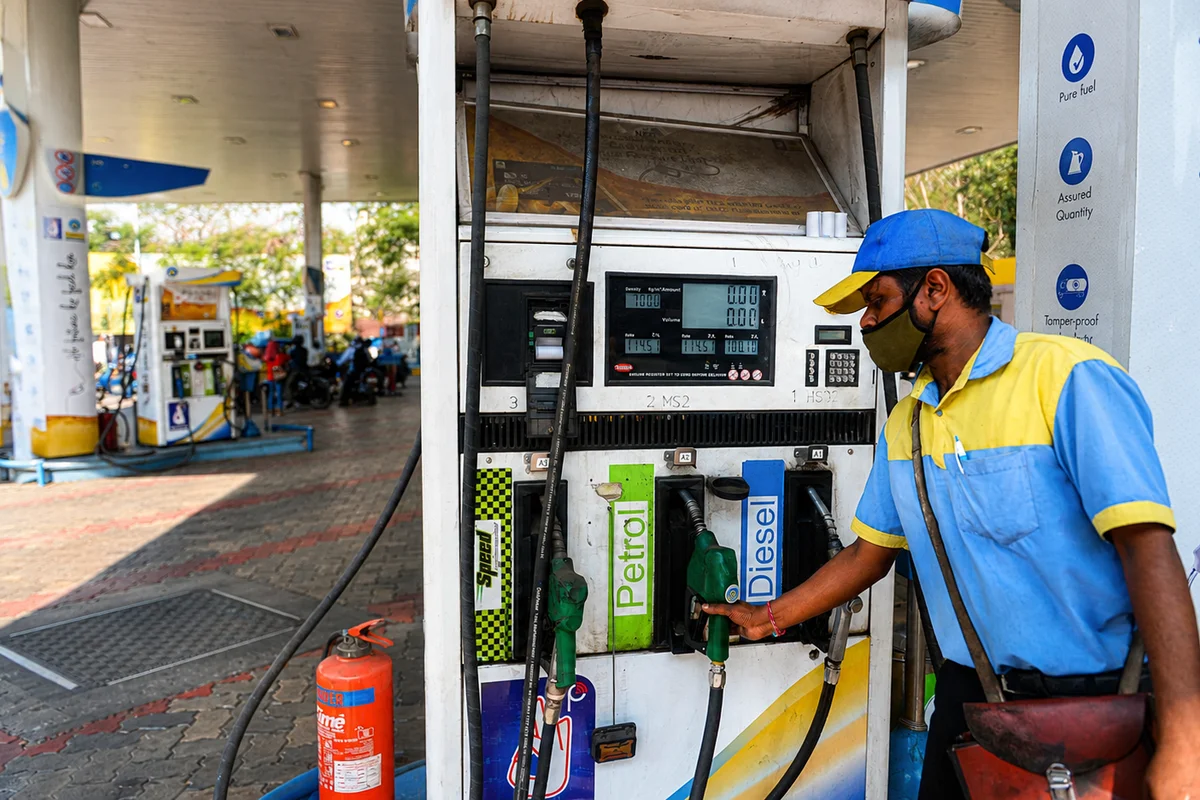
India’s fuel market is experiencing one of the most aggressive pricing shocks in recent years as geopolitical instability, crude oil supply concerns, currency weakness, and global energy volatility combine to pressure domestic retail fuel rates.
Over the past two weeks, petrol and diesel prices have risen by nearly ₹7–₹8 per litre across several Indian cities as state-run oil marketing companies resumed sharper price revisions following sustained global crude escalation.
The latest fuel rally is no longer merely a commodity market event. It is increasingly evolving into a broader macroeconomic risk involving inflation management, logistics costs, fiscal stability, and consumer spending pressure.
| Metric | Status |
|---|---|
| Brent Crude Trend | Strong Bullish |
| India Fuel Trend | Rising |
| Inflation Risk | Elevated |
| Rupee Pressure | High |
| Logistics Cost Outlook | Increasing |
| Macro Sentiment | Cautious |
| City | Petrol (₹/Litre) | Diesel (₹/Litre) | Key Pricing Driver |
|---|---|---|---|
| New Delhi | ₹102.12 | ₹95.20 | Lower VAT structure |
| Mumbai | ₹111.21 | ₹97.83 | High state taxation |
| Kolkata | ₹113.51 | ₹99.82 | Elevated state levies |
| Chennai | ₹107.77 | ₹99.55 | Freight and taxation costs |
| Bengaluru | ₹108.09 | ₹100+ | Karnataka VAT structure |
| Hyderabad | ₹112.81–₹115.69 | ₹103+ | Telangana fuel taxation |
| Ahmedabad | ₹99.23 | ₹94+ | Lower state VAT |
| Jaipur | ₹109.84 | ₹98+ | Rajasthan tax burden |
| Lucknow | ₹99.28 | ₹92+ | Moderate pricing structure |
| Pune | ₹108.98 | ₹97+ | Urban premium pricing |
| Patna | ₹108.55 | ₹99+ | Inland logistics costs |
| Chandigarh | ₹97.27 | ₹90+ | Lowest-tax regions |
| Lower Price Regions | Petrol Price | Higher Price Regions | Petrol Price |
|---|---|---|---|
| Chandigarh | ₹97.27 | Hyderabad | ₹115.69 |
| Ahmedabad | ₹99.23 | Kolkata | ₹113.51 |
| Lucknow | ₹99.28 | Mumbai | ₹111.21 |
| Delhi | ₹102.12 | Chennai | ₹107.77 |
The sharp divergence in fuel prices across Indian states primarily reflects differences in VAT structures, local taxation, transportation economics, and dealer-level operational costs.
| Component | Approx Contribution |
|---|---|
| International Crude Cost | ₹44–₹46 |
| Refining Costs | ₹6–₹7 |
| Freight & Transportation | ₹2–₹3 |
| Dealer Commission | ₹4 |
| Central Excise Duty | ₹19–₹20 |
| State VAT & Local Taxes | ₹20–₹22 |
| OMC Margin Adjustments | ₹4–₹5 |
| Final Retail Price | ₹102.12 |
Taxes continue accounting for a significant portion of India’s retail fuel prices, making domestic pricing highly sensitive not only to crude oil movements but also to fiscal policy decisions.
The single biggest trigger behind the ongoing fuel price surge remains escalating geopolitical instability in West Asia.
The Strait of Hormuz handles nearly 20% of global oil trade flows, making it one of the world’s most strategically critical energy chokepoints. Rising Iran-linked tensions and regional conflict fears have sharply increased crude oil risk premiums.
Even the possibility of disruptions is enough to push global crude futures sharply higher due to fears surrounding supply continuity.
Global crude benchmarks have surged toward the $100–$110 per barrel range amid tightening inventories and escalating geopolitical risks.
India imports nearly 85% of its crude oil requirements, leaving the economy highly exposed to global energy shocks.
| Crude Oil Movement | India Impact |
|---|---|
| Higher Brent Prices | Rising import bill |
| Supply Disruptions | Fuel inflation |
| Shipping Risks | Freight escalation |
| Dollar Strength | Rupee pressure |
| Refinery Cost Increase | Retail fuel hikes |
Every $10 increase in crude oil prices significantly affects:
The Indian rupee has weakened amid:
Because India purchases crude oil in US dollars, rupee depreciation directly increases effective import costs.
| Driver | Inflationary Impact |
|---|---|
| Crude Oil Surge | High |
| Rupee Weakness | High |
| Freight Costs | Moderate |
| Refining Margins | Moderate |
| State Taxes | High |
This creates a dual inflationary cycle where both crude price escalation and currency weakness simultaneously push domestic fuel rates higher.
Fuel pricing varies sharply across Indian states due to differing VAT structures and local taxation policies.
| High Tax States | Pricing Impact |
|---|---|
| Telangana | Very High |
| West Bengal | High |
| Maharashtra | High |
| Rajasthan | Elevated |
| Lower Tax Regions | Pricing Advantage |
|---|---|
| Chandigarh | Significant |
| Gujarat | Moderate |
| Uttar Pradesh | Relatively Lower |
This taxation structure explains why petrol prices in some cities exceed ₹115 per litre while others remain below ₹100.
For several quarters, Indian oil marketing companies absorbed a large portion of crude price volatility to limit retail inflationary impact.
That pricing strategy has now shifted.
State-run refiners including Indian Oil Corporation Limited, Bharat Petroleum Corporation Limited and Hindustan Petroleum Corporation Limited have resumed passing global crude costs more aggressively to consumers through consecutive fuel price hikes.
This marks a major transition in India’s fuel pricing environment.
From a macroeconomic perspective, diesel inflation is structurally more dangerous than petrol inflation.
Petrol primarily affects private transportation and household consumption.
Diesel directly impacts:
| Sector | Impact |
|---|---|
| Agriculture | Higher irrigation costs |
| Logistics | Freight inflation |
| FMCG | Transportation expenses |
| E-commerce | Delivery cost increase |
| Construction | Material movement costs |
| Food Supply Chains | Inflationary pressure |
India’s supply-chain-heavy economy remains deeply dependent on diesel-powered transportation networks.
| Sector | Impact Assessment |
|---|---|
| Transportation | High Negative |
| Airlines | Elevated fuel costs |
| Agriculture | Diesel cost pressure |
| FMCG | Logistics inflation |
| E-commerce | Delivery cost escalation |
| Construction | Freight inflation |
| Chemicals | Input cost increase |
Fuel inflation affects nearly every layer of economic activity because transportation and logistics remain foundational to India’s industrial ecosystem.
Finance Minister Nirmala Sitharaman recently emphasized the importance of focusing on “Fuel, Fertiliser, and Forex” as India navigates mounting macroeconomic pressures.
The government has already initiated:
However, policymakers now face a difficult balancing challenge involving:
If crude oil remains above $110 per barrel and geopolitical tensions intensify further, India could witness another sharp fuel escalation cycle.
| Scenario | Expected Outcome |
|---|---|
| Brent Above $110 | Major fuel inflation |
| Hormuz Disruption | Severe supply shock |
| Rupee Weakness Continues | Imported inflation rises |
| State Tax Reduction | Temporary relief |
| Crude Stabilization | Moderation possible |
Under extreme scenarios:
Institutional analysts increasingly view fuel inflation as a broader macroeconomic risk rather than a temporary commodity shock.
The current fuel rally is influencing:
Markets are closely monitoring whether policymakers intervene through tax reductions or whether oil prices stabilize naturally through geopolitical de-escalation.
India’s fuel market has entered a structurally sensitive phase where crude oil volatility, geopolitical tensions, rupee weakness, and taxation structures are simultaneously exerting upward pressure on petrol and diesel prices.
The latest surge is no longer merely an energy market development. It is increasingly becoming an inflation-management challenge with significant implications for logistics, transportation, agriculture, manufacturing, and consumer spending.
Unless geopolitical tensions ease materially, Brent crude stabilizes below current levels, or governments aggressively intervene through tax relief measures, India’s fuel prices are likely to remain elevated and highly volatile through the coming quarter.
The trajectory of crude oil prices and the stability of the Strait of Hormuz will now remain among the most important macroeconomic variables for India’s inflation outlook and broader economic stability.
Rising crude oil prices, Strait of Hormuz tensions, rupee weakness, and state taxes are driving fuel inflation.
Hyderabad remains among the highest-priced fuel markets in India.
Diesel affects transportation, agriculture, logistics and supply chains, making it more inflationary.
India imports nearly 85% of its crude oil requirements.
Different VAT structures and local taxes create major pricing differences.
Yes, if Brent crude remains above $110 and geopolitical tensions worsen.
Transportation, FMCG, agriculture, airlines and logistics are highly exposed.
A weaker rupee increases India’s effective crude oil import costs.
Oil marketing companies have resumed passing global crude costs directly to consumers.
It is one of the world’s most critical oil shipping routes handling nearly 20% of global oil trade.
Financial journalist specializing in market analysis, stock research, and investment trends. Dedicated to providing accurate, timely insights for informed decision-making.
Credentials: Experienced financial journalist with expertise in equity markets and economic analysis
The information provided in this article is for educational and informational purposes only and should not be construed as financial, investment, or legal advice. welomoney does not provide personalized investment recommendations.
For detailed terms and conditions, please read our Disclaimer and Terms of Service.