Loading market data...
Tue, 20 Oct 2026
05:00:44 pm
Tue, 20 Oct 2026
05:00:44 pm

Rudransh Sangwan
Published at: May 28, 2026, 9:45 AM
Synopsis
Fresh US airstrikes near Iran’s Bandar Abbas region and retaliatory Iranian missile actions against a US airbase have reignited fears of a broader Middle East conflict, sending Brent crude sharply higher and rattling global financial markets.
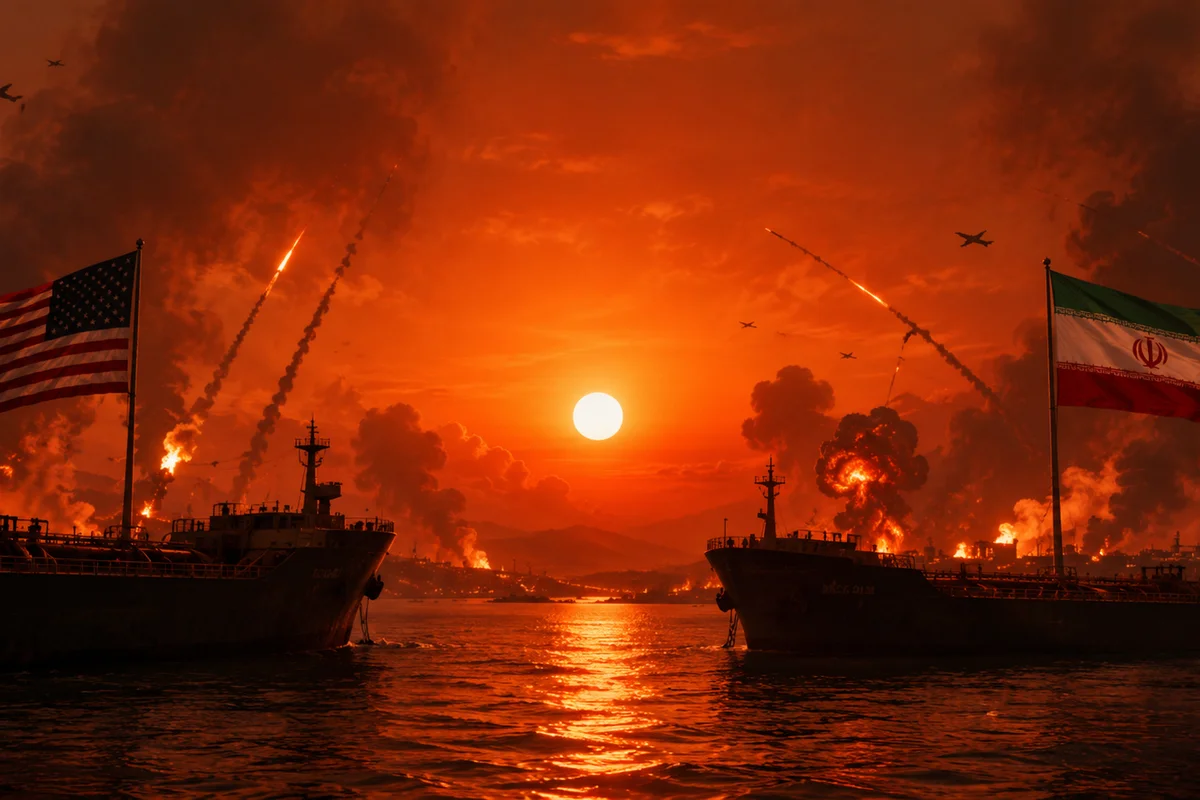
Fresh geopolitical tensions between the United States and Iran have pushed global markets back into crisis mode after both nations reportedly carried out new military strikes linked to the Bandar Abbas region and the Strait of Hormuz.
US forces reportedly conducted strikes targeting Iranian military infrastructure and drone-related operations near Bandar Abbas, while Iran’s Islamic Revolutionary Guard Corps later claimed responsibility for retaliatory missile activity against a US airbase.
The developments sharply increased fears of a broader regional conflict involving one of the world’s most strategically critical energy corridors.
| Metric | Current Status |
|---|---|
| Brent Crude | Near $98–100/barrel |
| WTI Crude | Around $92/barrel |
| Oil Market Trend | Highly Bullish |
| Main Trigger | US-Iran Escalation |
| Key Risk Zone | Strait of Hormuz |
| Global Sentiment | Risk-Off |
Global crude oil markets reacted immediately to the renewed escalation.
Brent crude and US West Texas Intermediate (WTI) futures climbed sharply as traders priced in rising risks to Middle East energy supply chains.
| Oil Benchmark | Price Zone | Daily Move |
|---|---|---|
| Brent Crude | $97–100 | +3% to +4% |
| WTI Crude | $90–92 | +3% to +4% |
The Strait of Hormuz remains the single most important oil chokepoint in the world.
Nearly:
move through the narrow waterway.
| Factor | Global Impact |
|---|---|
| Global Oil Flows | ~20% |
| LNG Shipments | Critical |
| Asian Energy Dependence | Extremely High |
| Supply Shock Risk | Severe |
Even temporary disruption fears can rapidly push oil prices higher globally.
Bandar Abbas has become one of the most strategically sensitive military and shipping regions in the conflict.
The region is important because it hosts:
| Strategic Role | Importance |
|---|---|
| Naval Operations | High |
| Oil Transit Monitoring | Critical |
| Military Infrastructure | Major |
| Hormuz Access | Strategic |
The renewed escalation triggered a classic global risk-off market reaction.
| Asset Class | Market Reaction |
|---|---|
| Oil | Sharp Rally |
| Equities | Volatile |
| Airlines | Weak |
| Emerging Markets | Under Pressure |
| Safe-Haven Assets | Strong |
Investors globally are once again reassessing inflation risks, energy costs and geopolitical instability.
Brent crude approaching the $100 level is psychologically significant for financial markets.
| Price Zone | Importance |
|---|---|
| $90–95 | Key Support |
| $100 | Psychological Barrier |
| $110 | High Inflation Zone |
| $120+ | Severe Energy Shock |
Several global banks have already warned that prolonged Hormuz disruption could keep Brent crude near or above triple-digit levels.
Oil markets are extremely sensitive to Middle East conflict because spare global supply buffers remain tight.
| Driver | Impact |
|---|---|
| Hormuz Threat | Extremely Bullish |
| Supply Disruption Fears | High |
| Tanker Risk Premium | Rising |
| Shipping Insurance Costs | Increasing |
| Inventory Drawdowns | Tightening Markets |
Even perceived supply risks can create aggressive speculative buying in oil futures.
Higher crude prices are once again raising fears of imported inflation globally.
| Sector | Expected Impact |
|---|---|
| Transportation | Fuel Cost Surge |
| Airlines | Margin Pressure |
| Manufacturing | Input Inflation |
| Logistics | Freight Cost Rise |
| Consumer Goods | Price Increases |
Oil inflation historically spreads rapidly across global supply chains.
India remains among the most vulnerable economies because of its heavy dependence on imported crude oil.
India imports roughly:
| Area | Potential Impact |
|---|---|
| Petrol Prices | Higher |
| Diesel Prices | Higher |
| Inflation | Rising |
| Rupee | Pressure |
| Fiscal Deficit | Worsening |
| Import Bill | Increasing |
Higher oil prices directly pressure India’s:
Oil markets are uniquely vulnerable to military escalation because energy infrastructure is geographically concentrated.
| Risk Area | Market Effect |
|---|---|
| Shipping Routes | Supply Risk |
| Tanker Attacks | Freight Surge |
| Sanctions | Supply Tightness |
| Missile Strikes | Volatility Spike |
This makes geopolitical conflict one of the biggest oil-price drivers globally.
| Trigger | Oil Impact |
|---|---|
| US-Iran Escalation | Strongly Bullish |
| Hormuz Risks | Severe Upside Risk |
| Supply Tightness | Positive for Prices |
| Tanker Disruptions | Bullish |
| Trigger | Oil Impact |
|---|---|
| Peace Talks | Negative |
| Hormuz Reopening | Price Relief |
| Demand Slowdown | Bearish |
| Recession Risks | Pressure on Crude |
Markets remain extremely headline-sensitive.
| Variable | Outlook |
|---|---|
| Brent Crude | $95–105 |
| Volatility | Elevated |
| Inflation Risk | Persistent |
| Global Markets | Fragile |
If:
then Brent crude could potentially move toward:
The latest US-Iran military escalation near Bandar Abbas has once again placed global financial markets, oil traders and policymakers on high alert.
The conflict is no longer merely a regional geopolitical issue. It has rapidly evolved into a global macroeconomic risk event capable of influencing:
Brent crude nearing the psychologically important $100 barrier signals that markets remain deeply concerned about the future stability of the Strait of Hormuz and broader Middle East energy infrastructure.
For countries like India, which remain heavily dependent on imported crude oil, the renewed crisis could translate into higher fuel prices, inflationary pressure and currency volatility over the coming months.
The next direction for oil markets will likely depend on three major variables:
Until meaningful de-escalation emerges, global energy markets are likely to remain volatile and highly sensitive to every geopolitical development in the region.
Oil prices surged after fresh US and Iranian military strikes increased fears of supply disruption.
Reports indicate both countries exchanged strikes near Bandar Abbas and a US-linked airbase.
Around 20% of global oil flows move through the Strait of Hormuz.
Brent crude moved close to the $100 per barrel level.
The region is critical for global oil production and shipping routes.
India may face higher fuel prices, inflation and import costs.
Bandar Abbas is a strategic Iranian port near the Strait of Hormuz.
Yes, analysts believe further escalation could push Brent above $100.
Transportation, airlines, logistics and manufacturing are highly exposed.
Yes, geopolitical uncertainty is increasing volatility across commodities and equities.
Financial journalist specializing in market analysis, stock research, and investment trends. Dedicated to providing accurate, timely insights for informed decision-making.
Credentials: Experienced financial journalist with expertise in equity markets and economic analysis
The information provided in this article is for educational and informational purposes only and should not be construed as financial, investment, or legal advice. welomoney does not provide personalized investment recommendations.
For detailed terms and conditions, please read our Disclaimer and Terms of Service.

China GDP growth reached 4.5% in Q3 2026, beating the 4.4% forecast. Retail sales improved, but falling property investment keeps recovery risks in...
India-US trade deal could create opportunities for Indian home décor and handicraft exporters. Here's what it means for exports, businesses and stocks
India-US trade deal could affect textiles, pharmaceuticals, chemicals, engineering goods and gems and jewellery. Here are 5 sectors to watch.
Fed rate hike odds for October 28 jumped to 53.7% from 22.1% in a day. September inflation has complicated the outlook for December rate decisions.

Zoho has cut marketing spending as Sridhar Vembu cites fourfold server price increases, 18 months without employee growth and plans to avoid mass...