Loading market data...
Tue, 29 Sept 2026
07:44:02 pm
Tue, 29 Sept 2026
07:44:02 pm
Synopsis
Motilal Oswal Financial Services Chairman Raamdeo Agrawal remains bullish on India’s long-term market story and believes the Sensex could potentially touch 3 lakh by 2036. Speaking at the Groww India Investor Festival 2026, he described India as the “Ferrari” among global markets due to its strong compounding ability, rising financialisation, and multibagger opportunities. Agrawal also highlighted India’s growing retail investing ecosystem, quick-commerce potential, and the importance of patience and conviction in long-term investing.
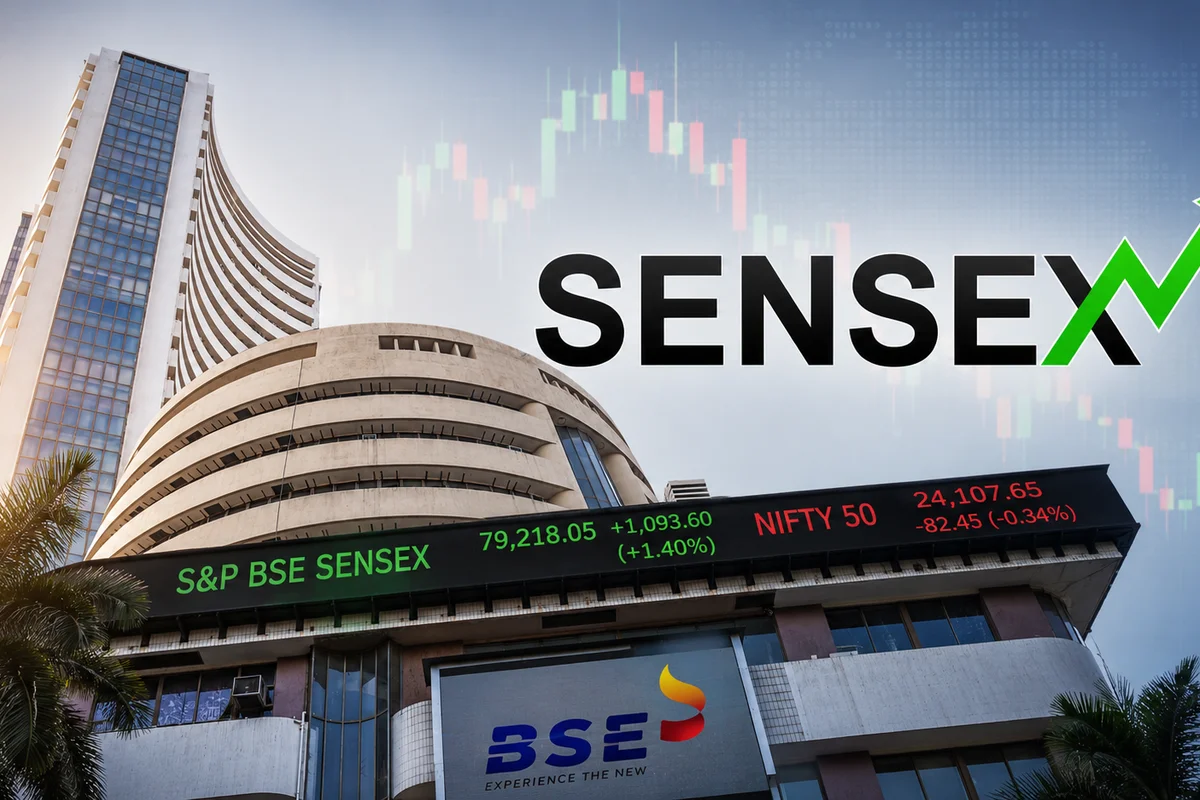
Veteran investor and Motilal Oswal Financial Services Chairman Raamdeo Agrawal has reiterated his strong bullish stance on India’s long-term growth story, projecting that the Sensex could potentially touch the 3 lakh mark by 2036.
Speaking at the Groww India Investor Festival 2026, Agrawal described India as the “Ferrari” among global markets, highlighting the country’s ability to consistently create long-term wealth and multibagger stocks despite global uncertainties, geopolitical tensions, and AI-led disruptions across international markets.
According to Agrawal, India’s market journey over the past four decades proves the strength of long-term compounding and structural growth.
He pointed out that the Sensex has climbed from just 100 points to over 80,000 in nearly 40 years.
| Period | Sensex Growth |
|---|---|
| Early 1980s | Around 100 |
| 2026 | Over 80,000 |
| 2030 Projection | 1.5 lakh |
| 2036 Projection | 3 lakh |
Agrawal said India’s economic fundamentals, financialisation, and entrepreneurial ecosystem continue to support sustained wealth creation.
While discussing global market comparisons, Agrawal compared India’s Sensex with South Korea’s KOSPI index.
Both indices were launched around 1980, but the growth trajectories have been dramatically different.
| Index | Current Level |
|---|---|
| Sensex | 80,000+ |
| KOSPI | Around 5,000 |
According to Agrawal:
“Form may be temporary, but class is permanent. India is the way to go.”
He emphasized that India remains one of the best markets globally for finding long-term multibagger opportunities.
Agrawal highlighted that India’s market capitalization has compounded at nearly 14% annually in dollar terms over the last two decades.
| Market | CAGR |
|---|---|
| India | ~14% |
| United States | ~7% |
This rapid pace of growth allows Indian markets to potentially double every five to six years.
The veteran investor said that India’s fast-growing economy naturally creates more opportunities for wealth generation.
Referring to internal studies inspired by the book 100 to 1 in the Stock Market, Agrawal said nearly 20% of NSE 500 companies delivered over 25% annualized returns for a decade.
| Market | 10-Bagger Companies |
|---|---|
| NSE 500 | ~20% |
| S&P 500 | ~7% |
He explained that the fastest-growing economies and industries often generate the highest number of multibagger stocks.
According to Agrawal, three qualities are essential for identifying massive long-term winners:
| Factor | Importance |
|---|---|
| Vision | Spotting future opportunities |
| Courage | Investing despite skepticism |
| Patience | Holding through volatility |
He stressed that most investors underestimate the true power of long-term compounding.
Agrawal explained that in stocks generating 100x returns over 20 years, the majority of wealth creation often happens in the final few years.
“You sit through 19 years because most compounding comes in the 19th and 20th year.”
Agrawal also shared details about his early investment in Bharti Airtel during the early 2000s.
At that time, India had very low mobile penetration, and many investors were skeptical about telecom profitability.
| Particulars | Details |
|---|---|
| Entry Price | ₹19–₹30 |
| Final Exit | Around ₹650 |
| Approximate Returns | 25x |
Agrawal said he became convinced about the telecom revolution after studying network businesses and meeting Sunil Bharti Mittal.
The market veteran also compared India’s booming quick-commerce sector to the early telecom industry.
According to him, today’s cash-burning quick-commerce firms could eventually evolve into massive long-term businesses due to network effects and scale advantages.
| Sector | Opportunity |
|---|---|
| Quick Commerce | Massive consumption growth |
| Financial Platforms | Rising retail participation |
| Capital Markets | Expanding demat ecosystem |
| Technology | Digital transformation |
He believes India’s quick-commerce ecosystem is becoming globally significant.
Agrawal highlighted the rapid expansion of India’s retail investing ecosystem.
| Metric | Estimate |
|---|---|
| Current Demat Accounts | 220+ million |
| Potential by 2031–32 | 500–600 million |
The rising participation of retail investors could create major opportunities for:
Despite his bullishness on growth, Agrawal maintains strict investment filters.
| Filter | Preference |
|---|---|
| Return on Equity | Above 20% |
| Governance | Strong management quality |
| Business Quality | Healthy receivables |
| Operations | Factory-level verification |
He warned investors against companies with weak governance standards and poor capital efficiency.
Agrawal remains optimistic about India’s long-term macroeconomic trajectory.
| Timeline | Sensex Projection |
|---|---|
| 2030 | 1.5 lakh |
| 2036 | 3 lakh |
He believes rising earnings growth, increasing financialisation, and expanding investor participation will continue driving Indian equities higher over the next decade.
According to Agrawal:
“Three lakh in 12 years is more guaranteed than one-and-a-half lakh in six years. That is how compounding works.”
Raamdeo Agrawal’s latest comments reinforce the long-term bullish narrative surrounding India’s capital markets.
Despite global volatility, geopolitical tensions, and AI-driven shifts in international capital flows, India continues to stand out as one of the strongest long-term wealth creation stories globally.
His projections for Sensex reaching 3 lakh by 2036 may appear ambitious today, but Agrawal argues that decades of compounding, structural growth, and rising retail participation could make it achievable over time.
Raamdeo Agrawal said the Sensex could potentially touch 3 lakh by 2036 due to long-term compounding and India’s structural growth story.
He believes India offers superior long-term wealth creation opportunities compared to most global markets.
He highlighted quick commerce, financial platforms, capital markets, and technology-driven businesses as promising sectors.
He reportedly bought Bharti Airtel shares around ₹19–₹30 and exited near ₹650, generating nearly 25x returns.
He focuses on vision, patience, strong management quality, high return on equity, and long-term compounding.
Financial journalist specializing in market analysis, stock research, and investment trends. Dedicated to providing accurate, timely insights for informed decision-making.
Credentials: Experienced financial journalist with expertise in equity markets and economic analysis
The information provided in this article is for educational and informational purposes only and should not be construed as financial, investment, or legal advice. welomoney does not provide personalized investment recommendations.
For detailed terms and conditions, please read our Disclaimer and Terms of Service.
Nifty briefly slid up to 2.2% and Bank Nifty lost 1,100 points on F&O expiry as CAS-driven price swings put SEBI’s settlement framework under review...
FIIs sold Rs 5,353 crore on Monday as the Nifty fell to 22,780, while DIIs bought Rs 5,189 crore amid broad market weakness and heavy selling.
India-France defence ties deepen as Lt Gen Dominique Tardif backs Atmanirbhar Bharat and outlines Tarang Shakti 2026, AI, space and defence industry...
Bank Nifty fell 1.9% as Brent crude reached $106.7, while Yes Bank, Union Bank and IDFC First Bank led banking stock losses.
Nifty 50 is about 2,900 points below its 26,340 peak. See how crude oil, Hormuz risks and easing energy costs could shape an Indian market rebound in...