Loading market data...
Wed, 02 Sept 2026
07:04:01 am
Wed, 02 Sept 2026
07:04:01 am

Rudransh Sangwan
Published at: April 15, 2026, 2:39 PM
Synopsis
As the Nifty 50 dropped sharply by 11%, Indian investors did the unexpected by increasing their investments instead of exiting. With SIP inflows touching a record ₹32,087 crore in March 2026, this shift highlights a powerful change in market behavior. This article breaks down how disciplined investing is reshaping market dynamics, why volatility is now being treated as an opportunity, and what the surge in SIP activity truly signals for long-term wealth creation.

The recent 11% correction in the Nifty 50 would have triggered panic selling in earlier market cycles, but March 2026 has delivered a completely different narrative. Instead of exiting the market, Indian retail investors significantly increased their participation, with SIP inflows touching a record ₹32,087 crore. This divergence between falling markets and rising investments highlights a structural shift in investor behavior, where volatility is increasingly seen as an opportunity rather than a threat.
The most important takeaway from the current market phase is the evolution of retail investor psychology. Unlike earlier periods where corrections led to widespread redemption, investors today are following a disciplined investment approach through Systematic Investment Plans.
This shift is driven by increasing financial awareness, wider access to mutual funds, and long-term wealth creation goals. The “buy the dip” mindset is no longer limited to institutional investors but has become a mainstream strategy among retail participants.
Data suggests that when consistent inflows continue during market corrections, it creates a strong support base. This leads to reduced downside risk, which results in faster recoveries compared to previous cycles.
The numbers from March 2026 clearly reflect this structural transformation in market participation.
| Metric | February 2026 | March 2026 | Change |
|---|---|---|---|
| SIP Inflows | ₹29,845 crore | ₹32,087 crore | +7.5% |
| Equity MF Inflows | ₹25,000+ crore | ₹40,450 crore | +56% |
| SIP AUM | ₹16.64 lakh crore | ₹15.11 lakh crore | Decline due to valuation |
| Nifty Movement | — | -11% | Sharp correction |
The data shows a clear pattern where falling markets are not reducing participation but instead attracting more capital.
Investor allocation patterns also provide insight into how retail investors are positioning themselves during volatility.
| Category | Inflows (March 2026) | Investor Strategy |
|---|---|---|
| Flexi Cap Funds | ₹10,000+ crore | Diversification and safety |
| Mid Cap Funds | Strong inflows | Growth at reasonable valuations |
| Small Cap Funds | Strong inflows | Long-term value hunting |
This allocation trend indicates that investors are not just investing more but are also becoming more strategic in fund selection.
One of the most critical but less discussed factors is the rise of domestic liquidity. While foreign institutional investors have been net sellers in recent months, domestic investors are increasingly absorbing this selling pressure.
This creates a powerful structural shift
Data suggests rising SIP inflows This leads to consistent domestic liquidity Which results in reduced dependence on foreign capital
This transition is crucial because it makes the Indian market more resilient to global shocks.
The spike in the SIP stoppage ratio to 101% may appear alarming at first glance. Many interpret this as investors exiting the market, but the reality is different.
A large part of this increase is due to
Another misconception is the drop in SIP AUM. This is largely a mark-to-market effect caused by falling stock prices rather than actual withdrawals.
Traditionally, volatility was seen as a risk factor. However, in the current market structure, volatility is acting as a catalyst for higher participation.
As markets fall, disciplined investors increase allocations through SIPs. This creates a cycle where corrections are quickly absorbed by fresh inflows.
This means that future market corrections may become shorter and less severe compared to previous cycles.
To fully understand this trend, it is important to look at the long-term growth of the mutual fund industry in India.
| Year | Industry AUM |
|---|---|
| 2014 | ₹10 lakh crore |
| 2026 | ₹73 lakh crore+ |
With over 27 crore folios, the scale of retail participation has expanded dramatically. This “retailisation” of markets is now a permanent feature rather than a temporary trend.
The current trend suggests several possible outcomes
However, risks such as global geopolitical tensions and inflation trends can still create short-term volatility.
Investors should focus on disciplined and structured investing rather than reacting to market noise
Consistency, rather than timing the market, remains the most effective strategy.
The March 2026 data marks a turning point in how Indian investors approach market volatility. The record SIP inflows during a sharp correction prove that retail investors are no longer reacting emotionally but are investing with discipline and long-term conviction. This shift is fundamentally changing the structure of the Indian stock market, making it more resilient and less dependent on global capital flows. Investors who align with this disciplined approach are likely to benefit the most in the long run.
SIP inflows are rising because investors are using market corrections as an opportunity to invest at lower prices, following a disciplined long-term strategy.
It does not necessarily indicate panic selling. It often reflects SIP maturity, portfolio reshuffling, or switching between funds rather than exiting the market.
Yes, if done through disciplined methods like SIPs. It helps average costs over time and reduces the impact of market volatility on long-term returns.
Financial journalist specializing in market analysis, stock research, and investment trends. Dedicated to providing accurate, timely insights for informed decision-making.
Credentials: Experienced financial journalist with expertise in equity markets and economic analysis
The information provided in this article is for educational and informational purposes only and should not be construed as financial, investment, or legal advice. welomoney does not provide personalized investment recommendations.
For detailed terms and conditions, please read our Disclaimer and Terms of Service.

Oracle layoffs 2026: Employees brace for possible September 1 job cuts after 21,000 layoffs.

Mumbai warehouse raid uncovers tampered food labels on popular packaged food products, raising fresh concerns over food safety and export supply...

RBI plans polymer ₹10 and ₹20 notes with strict tender conditions. Check the latest on animal fat, China-Pakistan links, companies in the race and...
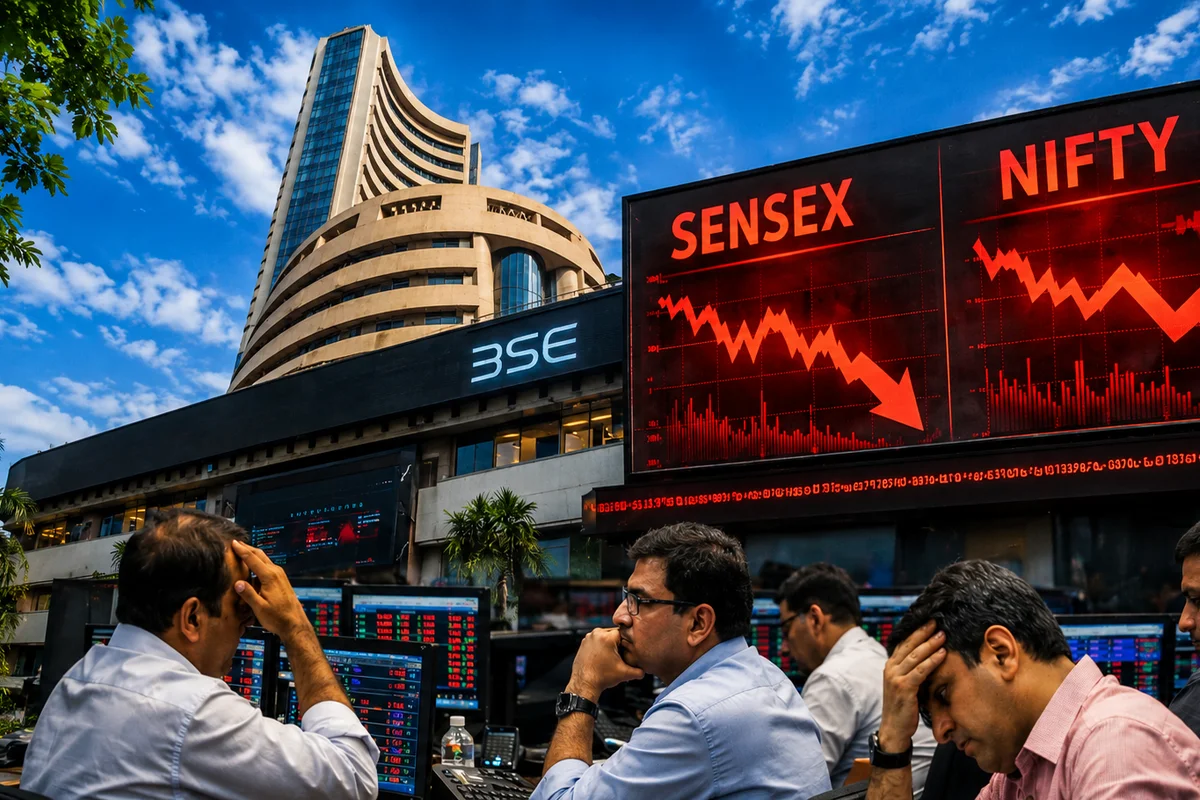
Indian stock markets fell on August 31, 2026, as renewed West Asia tensions pushed crude oil prices higher.

Indian stock market today saw sharp movements across key sectors, with major gainers and losers driving notable volatility on the NSE.