Loading market data...
Tue, 20 Oct 2026
03:28:29 pm
Tue, 20 Oct 2026
03:28:29 pm

Rudransh Sangwan
Published at: October 9, 2026, 6:36 AM
Synopsis
Sensex climbed 854 points and Nifty gained 284 as IT stocks supported the rebound. Check the role of crude oil, global tensions and key market levels.
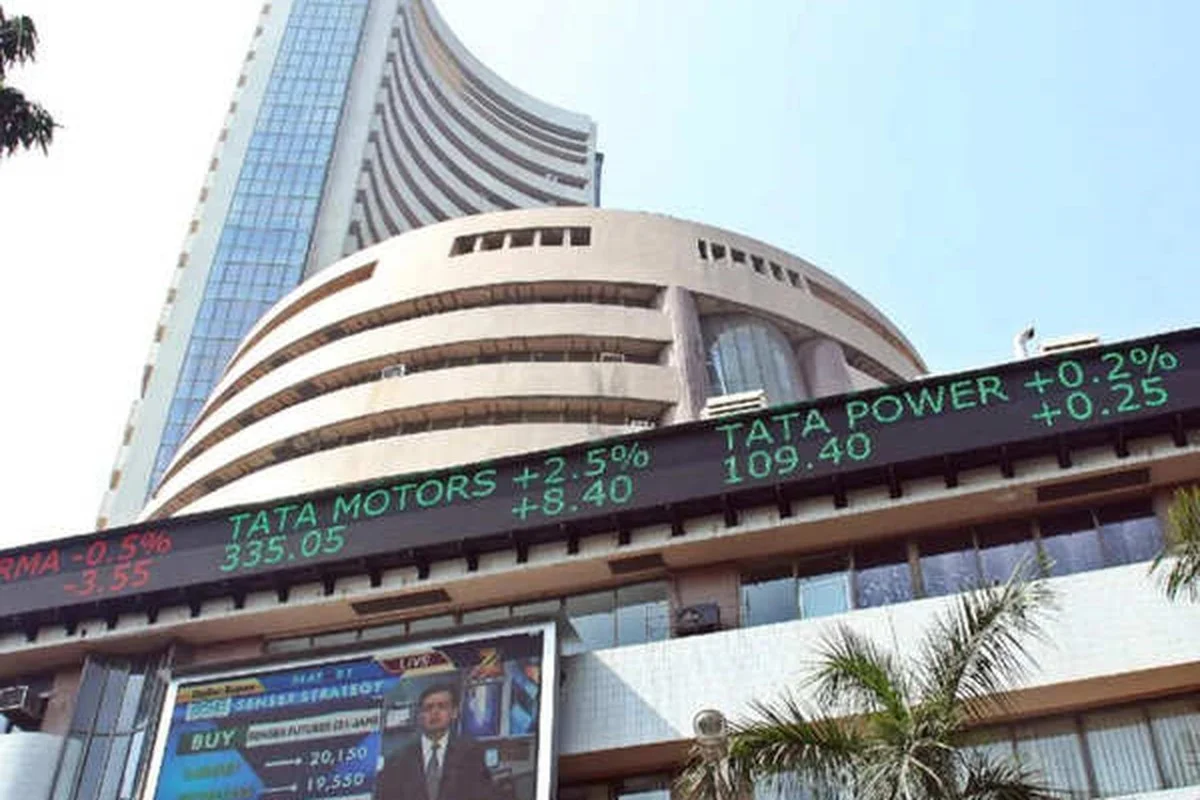
The Sensex and Nifty recovered on Friday, October 9, after oil prices eased and US President Donald Trump signalled a pause in potential military strikes against Iran. The Sensex rose as much as 854 points to 72,447.61, while the Nifty 50 gained 284 points to 22,515.95 during intraday trade.
The recovery followed Thursday's sharp sell off, which had wiped out more than Rs 10 lakh crore in investor wealth. The rebound added more than Rs 3 lakh crore to the combined market capitalisation of companies listed on the BSE by 10:30 am on Friday.
Information technology stocks led the recovery after Tata Consultancy Services (TCS) reported higher profit and revenue for the September quarter of FY27. Easing crude oil prices and hopes of reduced military escalation in the Middle East also supported sentiment, although continued geopolitical uncertainty and foreign investor selling remained concerns.
Buying across technology, banking and consumer stocks helped the benchmark indices recover part of their recent losses. TCS, Infosys, HCL Technologies and Tech Mahindra rose by as much as 5% during the session. Gains extended to ITC, Adani Ports, HDFC Bank, Power Grid, Bajaj Finserv, Tata Steel, Trent, State Bank of India, Maruti Suzuki and Kotak Mahindra Bank, with several of these stocks advancing by up to 3%.
The Nifty IT index rose more than 3%, making it the strongest performing sectoral index in the session. FMCG, PSU Bank, Private Bank, Realty and Financial Services indices also gained more than 1% each. However, the recovery was uneven. Bharat Electronics (BEL) and Reliance Industries were among the notable laggards, falling by as much as 1%. The negative market breadth suggested that the rise in the headline indices did not reflect a broad recovery across all listed shares.
| Market indicator | Level or change |
|---|---|
| Sensex intraday high | 72,447.61 |
| Sensex intraday gain | 854 points |
| Nifty 50 intraday high | 22,515.95 |
| Nifty 50 intraday gain | 284 points |
| Increase in BSE listed companies' market value | More than Rs 3 lakh crore |
| Previous session's investor wealth loss | More than Rs 10 lakh crore |
| Nifty IT index gain | More than 3% |
TCS was a major driver of the technology sector's recovery after reporting a 15% year on year rise in consolidated net profit for the September quarter of FY27. Net profit increased to Rs 13,884 crore from Rs 12,075 crore in the same quarter a year earlier. Revenue rose 11% to Rs 73,188 crore.
The results supported buying across other large technology services companies. Infosys, HCL Technologies and Tech Mahindra also advanced, with gains of up to 4% during the session. The movement suggested that investors were responding to the earnings update and the sector's business outlook.
Technology stocks continued to face concerns over US immigration policy. Trump reiterated his push for a $100,000 fee for H 1B non immigrant visas, a potential cost concern for technology services companies that depend on skilled workers moving across borders. However, investors appeared to focus on quarterly earnings and the business potential of artificial intelligence (AI), which has become an important area of work for Indian IT services firms.
The broader technology sector's performance will depend on whether revenue growth can be sustained and whether companies can manage labour costs and changes in client spending. TCS's results provided support to market sentiment during Friday's session, but one company's quarterly performance does not establish the outlook for the entire sector.
Oil prices fell on Friday as traders assessed the possibility of reduced military escalation in the Middle East. Brent crude futures dropped 72 cents, or 0.7%, to $103.53 a barrel, while US West Texas Intermediate (WTI) crude futures fell 52 cents, or 0.6%, to $90.97 a barrel by 0220 GMT.
The fall followed an increase of about 4% in Brent crude on Thursday, driven by attacks on shipping transporting oil from the Middle East. Despite the latest pullback, Brent remained on course for a weekly gain, reflecting continuing concerns about supply disruptions.
Crude prices matter to India because the country relies heavily on imported oil. Sustained high prices can increase the import bill, put pressure on the rupee and add to inflation risks. Lower prices can ease some of that pressure, but Brent crude above $100 a barrel still leaves India exposed to changes in global energy costs.
The relationship between oil and equities has also been visible in recent market sessions. The earlier Sensex and Nifty decline as crude neared $100 highlighted concerns about rising energy prices. Friday's recovery showed how a change in oil prices and geopolitical expectations can affect sentiment across the domestic market.
Trump's comments on Iran helped ease immediate fears of further military escalation. In a social media post, the US president referred to "productive discussions" with Tehran and said crude oil was flowing through the Strait of Hormuz in record amounts. He also indicated that the US would avoid launching fresh strikes against Iran before next month's US elections.
However, the risks to energy supplies remained. Trump said the US naval blockade of Iranian ports would continue, while Tehran intensified attacks in the strategic waterway. The possibility of further disruption to commercial shipping and crude supplies therefore remained a concern for global markets.
Plans for potential US military strikes targeting Iranian drone and missile arsenals, energy infrastructure and other sites added to the uncertainty. The immediate easing in market concerns did not establish that the conflict had reached a lasting resolution. Any renewed escalation could push oil prices higher and put pressure on risk sensitive assets, including Indian equities.
For domestic investors, developments in the Middle East remain closely linked to crude prices, currency movements and expectations for inflation. The market's response will depend on whether lower oil prices persist and whether the risk of supply disruptions continues to ease.
The Indian rupee strengthened by 23 paise to 96.65 against the US dollar in early trade on Friday. A weaker dollar and possible intervention by the Reserve Bank of India supported the currency.
Jateen Trivedi, vice president and research analyst for commodity and currency at LKP Securities, said elevated global bond yields were keeping foreign institutional investor flows subdued and adding pressure to the rupee. He expected a possible modest recovery if crude prices remained under control and projected a trading range of 96.45 to 97.00.
Global bond yields also eased from recent multi year highs. The US 30 year Treasury yield slipped below 5.6%, while the 10 year yield fell to 5.2% and the two year yield declined to 4.75%.
High US bond yields can make fixed income investments more attractive relative to equities. This can reduce demand for emerging market stocks and put pressure on foreign fund flows into India. The recent retreat in yields offered some relief, but currency stability and overseas investor activity remain important factors for the domestic market.
The broader relationship between overseas markets and Indian benchmarks is explained in WeloMoney's guide to US market movements and Indian indices. Changes in global interest rates can affect investor appetite for equities, while movements in the dollar and crude prices influence India's market outlook.
Shrikant Chouhan, head of equity research at Kotak Neo, identified near term support and resistance levels for both benchmarks. These levels indicate price areas traders may monitor to assess whether the recovery continues or selling pressure returns.
| Index | Immediate support | Immediate resistance | Upside level if resistance breaks |
|---|---|---|---|
| Nifty 50 | 22,200 to 22,150 | 22,300 to 22,400 | 22,500 |
| Sensex | 71,500 to 71,300 | 71,800 to 72,100 | 72,500 |
Chouhan said a decisive break below the immediate support zones could increase selling pressure. In that situation, the Nifty could move towards 22,000 to 21,750, while the Sensex could fall towards 70,800 to 70,000. On the other hand, a sustained move above resistance could support a further intraday recovery towards 22,500 on the Nifty and 72,500 on the Sensex.
These levels are technical assessments from the analyst, not guaranteed price targets. Market movements could change as fresh information emerges on crude oil, geopolitical developments and global bond yields.
Friday's rebound was supported by three developments: easing crude prices, reduced immediate fears of military escalation and stronger sentiment following TCS's quarterly results. The retreat in US bond yields and the rupee's early gains also offered some relief.
However, the risks facing Indian equities had not disappeared. Crude oil remained above $100 a barrel, global interest rates were still elevated and concerns about foreign institutional investor selling continued. The negative market breadth also showed that gains in the benchmark indices did not translate into advances across every part of the market.
V K Vijayakumar, chief investment strategist at Geojit Investments, said elevated crude prices and US bond yields were creating pressure on Indian equities. He described the near term market structure as a "sell on rally" environment and said foreign institutional investors had continued selling, including in large established companies.
Vijayakumar also said market corrections could create opportunities for long term investors to accumulate high quality stocks at more attractive valuations. This was his assessment of the market's risk and return profile, rather than a confirmed indication that prices had reached a bottom.
The next phase of trading will depend on whether the recovery holds and whether the factors that supported Friday's gains continue. Market participants will be watching:
A sustained fall in crude prices could reduce some of the pressure on India's import bill and inflation outlook. Renewed geopolitical tensions or a rise in global bond yields could have the opposite effect. The next market sessions will show whether Friday's recovery develops into a broader rebound or remains a temporary pause after Thursday's steep losses.
The Indian stock market rose on October 9 as crude oil prices eased, fears of immediate military escalation between the US and Iran reduced, and IT stocks gained after TCS reported stronger quarterly results. The Sensex rose as much as 854 points, while the Nifty 50 gained 284 points during intraday trade.
The Sensex reached an intraday high of 72,447.61, gaining 854 points, while the Nifty 50 reached 22,515.95, rising 284 points. The gains followed a sharp sell off on Thursday that erased more than Rs 10 lakh crore in investor wealth.
IT stocks rose after TCS reported a 15% year on year increase in consolidated net profit to Rs 13,884 crore for the September quarter of FY27. TCS revenue rose 11% to Rs 73,188 crore, helping lift sentiment across Infosys, HCL Technologies and Tech Mahindra.
Higher crude oil prices can increase India's import bill, pressure the rupee and add to inflation risks because India relies heavily on imported oil. Brent crude fell 0.7% to $103.53 a barrel on Friday, providing some relief, although prices remained elevated.
The immediate support zones identified by Kotak Neo's Shrikant Chouhan were 22,200 to 22,150 for the Nifty and 71,500 to 71,300 for the Sensex. He identified resistance at 22,300 to 22,400 for the Nifty and 71,800 to 72,100 for the Sensex.
The recovery could continue if crude oil prices remain under control, global bond yields ease and corporate earnings support sentiment. However, geopolitical uncertainty and foreign investor selling remain risks, and the market's next direction will depend on whether the benchmarks sustain their gains.
Financial journalist specializing in market analysis, stock research, and investment trends. Dedicated to providing accurate, timely insights for informed decision-making.
Credentials: Experienced financial journalist with expertise in equity markets and economic analysis
The information provided in this article is for educational and informational purposes only and should not be construed as financial, investment, or legal advice. welomoney does not provide personalized investment recommendations.
For detailed terms and conditions, please read our Disclaimer and Terms of Service.

Diwali Muhurat Trading 2026 is scheduled for November 8 from 2:20 PM to 3:30 PM. See NSE and BSE timings, pre-open session and market schedule.

Sugar stocks fell up to 5.79% after the government barred sugarcane juice and syrup for FY27 ethanol procurement. Analysts flag earnings pressure.

NSE indices on October 16, 2026: Nifty IT rises 3.12%, Nifty 50 gains 0.49%, while Nifty FMCG, Capital Market and Bank indices decline.
India-US trade deal could influence Sensex, Nifty 50 and export stocks. Explore five sectors to watch and the key factors investors should track.

India agricultural growth may approach zero as El Niño threatens crops, with output potentially falling 4%.