Loading market data...
Tue, 20 Oct 2026
03:32:01 pm
Tue, 20 Oct 2026
03:32:01 pm

Rudransh Sangwan
Published at: October 15, 2026, 6:23 PM
Synopsis
India-US trade deal could influence Sensex, Nifty 50 and export stocks. Explore five sectors to watch and the key factors investors should track.
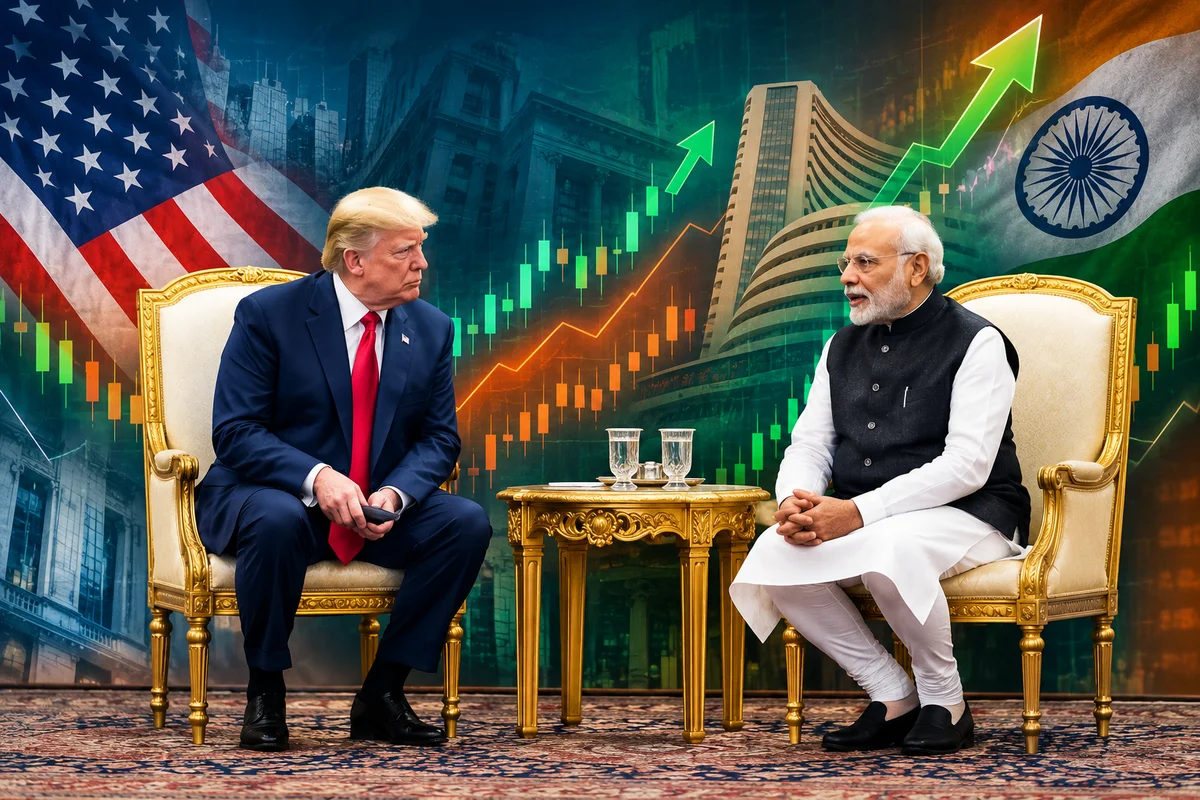
India and the US have finalised the first phase of their proposed trade deal, with legal drafting and final review underway. The agreement could support export stocks, but its impact will depend on the final tariff terms and implementation date.
Commerce Minister Piyush Goyal said on October 15 that implementation would depend on India gaining a competitive advantage over rival exporters.
The announcement could improve sentiment towards Indian exporters, but it does not guarantee a sustained rise in the Sensex or Nifty 50.
Companies with significant US exposure could benefit if the deal lowers trade costs or improves access to American buyers. The broader market will also depend on corporate earnings, foreign investor flows, crude oil prices and global sentiment.
| Sector | Potential impact | What investors should watch |
|---|---|---|
| Textiles and apparel | Better price competitiveness for eligible exports | Export orders and margins |
| Pharmaceuticals | Greater clarity on trade rules | US sales and final tariff terms |
| Chemicals | Improved access for eligible products | Export growth and input costs |
| Engineering goods | Potential gains from better market access | Order books and US demand |
| Gems and jewellery | Possible benefits from preferential tariffs | Export growth and costs |
The February 2026 US India joint statement outlined proposed tariff arrangements. These should not be treated as confirmed benefits for every product.
The agreement is still undergoing legal drafting and review. Investors need clarity on eligible products, tariff changes, rules of origin and the implementation timeline.
Better market access will not automatically increase profits. Exporters must turn the opportunity into higher sales, larger orders or improved margins.
India's merchandise exports to the US rose 11.1% to $50.81 billion in April to September 2026, while imports increased 26% to $32.33 billion, according to figures reported by Open Magazine on October 15. These figures show the scale of bilateral trade but do not establish that the proposed deal caused the growth.
Investors should track the final agreement, tariff schedules, implementation date and company updates on US orders.
The trade deal could support sentiment towards export stocks, but a lasting impact on Sensex and Nifty will depend on confirmed benefits and stronger business performance.
The deal could support sentiment towards eligible export-oriented companies. Its actual market impact will depend on the final tariff terms, implementation and company earnings.
A sustained rise is not guaranteed. Sensex and Nifty will also depend on earnings, foreign investor flows, crude oil prices and global market conditions.
Textiles, pharmaceuticals, chemicals, engineering goods, and gems and jewellery could benefit if their products receive favourable treatment under the final agreement.
Export-oriented companies with significant US exposure could benefit. Investors should check company disclosures, eligible products, export growth and operating margins before assessing individual stocks.
As of October 15, 2026, the first phase had been finalised and was undergoing legal drafting and review. Final implementation terms remain important.
The impact could be limited if tariff concessions are narrow, implementation is delayed or exporters cannot convert better market access into higher sales and profits.
Investors should monitor the final tariff schedule, eligible products, implementation date, export orders, company margins and US revenue growth.
The official US-India joint statement outlines the proposed trade framework.
Financial journalist specializing in market analysis, stock research, and investment trends. Dedicated to providing accurate, timely insights for informed decision-making.
Credentials: Experienced financial journalist with expertise in equity markets and economic analysis
The information provided in this article is for educational and informational purposes only and should not be construed as financial, investment, or legal advice. welomoney does not provide personalized investment recommendations.
For detailed terms and conditions, please read our Disclaimer and Terms of Service.

Diwali Muhurat Trading 2026 is scheduled for November 8 from 2:20 PM to 3:30 PM. See NSE and BSE timings, pre-open session and market schedule.

Sugar stocks fell up to 5.79% after the government barred sugarcane juice and syrup for FY27 ethanol procurement. Analysts flag earnings pressure.

NSE indices on October 16, 2026: Nifty IT rises 3.12%, Nifty 50 gains 0.49%, while Nifty FMCG, Capital Market and Bank indices decline.

India agricultural growth may approach zero as El Niño threatens crops, with output potentially falling 4%.

Indian IT stocks rose as TCS and HCLTech gained on the AI spending outlook. See Accenture's guidance, technical levels and FPI flows.