Loading market data...
Tue, 20 Oct 2026
03:27:58 pm
Tue, 20 Oct 2026
03:27:58 pm

Rudransh Sangwan
Published at: October 13, 2026, 5:08 AM
Synopsis
The IMF expects India's growth to hold at 7% in FY28, while inflation is forecast at 5% and the current account deficit at 1.5% of GDP in FY27.
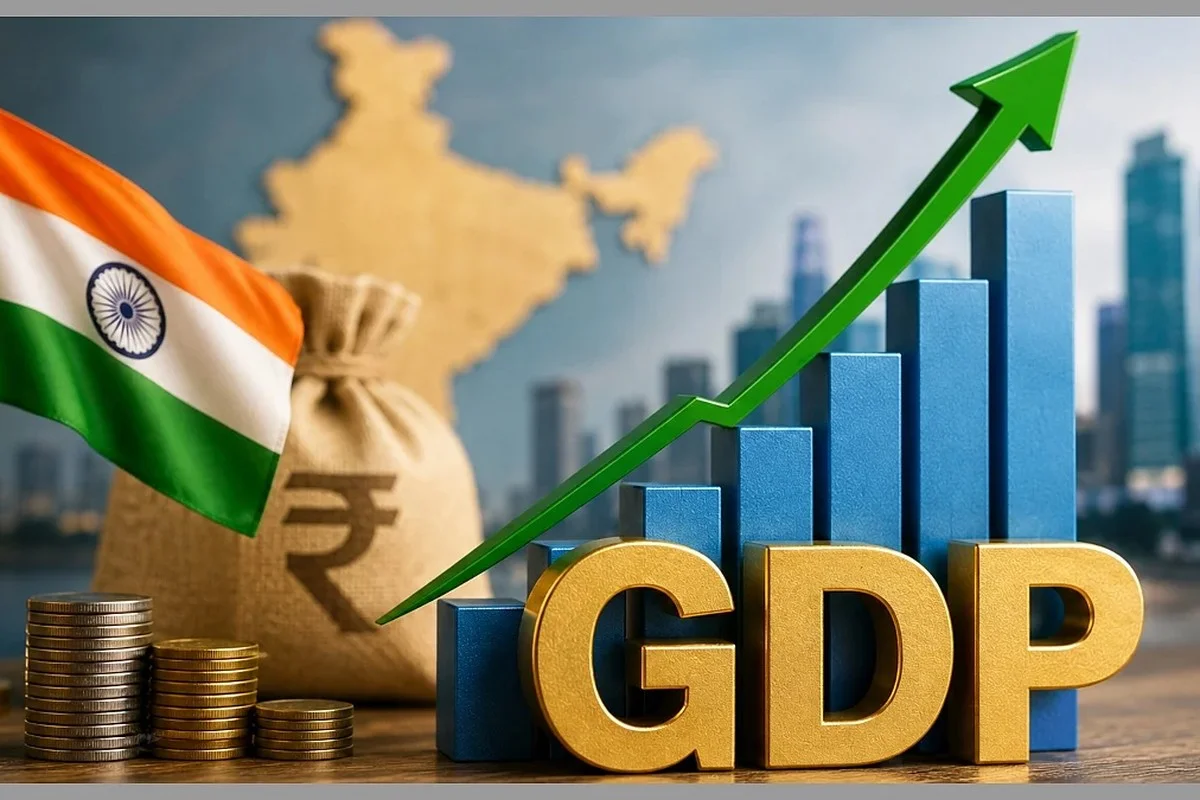
The International Monetary Fund (IMF) has raised India's GDP growth forecast for the financial year 2026 to 2027 by 0.6 percentage point to 7% in its October World Economic Outlook. The revision reflects stronger expectations for India's domestic demand and services sector, even as higher oil prices pose risks to economic growth.
The IMF has also raised its growth projection for FY28 by 0.3 percentage point to 7%. The revised estimates place India on a stronger growth path than several major economies, including China, whose 2026 growth forecast has been cut to 4.5%.
The improved outlook follows the Reserve Bank of India's (RBI) decision to raise its GDP growth estimate for the current financial year to 7.1%. However, higher inflation and a widening current account deficit remain concerns for India's economic outlook.
The IMF expects India's economy to grow by 7% in both FY27 and FY28, following an estimated growth rate of 7.8% in FY26. The upward revision for FY27 suggests that the IMF expects domestic economic activity to remain strong despite pressure from higher energy costs and uncertainty in the global economy.
The latest projections also reflect a change in expectations for India's growth trajectory. The IMF's revised estimates point to a slower pace of expansion after FY26, but the economy is still projected to grow at a rate of 7% over the following two financial years.
| Financial year | India's GDP growth forecast |
|---|---|
| FY26 | 7.8% |
| FY27 | 7.0% |
| FY28 | 7.0% |
The IMF's revised FY27 estimate is 0.6 percentage point higher than its previous projection. Its FY28 estimate has increased by 0.3 percentage point. These changes indicate a stronger outlook than the fund had previously expected, although the projections remain subject to changes in global energy prices and economic conditions.
Strong domestic consumption and continued activity in the services sector are among the main factors supporting India's growth outlook. Domestic spending provides demand for goods and services within the country, while services activity supports economic output across a range of industries.
India's large domestic market and demographic profile also support its medium term growth prospects. Ongoing structural reforms are another factor identified in the IMF's assessment. Together, these conditions are expected to help sustain economic expansion over the coming years.
However, the outlook faces external pressure. Higher oil prices can increase India's import bill and raise costs for businesses and households. Energy costs can also feed into broader inflation, making it harder to maintain strong growth without additional price pressure.
India's revised growth projections also follow a series of changes in domestic economic forecasts. Readers tracking the outlook can compare the IMF's latest assessment with earlier India GDP growth forecasts from other institutions to understand how expectations have changed.
The IMF expects the global economy to grow more slowly in 2026 than it did in 2025. Global growth is projected to ease to 3.1% in 2026 from 3.5% in 2025, before recovering to 3.4% in 2027. Higher energy prices and differences in how countries benefit from technological developments are contributing to varied growth expectations.
China's outlook is weaker than India's. The IMF expects China's economy to grow by 4.5% in 2026 and 4% in 2027, compared with growth of 5% in 2025. Higher oil prices, subdued domestic demand and structural pressures are weighing on China's projections.
| Economy | 2025 growth | 2026 growth forecast | 2027 growth forecast |
|---|---|---|---|
| India, FY26 to FY28 | 7.8% in FY26 | 7.0% in FY27 | 7.0% in FY28 |
| China | 5.0% | 4.5% | 4.0% |
| Global economy | 3.5% | 3.1% | 3.4% |
India's figures are for financial years, while China's and global figures are for calendar years. The periods are therefore not directly comparable. Still, the forecasts show that India is expected to maintain a higher growth rate than the global economy and China over the periods covered.
The difference matters for emerging economies facing higher energy costs. Countries that rely heavily on imported energy can experience pressure on growth when oil prices rise. India's improved forecast suggests that domestic demand and services activity are expected to help offset some of these pressures.
The stronger growth forecast comes alongside expectations of higher inflation. The IMF projects India's consumer price inflation to average 5% in FY27, compared with 2% in FY26. Inflation is then expected to ease to 4.4% in FY28.
The September inflation reading was reported at 5.5%, the highest under the new series. The IMF's FY27 inflation projection is slightly below the RBI's estimate of 5.2%, although the two estimates remain forecasts and can change as economic conditions evolve. Higher oil and commodity prices remain a risk because they can raise domestic costs.
India's current account deficit is also expected to widen. The IMF projects the deficit at 1.5% of GDP in FY27, up from 0.7% in FY26, before narrowing to 1.3% in FY28.
| Indicator | FY26 | FY27 forecast | FY28 forecast |
|---|---|---|---|
| GDP growth | 7.8% | 7.0% | 7.0% |
| Average consumer inflation | 2.0% | 5.0% | 4.4% |
| Current account deficit as a share of GDP | 0.7% | 1.5% | 1.3% |
A wider current account deficit means the gap between the country's external payments and receipts is expected to increase relative to the size of its economy. Higher energy import costs can add to this pressure. The projected rise in inflation and the deficit therefore remain important considerations alongside the improved growth outlook.
The RBI's own growth and inflation estimates provide another point of comparison. Its policy outlook and the IMF's projections can differ because of their assumptions and assessment periods. Readers can review the earlier RBI growth and inflation outlook alongside the latest IMF estimates.
India's growth forecast depends on whether domestic demand and services activity remain strong enough to offset external risks. Oil supply disruptions, renewed trade tensions and tighter financial conditions could weigh on economic activity across countries. For India, sustained increases in energy costs could also affect inflation and the external balance.
The IMF's projections point to a combination of strong expected growth and rising economic pressures. Growth is forecast to remain at 7% in FY27 and FY28, while average inflation is expected to rise in FY27 before easing the following year. The current account deficit is also projected to increase in FY27.
The next developments to watch include changes in global oil prices, India's inflation readings and updates to growth estimates from the IMF and RBI. These indicators will help show whether the current growth projections remain on track as the global economy faces energy and trade related uncertainty.
The IMF forecasts India's GDP growth at 7% in FY27. This is an upward revision of 0.6 percentage point from its earlier estimate. The IMF expects growth to remain at 7% in FY28 after estimating growth of 7.8% in FY26.
The IMF's improved outlook reflects strong domestic consumption and continued activity in the services sector. India's large domestic market, demographic profile and structural reforms also support its medium term growth prospects. Higher oil prices remain a risk to this outlook.
The IMF projects India's GDP growth at 7% in FY28. The forecast is 0.3 percentage point higher than its previous estimate. The projection assumes that the economy can maintain growth despite external economic pressures.
The IMF forecasts China's economy to grow by 4.5% in 2026, down from 5% in 2025. Growth is projected to ease further to 4% in 2027. Higher oil prices, subdued domestic demand and structural pressures weigh on the outlook.
The IMF expects India's average consumer inflation to reach 5% in FY27, compared with 2% in FY26. It projects inflation to ease to 4.4% in FY28. The FY27 estimate is slightly below the RBI's forecast of 5.2%.
The IMF projects India's current account deficit at 1.5% of GDP in FY27, compared with 0.7% in FY26. The deficit is forecast to narrow to 1.3% of GDP in FY28. Higher energy import costs are among the external pressures facing the economy.
Financial journalist specializing in market analysis, stock research, and investment trends. Dedicated to providing accurate, timely insights for informed decision-making.
Credentials: Experienced financial journalist with expertise in equity markets and economic analysis
The information provided in this article is for educational and informational purposes only and should not be construed as financial, investment, or legal advice. welomoney does not provide personalized investment recommendations.
For detailed terms and conditions, please read our Disclaimer and Terms of Service.

Diwali Muhurat Trading 2026 is scheduled for November 8 from 2:20 PM to 3:30 PM. See NSE and BSE timings, pre-open session and market schedule.
Sugar stocks fell up to 5.79% after the government barred sugarcane juice and syrup for FY27 ethanol procurement. Analysts flag earnings pressure.
NSE indices on October 16, 2026: Nifty IT rises 3.12%, Nifty 50 gains 0.49%, while Nifty FMCG, Capital Market and Bank indices decline.
India-US trade deal could influence Sensex, Nifty 50 and export stocks. Explore five sectors to watch and the key factors investors should track.
India agricultural growth may approach zero as El Niño threatens crops, with output potentially falling 4%.