Loading market data...
Tue, 20 Oct 2026
03:29:48 pm
Tue, 20 Oct 2026
03:29:48 pm

Rudransh Sangwan
Published at: October 16, 2026, 7:45 AM
Synopsis
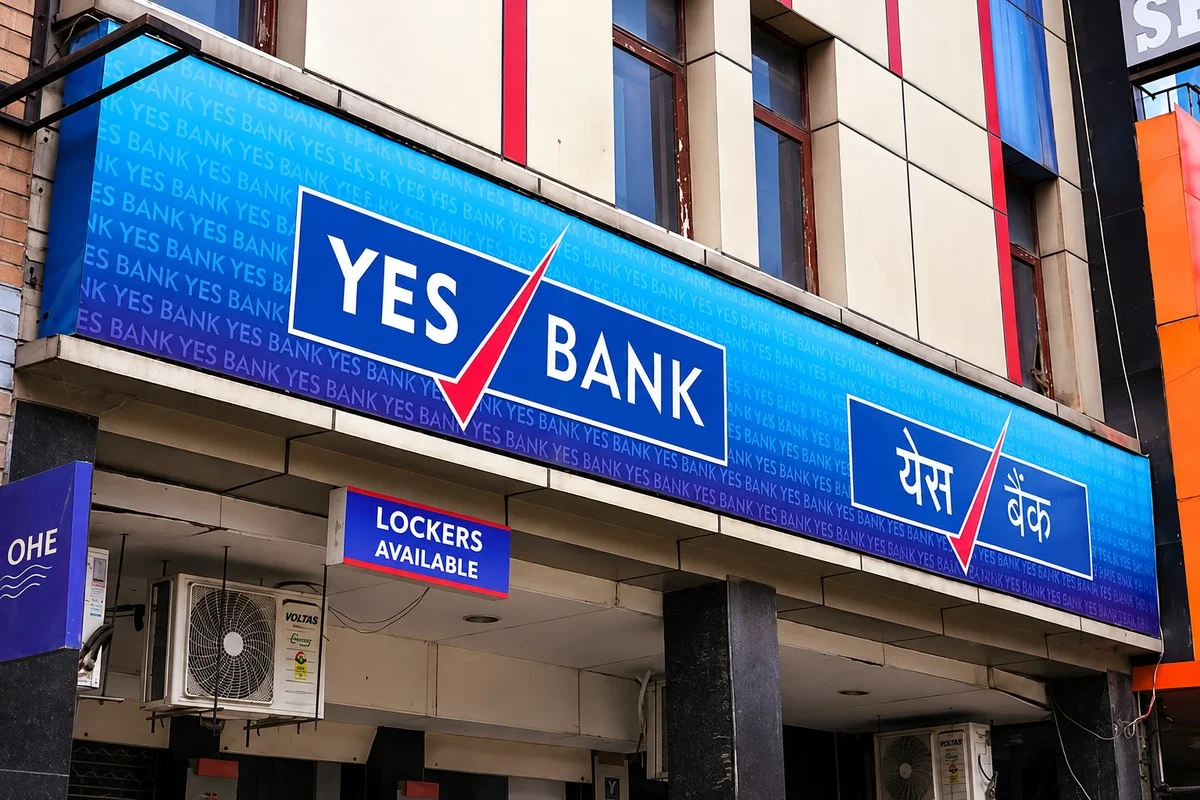
Yes Bank's AT1 bond verdict puts capital buffers under scrutiny as Citi cuts its target price to Rs 17.50. See Morgan Stanley's view and the estimated capital impact.
The short version
Yes Bank faces renewed capital concerns after the Supreme Court upheld the Bombay High Court's decision to quash the write off of Rs 8,415 crore in Additional Tier 1 (AT1) bonds issued by the lender. The ruling has prompted brokerages to reassess the bank's capital position and the possible cost of restoring the bonds.
Loading chart...
Citi lowered its target price for Yes Bank from Rs 22 to Rs 17.50, retaining its Sell rating. Morgan Stanley kept its Underweight rating and a target price of Rs 17. Both brokerages flagged potential pressure on the bank's core equity capital, although the final financial impact remains uncertain.
Yes Bank shares hit the lower circuit in the trading session following the verdict, falling as much as 20% to Rs 16.96. The market reaction came as investors assessed whether the court decision could lead to a liability, a reduction in capital ratios or a fresh capital raising exercise.
Citi expects the reversal of the AT1 bond write off to put pressure on Yes Bank's capital position. Its revised target price of Rs 17.50 reflects concerns that the bank may have to account for the liability and replenish its capital buffers.
Citi estimates that the impact could reduce Yes Bank's Common Equity Tier 1 (CET1) capital ratio by 250 basis points, taking it to 11.5%. The estimate considers the principal amount of the bonds and assumes that coupon payments are discretionary and non cumulative.
The brokerage also expects the potential liability to reduce the bank's book value by 13% to 14%. A fall of this scale could leave Yes Bank needing additional capital to restore its financial buffers. However, the eventual effect will depend on how the court ruling is implemented and how the outstanding bonds are treated.
| Citi's assessment | Estimate |
|---|---|
| Previous target price | Rs 22 |
| Revised target price | Rs 17.50 |
| Rating | Sell |
| Potential CET1 ratio reduction | 250 basis points |
| Estimated CET1 ratio after impact | 11.5% |
| Potential book value reduction | 13% to 14% |
Citi's assessment is based on a possible financial outcome rather than a confirmed capital charge. The amount Yes Bank may eventually have to recognise remains subject to further clarity on the judgment and the bonds.
Morgan Stanley has kept its target price for Yes Bank at Rs 17 and retained its Underweight rating. The brokerage described the Supreme Court decision as negative for the lender but said the eventual impact would depend on how much of the AT1 bonds could be written off under the final interpretation of the ruling.
Morgan Stanley estimates a post tax amount of Rs 6,300 crore, equivalent to around 12% of Yes Bank's net worth. It also estimates that the bank's CET1 ratio could fall by about 190 basis points from its current level of 14%.
| Morgan Stanley's assessment | Estimate |
|---|---|
| Target price | Rs 17 |
| Rating | Underweight |
| Estimated post tax amount | Rs 6,300 crore |
| Estimated share of net worth | 12% |
| Current CET1 ratio cited | 14% |
| Potential CET1 ratio reduction | 190 basis points |
The brokerage is also watching whether Yes Bank or other parties seek a review of the judgment. Another question is whether the decision changes the way AT1 bonds can absorb losses or whether it primarily concerns the process followed during Yes Bank's reconstruction in 2020.
The distinction matters because AT1 bonds are designed to absorb losses under specified conditions. The financial effect of the verdict will depend on the extent to which those conditions can be applied following the court's decision.
The Supreme Court dismissed appeals filed by Yes Bank, the Reserve Bank of India (RBI) and the Centre against the Bombay High Court's judgment dated January 20, 2023. That judgment had quashed the write off of Rs 8,415 crore in AT1 bonds during the bank's reconstruction in March 2020.
Yes Bank was facing a severe financial crisis in 2020, with rising bad loans and falling depositor confidence. The RBI superseded the bank's board and imposed a moratorium. The government subsequently approved a reconstruction scheme backed by a capital infusion from a consortium led by the State Bank of India.
During the reconstruction, the bank's administrator wrote off AT1 bonds issued in 2016 and 2017, reducing their value to zero. The decision wiped out the investments of institutional and retail bondholders, who challenged the move in court.
Bondholders argued that the final reconstruction scheme did not authorise the write off, even though the draft scheme had included such a provision. The Bombay High Court accepted their argument and set aside the administrator's decision, finding that the write off appeared to exceed the authority available under the final scheme.
By declining to interfere with that judgment, the Supreme Court left the High Court's decision intact. The verdict resolves the challenge to the earlier ruling, but questions remain about the practical steps required to implement it and the resulting financial treatment.
For shareholders, the main concern is how the judgment affects core equity capital and whether Yes Bank will need to raise fresh funds. A capital raise could help restore the bank's buffers, but its size, timing and structure have not been established in the supplied details.
Yes Bank had previously said that any financial liability arising from the verdict would be recognised in the relevant future reporting period. The bank had also said it did not expect a material financial impact.
That position needs to be considered alongside the brokerages' estimates. Citi's projected 250 basis point reduction in CET1 and Morgan Stanley's estimate of a 190 basis point reduction are analytical assessments, not confirmed changes in the bank's reported capital ratios.
CET1 capital consists mainly of common equity and retained earnings, after applicable regulatory deductions. It is an important measure of a bank's ability to absorb losses. AT1 capital is a separate category of regulatory capital that can absorb losses under specified conditions.
After the 2023 High Court ruling, former Yes Bank chief executive Prashant Kumar had said that restoring the bonds would not affect total capital adequacy. He also said that, in an extreme scenario, CET1 capital could fall while AT1 capital increased.
The distinction helps explain why a change in the treatment of AT1 bonds could affect individual capital components differently. The final outcome will depend on the accounting and regulatory treatment of any liability arising from the judgment.
Investors tracking the bank's operating performance can also refer to its quarterly profit and net interest income figures. Those results provide a separate view of earnings and asset quality, while the court ruling raises questions about capital and legal liabilities.
The decision may have implications for other Indian banks that issue AT1 bonds. During the Supreme Court proceedings, the Centre argued that nearly Rs 1 lakh crore of AT1 bonds were outstanding across Indian banks. It warned that an adverse ruling could weaken confidence in these instruments and complicate future bank rescues.
AT1 bonds are perpetual, unsecured instruments used by banks to meet regulatory capital requirements. They generally carry more risk than conventional bonds because they can absorb losses through a write down or conversion into equity under specified conditions.
Their loss absorption mechanism is one reason they matter during a bank's financial crisis. Investors in these instruments may face substantial losses when the relevant contractual and regulatory conditions are triggered.
The dispute involving Yes Bank centred on whether the administrator had followed the applicable legal process when the bonds were written off during reconstruction. Bondholders challenged the authority for the decision, while the authorities sought to defend the original action.
The Supreme Court's decision leaves the High Court judgment in place. Its wider effect will depend on how the ruling is implemented and whether it changes the treatment of AT1 instruments in future bank resolutions.
The issue also connects with wider developments affecting Indian banking stocks, including changes in investor expectations around earnings, risk and regulatory decisions. WeloMoney has covered other bank specific concerns in its report on Bank of Baroda's share price and brokerage target changes.
The next stage will depend on further clarification of the judgment and the steps taken by Yes Bank and the authorities. The following developments will help establish the actual financial impact:
Citi's Rs 17.50 target and Morgan Stanley's Rs 17 target reflect their assessments of the risks following the verdict. The actual financial outcome may differ from these estimates once the implementation details become clearer.
The Supreme Court upheld the Bombay High Court's decision to quash Yes Bank's Rs 8,415 crore AT1 bond write off. The bonds had been written down to zero during the bank's reconstruction in March 2020. The financial and operational steps required to implement the judgment remain subject to further clarity.
Citi cut its target price for Yes Bank to Rs 17.50 from Rs 22 and retained its Sell rating. The brokerage estimates that the reversal of the bond write off could reduce the bank's CET1 ratio by 250 basis points to 11.5%. It also warned that a capital raise may be needed.
Morgan Stanley retained its Rs 17 target price and Underweight rating for Yes Bank. It estimates that a post tax amount of Rs 6,300 crore would equal around 12% of the bank's net worth. The brokerage estimates a possible 190 basis point reduction in the CET1 ratio from 14%.
Yes Bank could need fresh capital if the financial impact of the AT1 bond ruling reduces its capital buffers. Citi estimates a potential 13% to 14% reduction in book value and a 250 basis point fall in the CET1 ratio. The actual requirement will depend on the final treatment of the outstanding bonds.
AT1 bonds are perpetual, unsecured debt instruments that banks use to strengthen regulatory capital. They can absorb losses through a write down or conversion into equity under specified conditions. The Yes Bank case concerns the legality of the process used to write off Rs 8,415 crore of these bonds during the bank's 2020 reconstruction.
Investors should watch for any review petition, clarification from Yes Bank and details of how the outstanding AT1 bonds will be treated. The bank's reported CET1 ratio, any liability recognised in its accounts and a possible capital raise will help establish the financial impact. The timing and size of any capital requirement have not been confirmed.
Financial journalist specializing in market analysis, stock research, and investment trends. Dedicated to providing accurate, timely insights for informed decision-making.
Credentials: Experienced financial journalist with expertise in equity markets and economic analysis
The information provided in this article is for educational and informational purposes only and should not be construed as financial, investment, or legal advice. welomoney does not provide personalized investment recommendations.
For detailed terms and conditions, please read our Disclaimer and Terms of Service.

L&T has begun preliminary work on the New Tashkent International Airport project after receiving a limited notice to proceed.

DLF share price has 41% upside, according to HSBC’s target. Compare Jefferies, CLSA and other broker views on sales, cash flow and valuations.
Divi's Laboratories shares rose 1.01% to Rs 9,242.50 after a positive EU opinion on Eli Lilly's weight loss drug Foundayo. See the growth outlook.

Awfis revenue target exceeds Rs 1,800 crore for FY27, with flexible workspace demand supporting growth. Expansion and execution remain key to watch.

L&T has won a contract worth over Rs 15,000 crore. The client, project scope and execution timeline remain undisclosed, leaving its revenue impact...