Loading market data...
Tue, 28 Jul 2026
11:19:51 am
Tue, 28 Jul 2026
11:19:51 am

Rudransh Sangwan
Published at: April 28, 2026, 3:48 AM
Synopsis
The Bank of Japan kept its benchmark interest rate unchanged at 0.75 percent, but internal divisions within the policy board signal a potential shift ahead. Three out of nine members pushed for a rate hike to counter rising inflation risks driven by elevated oil prices and geopolitical tensions linked to the US-Iran conflict. While the decision reflects caution amid economic uncertainty, it also highlights growing pressure on policymakers as inflation inches higher and the Japanese yen remains weak. Markets are now closely watching future guidance from Governor Kazuo Ueda for clues on the next rate move.
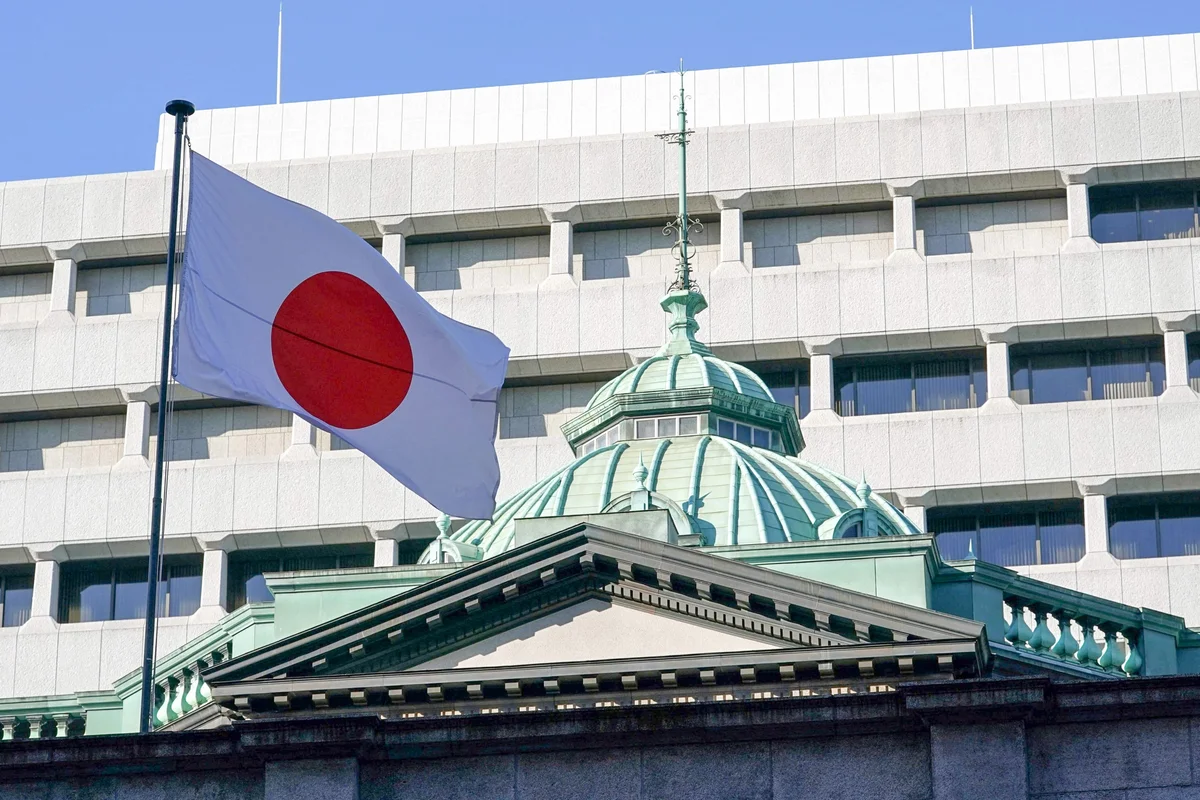
The latest policy decision from the Bank of Japan reflects a delicate balancing act between economic stability and rising inflation risks. While the central bank chose to keep its key interest rate unchanged at 0.75%, the presence of dissent within its own board reveals a deeper shift underway. This creates a tension between maintaining accommodative conditions and preparing markets for tighter monetary policy, especially as global energy shocks begin to feed into inflation dynamics.
The Bank of Japan maintained its short-term policy rate at 0.75% following its April meeting, aligning with broad market expectations. However, the decision was not unanimous, as three out of nine board members pushed for a rate hike toward 1.0%, indicating growing concern over inflationary pressures.
This divergence is significant. Data shows Japan’s CPI inflation rose to 1.5% year-on-year in March, with core inflation at 1.8%, marking a gradual but persistent upward trend. At the same time, crude oil prices have surged above $100 per barrel due to geopolitical tensions, raising imported inflation risks for an energy-dependent economy like Japan.
Data suggests inflation pressures are building This leads to internal policy disagreement Which results in early signals of a future rate hike cycle
Japan’s monetary policy has undergone a historic shift over the past two years. After maintaining near-zero or negative interest rates for over 17 years, the Bank of Japan began tightening in 2024, gradually raising rates to the current 0.75% level.
| Timeline | Policy Rate Change |
|---|---|
| Pre-2024 | -0.1% (negative rate era) |
| July 2024 | 0.1% introduced |
| Jan 2025 | Further hike |
| Dec 2025 | Raised to 0.75% |
| Apr 2026 | Held at 0.75% |
This transition marks one of the most significant policy reversals among global central banks, especially given Japan’s long-standing battle with deflation.
The Japanese yen remains under pressure, trading near 159 per dollar, close to levels that previously triggered government intervention. A weaker yen increases import costs, particularly for energy, which directly feeds into domestic inflation.
At the same time, global monetary conditions are tightening. Central banks such as the Federal Reserve, European Central Bank, and Bank of England are also navigating inflation risks, creating a synchronized global policy environment that influences Japan’s decisions.
One under-discussed factor is the impact of rising crude oil prices on Japan’s policy stance. Unlike demand-driven inflation seen in Western economies, Japan’s inflation is increasingly cost-driven, largely influenced by imported energy.
With oil prices climbing above $100 per barrel amid geopolitical disruptions, Japan faces a trade-off between supporting growth and controlling inflation. This external shock is accelerating the urgency within the Bank of Japan to normalize policy faster than initially expected.
A common misconception is that Japan’s rate hikes will mirror aggressive tightening cycles seen in the US or Europe. This is unlikely.
Japan’s economy remains structurally different, with slower wage growth and a long history of deflation. Even if rates rise, the pace will likely remain gradual and data-dependent rather than aggressive.
Another misunderstanding is that a stable rate decision signals policy comfort. In reality, the internal dissent suggests discomfort is rising beneath the surface.
While the decision to hold rates may appear dovish, it may actually be strategically hawkish. By maintaining rates while signaling internal pressure for hikes, the Bank of Japan is preparing markets for a future shift without triggering immediate volatility.
This approach allows the central bank to manage expectations, stabilize the yen, and avoid sudden shocks to financial markets while keeping tightening options open.
Several key factors will determine the Bank of Japan’s next policy step:
Sustained inflation above the 2% target
Oil price trajectory and geopolitical developments
Yen stability and intervention risks
Wage growth trends and domestic demand
If inflation continues to rise and energy prices remain elevated, a rate hike toward 1.0% in the coming months becomes increasingly likely.
For investors and traders, this policy stance has clear implications:
A shift in Japan’s policy stance also has global implications, particularly for capital flows and carry trades.
The Bank of Japan’s decision to hold rates steady is less about maintaining the status quo and more about managing a transition. The growing divide within its policy board signals that Japan is moving closer to a new monetary regime, where inflation, not deflation, becomes the central concern. Investors who recognize this early shift will be better positioned to navigate the next phase of global monetary realignment.
The Bank of Japan held rates steady to balance economic growth concerns with rising inflation risks. While inflation is increasing, uncertainty around global conditions and domestic demand led the central bank to adopt a cautious approach for now.
There is increasing likelihood of a rate hike in the coming months, as internal board members have already signaled support for higher rates. Future decisions will depend on inflation trends, oil prices, and currency stability.
Japan’s monetary policy affects global liquidity and currency markets. A shift toward higher rates could influence capital flows, strengthen the yen over time, and impact global risk sentiment, especially in emerging markets.
Financial journalist specializing in market analysis, stock research, and investment trends. Dedicated to providing accurate, timely insights for informed decision-making.
Credentials: Experienced financial journalist with expertise in equity markets and economic analysis
The information provided in this article is for educational and informational purposes only and should not be construed as financial, investment, or legal advice. welomoney does not provide personalized investment recommendations.
For detailed terms and conditions, please read our Disclaimer and Terms of Service.

More than 11 years after entering North America, a major smartphone brand is exiting the US market.

Former GitHub CEO Thomas Dohmke has launched Entire's India Git region, enabling local repository hosting, faster Git operations, improved data...

Nothing has denied reports of shutting down operations in multiple markets and carrying out massive layoffs.

OnePlus has officially ended new product launches in North America and Europe after 11 years.

Looking for the best Friendship Day gift? Here are the top smartphones to gift on Friendship Day 2026, including Samsung Galaxy S26 Ultra, OnePlus...