Loading market data...
Wed, 07 Oct 2026
01:06:11 pm
Wed, 07 Oct 2026
01:06:11 pm
Synopsis
Over $130 billion worth of AI data center projects have reportedly been blocked or delayed in the US as companies increasingly shift AI infrastructure investments toward Europe, renewable energy, and power-ready locations.
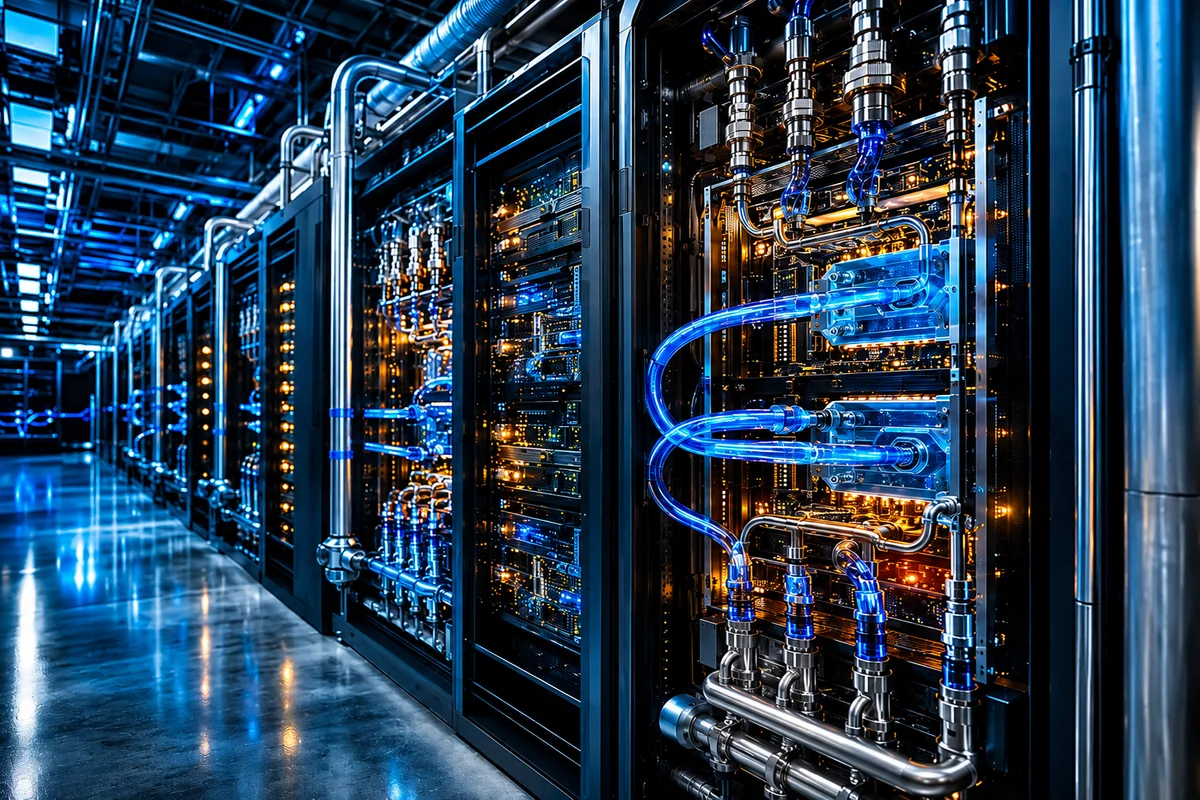
The artificial intelligence (AI) infrastructure boom is entering a new phase as communities across the United States increasingly reject large-scale data center developments. According to recent industry estimates, more than $130 billion worth of AI data center projects have been delayed or blocked during the first quarter of 2026, forcing technology companies and infrastructure developers to look beyond the US for future expansion.
The growing resistance comes amid concerns over electricity consumption, water usage, environmental impact, and rising utility costs. As approvals become increasingly difficult in major US markets, countries such as Norway and Finland are emerging as attractive alternatives, offering abundant renewable energy, lower electricity costs, and faster regulatory approvals for AI infrastructure projects.
For much of the AI boom, the industry's biggest challenge was securing enough advanced semiconductors, particularly GPUs used to train large AI models. As chip availability gradually improves, another bottleneck has emerged—finding locations where massive AI data centers can actually be built.
Several proposed projects across states including Arizona, Texas, Indiana, Georgia, and Virginia have either faced significant delays or been rejected outright due to increasing opposition from local communities.
Municipal authorities and residents have raised concerns regarding:
As a result, obtaining permits has become significantly more difficult for hyperscale AI developers.
AI data centers consume enormous amounts of electricity and cooling resources.
Modern AI training facilities often require hundreds of megawatts of continuous power, making them among the most energy-intensive commercial developments.
Residents in several US cities argue that these projects could:
This growing resistance has transformed data center approvals from relatively routine administrative processes into politically sensitive local issues.
As regulatory hurdles increase in the United States, Northern Europe is becoming an increasingly attractive destination for AI infrastructure investments.
Countries such as Norway and Finland offer several structural advantages:
These advantages significantly reduce operating costs while helping technology companies meet sustainability targets.
Although several US projects have stalled, overall AI infrastructure spending continues to grow rapidly.
Major technology companies including Alphabet (Google), Meta Platforms, Microsoft, Amazon, and other hyperscalers continue investing billions of dollars in AI computing capacity to support cloud services, generative AI models, enterprise applications, and next-generation data centers.
The shift appears to be geographical rather than a slowdown in investment.
Industry analysts believe future AI capital expenditure will increasingly flow toward regions where power availability, regulatory approvals, and community acceptance are already secured.
One of the biggest factors influencing AI infrastructure investment is access to reliable, low-cost electricity.
Large AI clusters now require gigawatt-scale power supplies, making renewable energy increasingly important for both cost management and sustainability goals.
Countries with abundant hydroelectric, wind, and renewable energy resources are becoming preferred destinations as companies attempt to reduce both operational expenses and carbon emissions.
The combination of clean energy and established grid infrastructure is emerging as a key competitive advantage for future AI data center development.
Every generative AI application relies on massive computing infrastructure.
AI data centers support:
As AI adoption accelerates globally, demand for data center capacity is expected to continue rising despite regulatory challenges.
The AI infrastructure market remains in a strong long-term growth cycle, but project execution is becoming increasingly dependent on energy availability, regulatory approvals, and community acceptance rather than capital alone. While semiconductor manufacturers continue expanding production, power infrastructure has emerged as the next critical constraint for AI deployment. Companies involved in renewable energy, grid infrastructure, power transmission, cooling technologies, and AI-ready data center development could become major beneficiaries as hyperscalers diversify investments beyond traditional US markets.
Investors should monitor global AI infrastructure spending, renewable energy investments, electricity transmission expansion, hyperscaler capital expenditure, government policies on data center approvals, and developments in European AI infrastructure markets. Energy availability and regulatory certainty are likely to become key competitive advantages as AI computing demand continues to accelerate.
| Highlights | Details |
|---|---|
| AI Data Center Projects Delayed/Blocked | Over $130 Billion |
| Time Period | Q1 2026 |
| Main Challenge | Power, Permits & Community Opposition |
| Key Markets Facing Resistance | Arizona, Texas, Indiana, Virginia, Georgia |
| Emerging AI Infrastructure Hubs | Norway, Finland |
| Primary Drivers | Renewable Energy, Grid Access, Faster Approvals |
| Long-Term Trend | AI Infrastructure Expansion Continues Globally |
Many local communities are raising concerns over electricity consumption, water usage, environmental impact, and the cost of upgrading local power infrastructure.
Industry estimates suggest that more than $130 billion worth of AI data center projects have been delayed or blocked during the first quarter of 2026.
Countries such as Norway and Finland are attracting AI infrastructure investments due to abundant renewable energy, lower electricity costs, and favorable regulatory environments.
Modern AI data centers require enormous amounts of continuous power to train and operate advanced AI models, making reliable and affordable electricity one of the industry's most valuable resources.
Current trends suggest that AI infrastructure spending is continuing to grow, but future investments may increasingly shift toward regions offering better power infrastructure, regulatory certainty, and community support.

Financial journalist specializing in market analysis, stock research, and investment trends. Dedicated to providing accurate, timely insights for informed decision-making.
Credentials: Experienced financial journalist with expertise in equity markets and economic analysis
The information provided in this article is for educational and informational purposes only and should not be construed as financial, investment, or legal advice. welomoney does not provide personalized investment recommendations.
For detailed terms and conditions, please read our Disclaimer and Terms of Service.

Trump’s Canadian alcohol ban is in force, but bulk whisky and liqueurs are exempt. Learn why repackaging matters and what Section 338 means for trade.

Trump-Xi talks could shape US stocks as the tariff truce nears its November 10 deadline. See key market risks, sectors and outcomes for investors.

Iran’s Strait of Hormuz decision is deepening tensions with the US. Discover Tehran’s conditions for reopening the waterway and the risks to global...