Loading market data...
Wed, 07 Oct 2026
05:55:22 pm
Wed, 07 Oct 2026
05:55:22 pm

Rudransh Sangwan
Published at: May 25, 2026, 9:30 AM
Synopsis
Brent crude oil nears $100 per barrel again as Middle East tensions, Hormuz supply fears, and OPEC+ actions trigger fresh volatility across global energy markets.
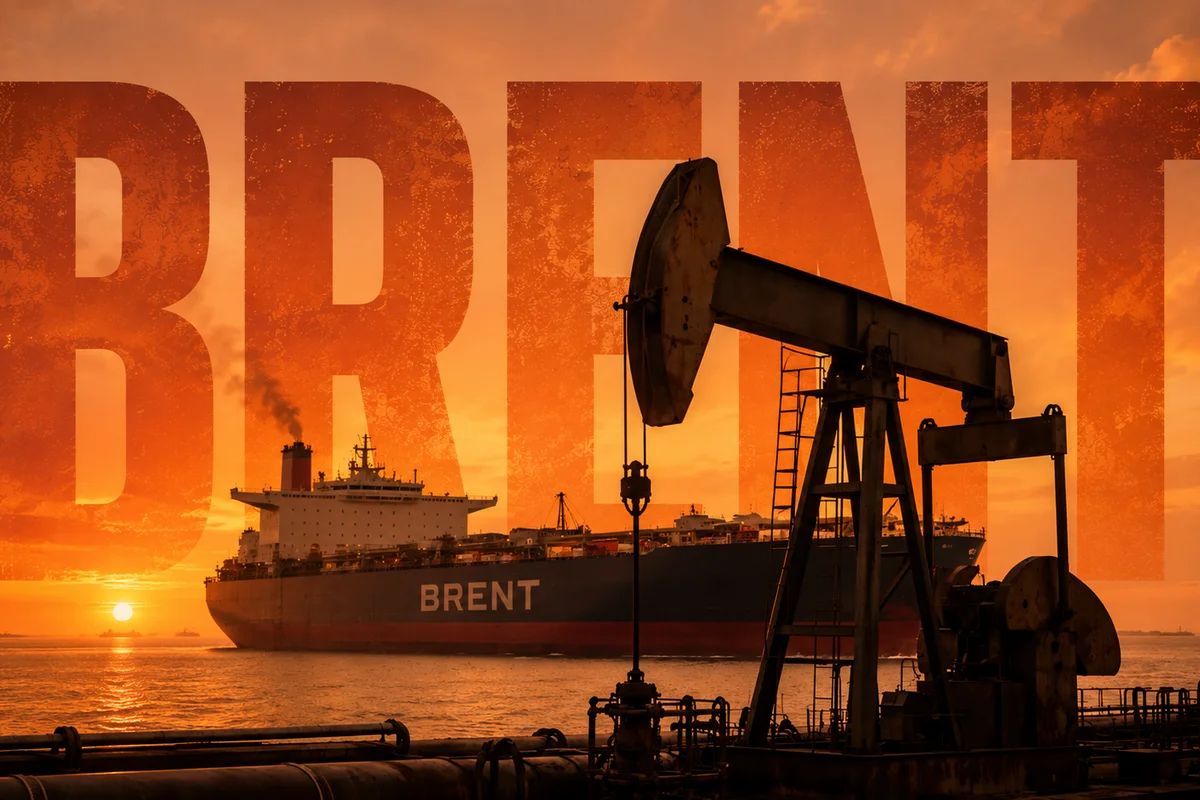
Brent crude oil has once again moved close to the critical $100 per barrel mark as escalating Middle East tensions, supply disruption fears, and shipping risks around the Strait of Hormuz continue to inject massive volatility into global energy markets.
After witnessing explosive rallies above $110–114 earlier this month, Brent crude remains trapped in one of the most geopolitically sensitive trading environments since the Russia-Ukraine energy crisis.
The current market environment is being driven by a dangerous combination of:
As of 25 May 2026, Brent crude is fluctuating near the $99–104 per barrel range, while WTI crude remains around $92–97 per barrel.
| Metric | Current Estimate |
|---|---|
| Brent Crude | ~$99–104/bbl |
| Intramonth High (May 2026) | ~$114–115/bbl |
| WTI Crude | ~$92–97/bbl |
| Brent-WTI Spread | ~$6–8 |
| Volatility Trend | Extremely High |
| Market Structure | Geopolitical Risk Premium Dominated |
| YoY Price Change | +50%+ |
Global oil markets continue witnessing sharp intraday swings as traders react to every geopolitical headline related to Iran, Gulf shipping lanes, and OPEC production strategy.
The biggest driver behind Brent crude’s renewed rally is the escalating instability surrounding the Strait of Hormuz.
Nearly 20% of global oil trade passes through the Strait of Hormuz, making it one of the world’s most important energy chokepoints.
Major exporters dependent on the route include:
Any disruption to tanker movement or Gulf export infrastructure immediately triggers a geopolitical “war premium” in global crude prices.
| Event | Brent Market Reaction |
|---|---|
| US-Iran tensions intensify | +5–7% spike |
| Tanker attack fears | Volatility surge |
| UAE infrastructure threats | Brent above $110 |
| Peace negotiation rumors | Sharp correction |
| OPEC supply concerns | Sustained rally |
Markets remain highly sensitive to military escalation risks in the Gulf region.
OPEC+ remains one of the strongest structural supports for oil prices globally.
Saudi Arabia and allied producers continue maintaining:
This has prevented oil prices from collapsing despite concerns over slowing global growth.
Iranian crude exports and production continue facing pressure due to:
Any major escalation involving Iran could rapidly tighten global supply conditions.
| Price Zone | Importance |
|---|---|
| $90–95 | Major Support |
| $100 | Psychological Battlefield |
| $105–110 | High Volatility Zone |
| $115–120 | Panic Premium Region |
| $130+ | Extreme War Escalation Scenario |
The $100 level is now functioning as the most critical short-term psychological zone for global oil traders.
| Price Region | Market Interpretation |
|---|---|
| $130+ | Extreme geopolitical panic |
| $120 | Severe supply disruption fears |
| $115 | Aggressive war premium |
| $104 | Current high-risk range |
| $100 | Critical macro support zone |
| $95 | Stabilization range |
| $90 | Long-term technical support |
India imports nearly 85% of its crude oil requirements, making Brent crude one of the most important macroeconomic variables for the Indian economy.
Every major increase in crude oil prices impacts:
| Sector | Brent Impact |
|---|---|
| Airlines | Negative |
| Logistics | Negative |
| FMCG | Margin Pressure |
| Paint Companies | Negative |
| Refiners | Mixed |
| Oil Exploration Firms | Positive |
| Oil Marketing Companies | Highly Sensitive |
Higher crude oil prices also increase pressure on India’s current account deficit and imported inflation.
The global crude oil market is currently trapped between bullish supply fears and bearish recession concerns.
This conflict between supply fear and demand weakness is creating massive volatility across global energy markets.
| Forecast Range | $95–110 |
|---|---|
| Assumptions | Controlled tensions, no full-scale war, stable OPEC discipline |
This remains the most likely short-term scenario.
| Forecast Range | $120–140+ |
|---|---|
| Triggers | Hormuz closure, refinery attacks, prolonged Gulf conflict |
This scenario could sharply worsen global inflation.
| Forecast Range | $70–85 |
|---|---|
| Triggers | Global recession, peace breakthrough, weak China demand |
Markets currently assign lower probability to this outcome due to geopolitical uncertainty.
Higher oil prices directly influence:
This is why central banks globally are closely monitoring crude oil movements.
Brent crude is no longer trading purely on traditional supply-demand fundamentals.
The market is now heavily influenced by:
Oil has increasingly evolved into:
Unless Gulf shipping stability improves and Middle East tensions cool meaningfully, Brent crude is likely to remain structurally volatile through the coming weeks.
For India and other major oil-importing economies, sustained Brent crude above $100 per barrel could create serious pressure on inflation management, currency stability, and consumer spending.
Brent crude is rising due to escalating Middle East tensions, Strait of Hormuz disruption fears, OPEC+ supply discipline, and geopolitical risk premiums.
Brent crude is currently trading near the $99–104 per barrel range.
The Strait of Hormuz handles nearly 20% of global oil trade, making it one of the world’s most critical energy routes.
Higher Brent prices increase India’s fuel costs, inflation pressure, import bill, and current account deficit.
Yes, if Middle East tensions escalate further or tanker disruptions intensify, Brent crude could potentially move toward $120–140.
Markets are reacting to geopolitical conflicts, supply disruption fears, recession risks, OPEC policy, and speculative futures trading.
Airlines, logistics, FMCG, paint companies, transportation, and oil marketing companies are among the most affected sectors.
OPEC+ influences global oil supply through production management and strategic output cuts, helping support prices.
Financial journalist specializing in market analysis, stock research, and investment trends. Dedicated to providing accurate, timely insights for informed decision-making.
Credentials: Experienced financial journalist with expertise in equity markets and economic analysis
The information provided in this article is for educational and informational purposes only and should not be construed as financial, investment, or legal advice. welomoney does not provide personalized investment recommendations.
For detailed terms and conditions, please read our Disclaimer and Terms of Service.
No additional articles in this category yet.