Loading market data...
Tue, 29 Sept 2026
07:40:55 pm
Tue, 29 Sept 2026
07:40:55 pm

Rudransh Sangwan
Published at: June 26, 2026, 1:37 PM
Synopsis
Apple stock falls after the company raises Mac and iPad prices by up to 18% due to soaring AI-driven memory chip costs. Learn why prices are increasing, market impact, and what it means for future iPhones.
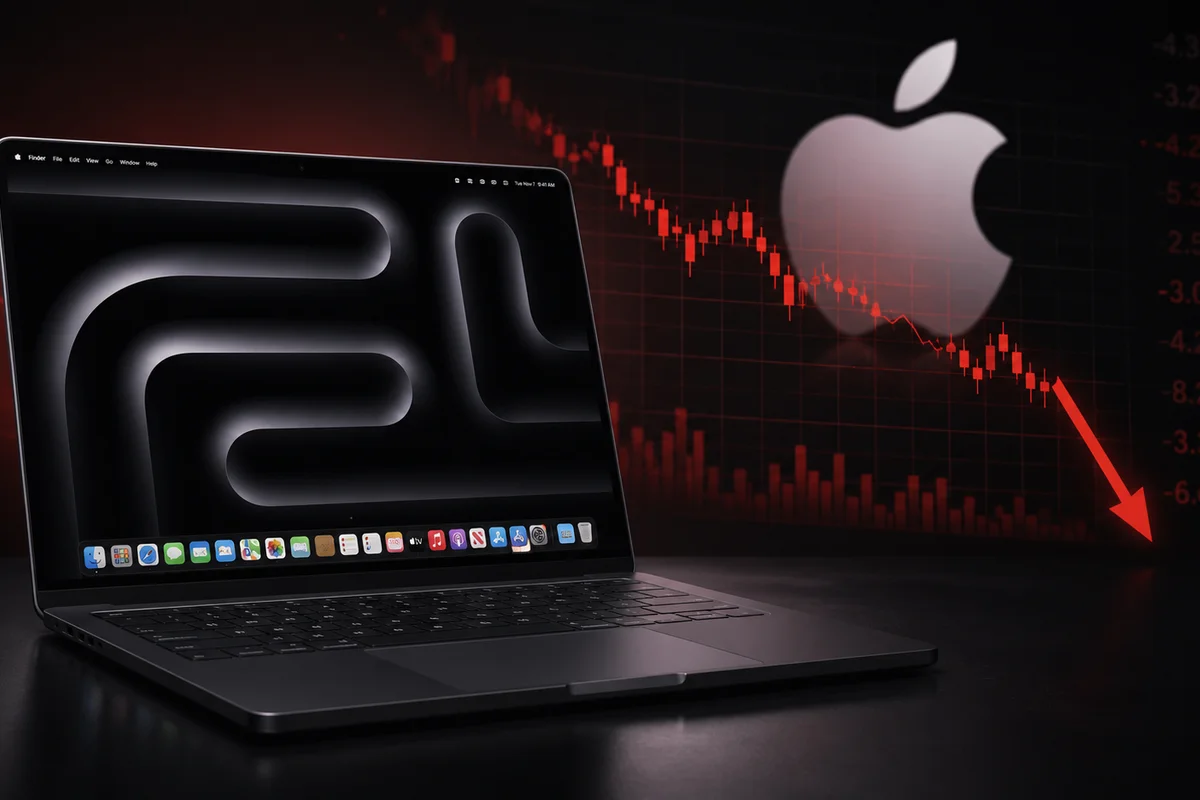
Apple Inc. witnessed a sharp decline in its stock price after announcing price hikes of up to 18% across several Mac and iPad models, citing soaring memory chip costs driven by the global artificial intelligence (AI) boom.
The company said it can no longer absorb the rising costs of DRAM and NAND flash memory, as chip manufacturers increasingly prioritize high-margin AI data center components over consumer electronics. Analysts believe elevated memory prices could persist through 2027, potentially leading to further price increases across Apple's product lineup, including future iPhones.
| Particulars | Details |
|---|---|
| Company | Apple Inc. |
| Maximum Price Increase | Up to 18% |
| Products Affected | MacBooks, Macs, iPads |
| Main Reason | Rising DRAM & NAND Memory Costs |
| Stock Reaction | Apple shares fell over 6% |
| Industry Driver | AI Data Centre Demand |
Apple attributed the price increases to a sharp surge in memory component costs as AI infrastructure spending continues to accelerate globally.
Leading memory manufacturers are allocating more production capacity to High Bandwidth Memory (HBM) used in AI servers, resulting in tighter supplies and higher prices for conventional memory chips used in consumer devices.
According to industry estimates, some memory chip prices are expected to rise by as much as 355% this year.
Several Apple devices have received significant price revisions.
| Product | Approximate Price Increase |
|---|---|
| MacBook Neo | +$100 |
| 13-inch MacBook Air | +$200 |
| 14-inch MacBook Pro | +$300 |
| 16-inch MacBook Pro | +$300 |
| Selected iPads | Price increases across models |
Apple stated that it had absorbed higher component costs for several quarters but has now reached a point where passing some of the additional costs to customers has become necessary.
The rapid expansion of AI infrastructure worldwide has significantly increased demand for advanced memory chips.
Major cloud providers and hyperscalers are investing hundreds of billions of dollars in AI data centres, prompting semiconductor manufacturers to prioritise AI-focused components that generate substantially higher margins.
| Driver | Impact |
|---|---|
| AI Data Centre Expansion | Higher demand for memory chips |
| Limited Manufacturing Capacity | Reduced supply for consumer electronics |
| High-Bandwidth Memory Demand | Suppliers prioritising AI server production |
| Cloud Infrastructure Growth | Sustained pricing pressure |
Industry analysts expect the supply-demand imbalance to continue over the next several years.
Investor sentiment weakened after Apple announced the price hikes.
Higher hardware prices could affect consumer demand, particularly in price-sensitive markets, while increasing production costs may continue to pressure margins if component inflation persists.
Despite the recent decline, many analysts remain positive on Apple's long-term prospects due to its premium customer base and growing ecosystem.
Analysts believe higher memory costs may eventually impact future iPhone pricing.
With Apple expanding on-device AI capabilities through Apple Intelligence, upcoming iPhone models are expected to require larger memory configurations, increasing production costs even further.
Industry experts estimate future iPhone prices could rise by $150 to $200 if memory inflation continues.
While hardware manufacturers face rising input costs, semiconductor companies supplying memory chips continue to benefit from the AI investment cycle.
Companies producing DRAM and NAND memory have reported stronger earnings, higher margins, and increasing long-term customer demand as AI infrastructure spending accelerates worldwide.
Investors will be monitoring several developments over the coming months:
Apple's latest price increases highlight how the global AI investment boom is reshaping the technology supply chain. As memory manufacturers focus on serving AI data centres, consumer electronics companies are facing higher production costs that are increasingly being passed on to customers. While Apple's premium brand may help absorb some of the impact, continued memory shortages could influence pricing across its broader product portfolio in the years ahead.
Apple cited rising DRAM and NAND memory chip costs driven by strong demand from AI data centres and limited global supply.
Several MacBook models, Macs, and selected iPads have received price increases of up to 18%.
Investors reacted to concerns that higher product prices could affect demand and pressure future sales growth.
Industry analysts believe future iPhone models may become more expensive if memory chip prices remain elevated.
Analysts expect memory supply constraints and elevated pricing to continue through at least 2027 as AI infrastructure investments remain strong.
Financial journalist specializing in market analysis, stock research, and investment trends. Dedicated to providing accurate, timely insights for informed decision-making.
Credentials: Experienced financial journalist with expertise in equity markets and economic analysis
The information provided in this article is for educational and informational purposes only and should not be construed as financial, investment, or legal advice. welomoney does not provide personalized investment recommendations.
For detailed terms and conditions, please read our Disclaimer and Terms of Service.