Loading market data...
Sun, 19 Jul 2026
03:12:17 am
Sun, 19 Jul 2026
03:12:17 am

Rudransh Sangwan
Published at: March 27, 2026, 3:28 AM
Synopsis
Crude oil slips but holds above $100 as Trump pauses Iran strikes for 10 days. Here’s what’s driving oil prices and what comes next.
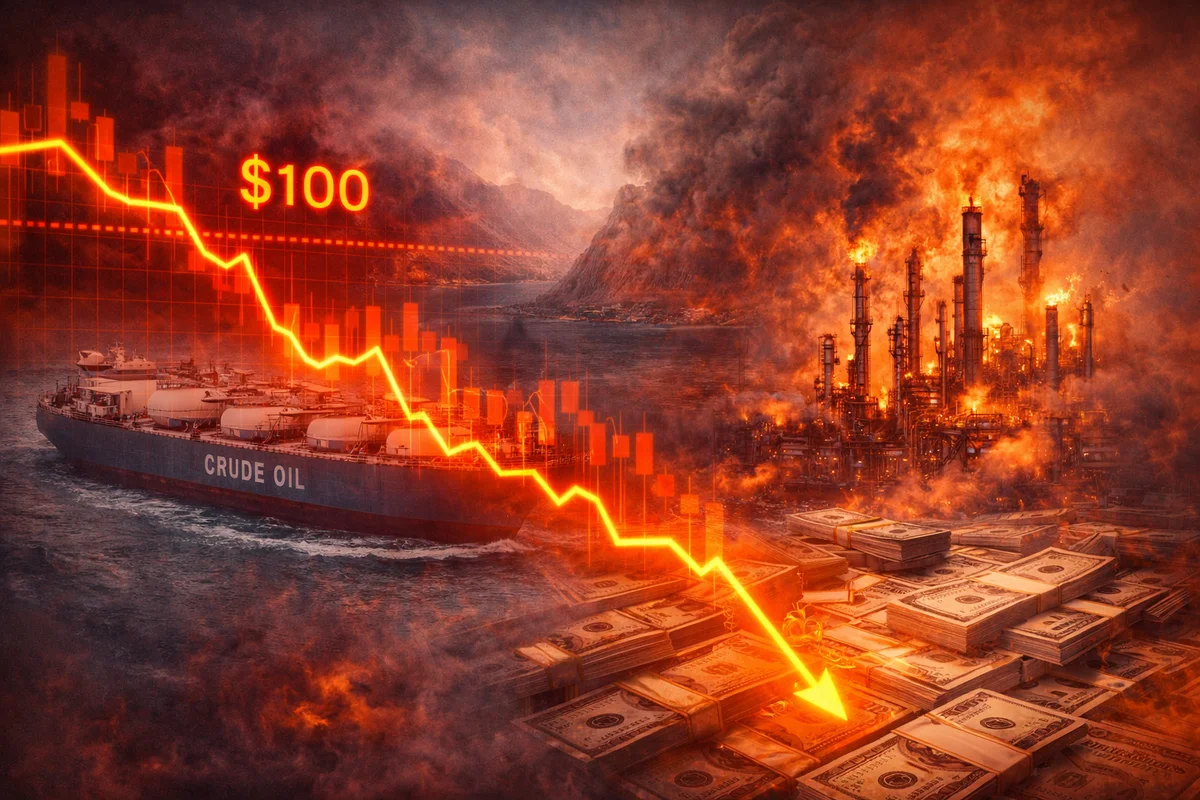
Global oil markets are showing a rare mix of relief and tension. Crude prices have slipped slightly, but they continue to hold firmly above the critical $100 mark. This comes after the United States announced a 10-day pause in strikes on Iran’s energy infrastructure.
At first glance, this may seem like a sign of easing tensions. But the reality is far more complex. Oil prices are not falling sharply because the underlying risks remain extremely high.
The market is now caught between short-term optimism and long-term uncertainty.
Oil prices moved lower after US President Donald Trump signaled a temporary halt in attacks on Iran’s energy infrastructure, opening a window for negotiations.
Brent crude slipped slightly, while WTI also saw marginal declines. This reaction is typical in oil markets. When geopolitical risk decreases, even temporarily, prices tend to cool off.
Key reasons for the dip:
However, this decline is limited. Oil is still trading above $100, which signals that markets remain cautious.
Even with the pause, traders are not convinced the conflict is over.
The 10-day window is seen as temporary. If talks fail, strikes could resume quickly.
Markets are pricing in this uncertainty:
This is why oil prices remain elevated despite the temporary relief.
The most important point is this: the structural risks have not gone away.
The Strait of Hormuz remains a major concern, with disruptions continuing to affect shipping activity and global supply chains.
This is critical because:
Even during the pause, supply constraints continue to impact markets.
The ongoing conflict has already disrupted oil flows and created supply tightness.
At the same time:
This keeps the geopolitical risk premium in oil prices intact.
The pause is not just a military move. It is a signal to markets that diplomacy is still possible.
It suggests:
This has improved short-term sentiment.
Despite the positive signal, markets remain cautious.
Several concerns continue to weigh on sentiment:
This is why volatility continues to dominate oil markets.
The current situation is being seen as one of the most serious energy disruptions in recent years.
The Strait of Hormuz crisis has:
This explains why even temporary relief cannot fully stabilize prices.
The Strait is a critical artery for global oil supply.
If disruptions continue:
This is why markets are closely monitoring developments in the region.
The coming days will be crucial in determining the direction of oil prices.
Markets will watch:
The outlook remains highly dependent on geopolitical events.
Successful negotiations Oil prices could stabilize or move lower.
Continued uncertainty Prices may remain volatile around current levels.
Renewed escalation Oil could surge sharply if conflict intensifies.
This makes the current phase extremely sensitive for global markets.
Oil prices above $100 have significant implications.
They affect:
Oil is a key driver of global economic conditions.
When prices rise:
This is why oil movements are influencing financial markets worldwide.
Crude oil slipping slightly while staying above $100 reflects the delicate balance in global markets. The 10-day pause in Iran strikes has provided temporary relief, but underlying risks remain strong.
The Strait of Hormuz disruption, supply concerns, and geopolitical uncertainty continue to dominate the outlook.
For now, oil markets are being driven more by global events than fundamentals. The next phase will depend on whether diplomacy succeeds or tensions escalate again.
Financial journalist specializing in market analysis, stock research, and investment trends. Dedicated to providing accurate, timely insights for informed decision-making.
Credentials: Experienced financial journalist with expertise in equity markets and economic analysis
The information provided in this article is for educational and informational purposes only and should not be construed as financial, investment, or legal advice. welomoney does not provide personalized investment recommendations.
For detailed terms and conditions, please read our Disclaimer and Terms of Service.
The RBI has fixed the premature redemption price of Sovereign Gold Bond (SGB) 2020-21 Series IV at ₹14,307 per unit.
Petrol and Diesel Prices Today (14 July 2026): Check the latest state-wise and city-wise petrol and diesel rates across India, fuel price analysis,...

Gold and silver prices today, July 14, 2026: Check the latest MCX gold and silver rates, 22K and 24K gold prices across major Indian cities,...