Loading market data...
Tue, 20 Oct 2026
06:00:53 pm
Tue, 20 Oct 2026
06:00:53 pm
Synopsis
India’s Gold ETF market is witnessing a historic expansion cycle as record gold prices, inflation fears, rupee weakness, and geopolitical uncertainty drive massive institutional and retail inflows into digital gold investment products.
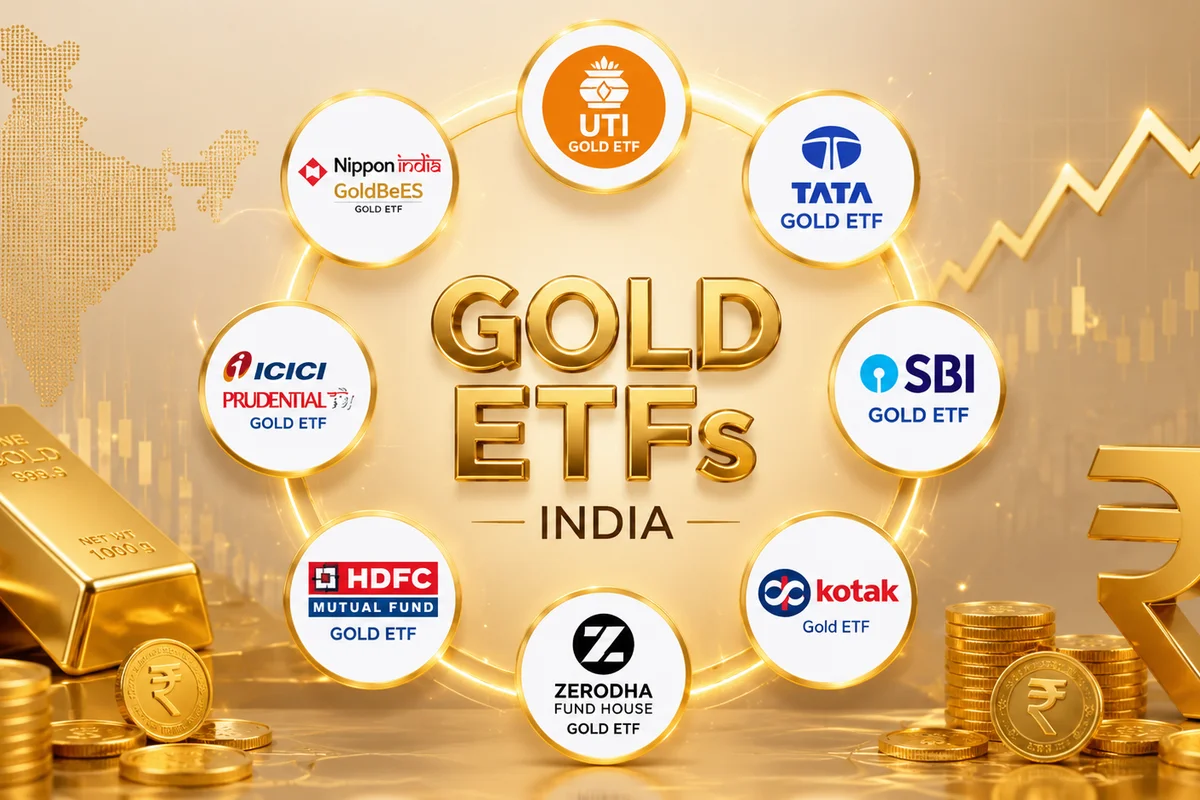
India’s Gold ETF ecosystem is experiencing one of the strongest growth phases in its history as investors increasingly shift toward digital gold exposure amid macroeconomic uncertainty.
The sector is benefiting from a rare convergence of:
Gold ETFs are increasingly evolving from niche investment products into mainstream portfolio allocation tools across India’s financial markets.
| Metric | Current Status |
|---|---|
| FY26 Gold ETF Inflows | ₹68,867 crore |
| YoY Growth in Inflows | ~364% |
| Total Industry AUM | ₹1.83 lakh crore+ |
| Investor Folios | 1.2 crore+ |
| Gold Price Trend | Near Record Highs |
| Key Growth Driver | Safe-Haven Demand |
| Market Theme | Institutional Adoption |
Gold ETFs provide investors exposure to gold prices without many of the limitations associated with physical gold ownership.
| Feature | Strategic Benefit |
|---|---|
| No Storage Risk | Safer Ownership |
| No Purity Concerns | Standardized Exposure |
| Exchange Trading | High Liquidity |
| No Making Charges | Cost Efficiency |
| Digital Ownership | Convenience |
| Institutional Transparency | Better Price Discovery |
Unlike jewellery investments, Gold ETFs closely track domestic gold prices and trade like stocks on exchanges.
This structure has become increasingly attractive during periods of:
Gold prices in India crossed ₹1.6 lakh per 10 grams in 2026, creating massive investor interest in safe-haven assets.
| Driver | Market Impact |
|---|---|
| Inflation Fears | Strong Positive |
| Geopolitical Tensions | Safe-Haven Demand |
| Rupee Weakness | Domestic Gold Inflation |
| Central Bank Buying | Bullish |
| Global Economic Stress | Positive |
As gold prices surged, investors increasingly turned toward ETFs for easier and more efficient exposure.
Global tensions involving:
have significantly strengthened safe-haven demand globally.
Gold ETFs are increasingly viewed by Indian investors as macroeconomic protection instruments.
A major structural trend in 2026 is the growing preference for digital gold investing over physical bullion ownership.
| Investor Group | Trend |
|---|---|
| Millennials | Strong ETF Adoption |
| Gen Z Investors | Digital-First Investing |
| Salaried Professionals | SIP-Based Allocation |
| Urban Investors | Convenience Preference |
Investors increasingly prefer:
| Gold ETF | Key Strength | Expense Ratio | Strategic Positioning |
|---|---|---|---|
| Nippon India Mutual Fund GoldBeES | Highest Liquidity | Moderate | Market Leader |
| ICICI Prudential Mutual Fund Gold ETF | Strong Tracking | ~0.50% | Institutional Favorite |
| SBI Mutual Fund Gold ETF | AMC Trust | Moderate | Conservative Investors |
| HDFC Mutual Fund Gold ETF | Brand Strength | Competitive | Long-Term Investors |
| Kotak Mahindra Asset Management Company Gold ETF | Lower Costs | ~0.55% | Cost-Conscious Investors |
| Zerodha Fund House Gold ETF | Ultra-Low Cost | ~0.30% | Young Investors |
| Tata Asset Management Gold ETF | Competitive Tracking | ~0.38% | Emerging Choice |
| UTI Mutual Fund Gold ETF | Low Tracking Error | Moderate | Precision-Focused Investors |
Among Indian Gold ETFs, GoldBeES remains the dominant player in terms of:
| Advantage | Impact |
|---|---|
| Deep Liquidity | Lower Slippage |
| Large AUM | Stability |
| Strong Retail Recognition | High Participation |
| Tight Bid-Ask Spreads | Better Trading Efficiency |
During Akshaya Tritiya 2026, Nippon reportedly captured approximately 63% market share in ETF trading volumes.
ICICI Prudential Mutual Fund Gold ETF is increasingly viewed as one of the strongest institutional-quality Gold ETFs because of:
| Factor | Strategic Importance |
|---|---|
| Lower Costs | Better Compounding |
| Tracking Efficiency | Reduced Leakage |
| AMC Reputation | Higher Confidence |
| Liquidity | Efficient Execution |
A major competitive trend in 2026 is the rapid emergence of low-cost Gold ETFs targeting younger digital investors.
| ETF Category | Competitive Edge |
|---|---|
| Zerodha Gold ETF | Ultra-Low Expense Ratio |
| Tata Gold ETF | Cost Efficiency |
| Mirae Asset Gold ETF | Digital Investing Appeal |
Asset managers are increasingly competing on:
One of the biggest misconceptions among retail investors is focusing only on short-term returns.
Since most Gold ETFs track the same underlying commodity, long-term differences often emerge from:
| Expense Difference | Long-Term Impact |
|---|---|
| 0.30% vs 0.60% | Significant Compounding Difference |
| Lower Cost ETFs | Better Long-Term Efficiency |
| High Fees | Return Drag |
Even small annual cost differences materially affect long-term portfolio performance.
Tracking error measures how accurately an ETF mirrors actual gold prices.
| Cause | Impact |
|---|---|
| Cash Holdings | Tracking Drift |
| Fund Expenses | Return Leakage |
| Liquidity Constraints | Execution Gaps |
| Operational Inefficiencies | Performance Divergence |
Institutional investors often prioritize lower tracking error over short-term outperformance claims.
India’s Gold ETF market has expanded dramatically in recent years.
| Metric | Value |
|---|---|
| Number of Gold ETFs | ~25 |
| Investor Folios | 1.2 crore+ |
| Total AUM | ₹1.83 lakh crore+ |
| FY26 Inflows | ₹68,867 crore |
The sector now reflects growing:
One of the most important regulatory developments in 2026 involves Securities and Exchange Board of India proposing reforms aimed at improving ETF market efficiency.
| Reform | Potential Benefit |
|---|---|
| Dynamic Pricing Bands | Better Price Discovery |
| Separate ETF Pre-Open Sessions | Improved Liquidity |
| Mispricing Reduction | Better Market Efficiency |
Institutional investors view these reforms as important structural improvements for India’s ETF ecosystem.
| Factor | Gold ETF | Physical Gold |
|---|---|---|
| Storage Risk | None | High |
| Purity Risk | None | Present |
| Liquidity | Very High | Moderate |
| Making Charges | None | High |
| Exchange Trading | Yes | No |
| Transparency | High | Variable |
Gold ETFs are increasingly preferred by investors prioritizing financial efficiency and liquidity.
Despite strong growth momentum, Gold ETFs are not risk-free investments.
| Risk | Potential Impact |
|---|---|
| Gold Price Correction | ETF Decline |
| Rupee Appreciation | Domestic Gold Weakness |
| Liquidity Risks in Smaller ETFs | Wider Spreads |
| Tracking Inefficiency | Underperformance |
| Rising Global Interest Rates | Pressure on Gold |
Gold ETFs remain highly sensitive to global macroeconomic conditions.
Institutional investors increasingly use Gold ETFs for:
| Market Environment | Gold Performance |
|---|---|
| Inflation Stress | Historically Positive |
| Currency Weakness | Strong |
| Geopolitical Crisis | Safe-Haven Demand |
| Equity Volatility | Diversification Support |
This is one reason Gold ETFs witnessed record FY26 inflows.
There is no universally “best” Gold ETF.
The ideal choice depends on:
| Investor Type | Suitable ETF Style |
|---|---|
| Long-Term Investors | ICICI, HDFC, SBI |
| High-Liquidity Traders | GoldBeES |
| Cost-Sensitive Investors | Zerodha, Tata |
| Conservative Investors | SBI, HDFC |
| Tracking Precision Investors | UTI-Style ETFs |
India’s Gold ETF market is entering a structurally important growth phase as investors increasingly embrace digital gold investing amid inflation uncertainty, geopolitical fragmentation, and currency volatility.
The market is no longer driven purely by speculative gold buying or seasonal demand cycles. Instead, Gold ETFs are increasingly evolving into institutional-grade portfolio diversification tools and macroeconomic hedging instruments.
Meanwhile, competition among asset management companies is rapidly improving:
As a result, Gold ETFs are becoming one of the most strategically important alternative investment categories within India’s rapidly evolving financial ecosystem.
Gold ETFs are exchange-traded funds that track gold prices and trade like stocks.
Rising gold prices, inflation fears and digital investing trends are driving growth.
GoldBeES from Nippon India remains the dominant market leader.
Lower costs improve long-term compounded returns.
It measures how accurately the ETF tracks actual gold prices.
They eliminate storage and purity risks associated with physical gold.
GoldBeES is generally considered India’s most liquid Gold ETF.
They use them for inflation hedging and portfolio diversification.
Yes, they are affected by gold-price corrections and macroeconomic changes.
Many investors use them as long-term strategic allocation assets.

Financial journalist specializing in market analysis, stock research, and investment trends. Dedicated to providing accurate, timely insights for informed decision-making.
Credentials: Experienced financial journalist with expertise in equity markets and economic analysis
The information provided in this article is for educational and informational purposes only and should not be construed as financial, investment, or legal advice. welomoney does not provide personalized investment recommendations.
For detailed terms and conditions, please read our Disclaimer and Terms of Service.