Loading market data...
Tue, 20 Oct 2026
05:00:44 pm
Tue, 20 Oct 2026
05:00:44 pm
Synopsis
India is set to launch its first hydrogen-powered passenger train on July 17, marking a major milestone in green transportation. Flagged off by Prime Minister Narendra Modi, the train will operate on the Jind–Sonipat route in Haryana, using hydrogen fuel cells to generate electricity with water vapour as its only emission.
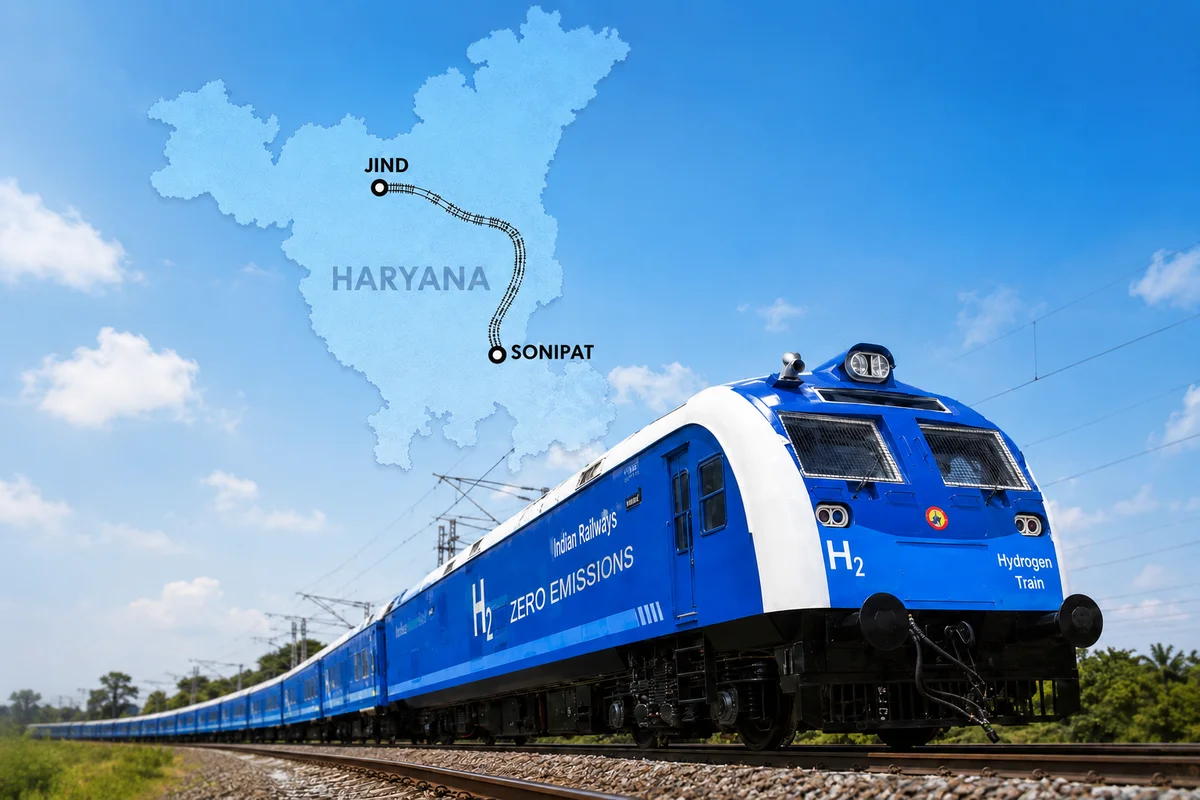
India has entered a new era of green transportation with the launch of its first hydrogen-powered passenger train, which is being flagged off today (July 17, 2026) by Prime Minister Narendra Modi. The launch represents one of the most significant milestones in Indian Railways' journey toward sustainable and low-carbon transportation.
Unlike conventional diesel-powered trains, the new hydrogen train generates electricity onboard through hydrogen fuel cells. The technology combines hydrogen and oxygen to produce electrical energy, with water vapour as the only by-product, making it one of the cleanest railway technologies currently available.
The hydrogen-powered train has been designed and developed under the Make in India initiative using indigenous engineering capabilities. Indian Railways believes the project will serve as a pilot for future hydrogen-powered railway corridors while reducing dependence on fossil fuels and supporting India's clean energy transition.
The launch also positions India among a small group of countries—including Germany, France, Italy, China, and Japan—that are actively developing or operating hydrogen-powered passenger trains.
Hydrogen-powered trains are considered one of the most promising alternatives to diesel locomotives on non-electrified railway routes. Unlike battery-powered trains that require frequent charging, hydrogen trains generate electricity continuously through onboard fuel cells, allowing longer operating ranges while producing almost zero direct emissions.
For India, the project demonstrates the country's growing capabilities in advanced railway engineering, clean energy technologies, and indigenous manufacturing. It also aligns with the government's broader focus on green mobility, carbon reduction, and energy security.
| Particular | Details |
|---|---|
| Launch Date | July 17, 2026 |
| Flagged Off By | Prime Minister Narendra Modi |
| Route | Jind – Sonipat (Haryana) |
| Distance | 89 km |
| Maximum Design Speed | 110 km/h |
| Operational Speed | 75 km/h |
| Coaches | 10 (2 Driving Power Cars + 8 Trailer Coaches) |
| Passenger Capacity | Around 2,600 passengers |
| Fuel | Hydrogen Fuel Cells |
| Emission | Water Vapour Only |
The country's first hydrogen-powered train will operate on the 89-kilometre Jind–Sonipat railway corridor in Haryana.
Jind → Pandu Pindara Junction → Lalit Khera Halt → Bhambhewa → Isapur Kheri Halt → Butana Halt → Khandrai Halt → Rabrah Halt → Lath Halt → Mohana → Barwasni Halt → Sonipat
The route has been selected as a demonstration corridor to evaluate the operational efficiency, reliability, and safety of hydrogen-powered passenger services under regular railway operations.
Instead of using diesel engines, the train uses hydrogen fuel cells to generate electricity onboard.
Inside the fuel cell, hydrogen reacts with oxygen from the atmosphere to produce electricity that powers the train's traction motors. Unlike fossil fuels, this process generates only water vapour, significantly reducing greenhouse gas emissions and improving environmental sustainability.
Each driving power car is equipped with:
Together, these systems generate the power required to operate the entire train efficiently.
The hydrogen-powered train has been designed with two power cars positioned at either end of the train, each capable of producing 1,200 kW (approximately 1,600 horsepower).
Combined, the train delivers sufficient traction power to operate at speeds of up to 110 km/h, although its regular operational speed has been fixed at 75 km/h.
| Technical Feature | Specification |
|---|---|
| Power Cars | 2 |
| Trailer Coaches | 8 |
| Power Output per Car | 1,200 kW |
| Combined Power | 2,400 kW |
| Battery Type | Lithium Iron Phosphate (LFP) |
| Hydrogen Storage | High-pressure cylinders |
To support regular operations, Indian Railways has established India's largest hydrogen refuelling station for railways at Jind, Haryana.
The dedicated infrastructure will supply hydrogen to the train in a manner similar to how fuel stations serve petrol, diesel, or CNG vehicles. The facility is expected to play a crucial role in evaluating the commercial viability of hydrogen-powered rail transport in India.
The hydrogen train has been designed, engineered, and integrated entirely in India, showcasing the country's growing expertise in advanced railway technologies.
Several Indian organizations contributed to the project:
| Organization | Contribution |
|---|---|
| RDSO | Technical specifications and design approval |
| Medha Servo Drives | Train integration |
| Integral Coach Factory (ICF) | Coach manufacturing and exterior design |
The project represents a significant achievement under the Make in India initiative by combining indigenous engineering, manufacturing, and railway technology.
Since hydrogen is a highly flammable fuel, Indian Railways has incorporated multiple safety mechanisms into the train.
The train includes advanced systems capable of detecting:
The selected Jind–Sonipat corridor will also help validate operational safety before hydrogen technology is introduced on additional railway routes.
Hydrogen-powered passenger trains remain relatively rare worldwide. Germany became the first country to introduce commercial hydrogen train services, while several other countries are currently testing or gradually deploying the technology.
India's hydrogen train is particularly notable because it consists of 10 passenger coaches, making it significantly longer than most existing hydrogen trains globally, which typically operate with only two or three coaches.
| Country | Hydrogen Train Status |
|---|---|
| Germany | Commercial operations |
| France | Pilot projects |
| Italy | Limited deployment |
| China | Testing |
| Japan | Pilot projects |
| India | Passenger service launched on July 17, 2026 |
Indian Railways plans to evaluate operational performance on the Jind–Sonipat route before expanding hydrogen-powered train services to other railway corridors.
Among the routes being considered is the Kalka–Shimla heritage railway, where hydrogen-powered trains could offer a cleaner alternative while preserving environmentally sensitive regions.
The operational data collected from today's launch is expected to guide future investments in hydrogen rail technology across India.
India's first hydrogen-powered passenger train is being flagged off on July 17, 2026, by Prime Minister Narendra Modi.
The train will operate between Jind and Sonipat in Haryana, covering approximately 89 kilometres.
Hydrogen fuel cells combine hydrogen and oxygen to generate electricity, with water vapour being the only emission.
The train is designed for a maximum speed of 110 km/h, while its operational speed is 75 km/h.
The project promotes clean transportation, supports the Make in India initiative, reduces dependence on diesel, and positions India among the few countries developing hydrogen-powered passenger rail services.

Financial journalist specializing in market analysis, stock research, and investment trends. Dedicated to providing accurate, timely insights for informed decision-making.
Credentials: Experienced financial journalist with expertise in equity markets and economic analysis
The information provided in this article is for educational and informational purposes only and should not be construed as financial, investment, or legal advice. welomoney does not provide personalized investment recommendations.
For detailed terms and conditions, please read our Disclaimer and Terms of Service.

Diwali Muhurat Trading 2026 is scheduled for November 8 from 2:20 PM to 3:30 PM. See NSE and BSE timings, pre-open session and market schedule.
Sugar stocks fell up to 5.79% after the government barred sugarcane juice and syrup for FY27 ethanol procurement. Analysts flag earnings pressure.
NSE indices on October 16, 2026: Nifty IT rises 3.12%, Nifty 50 gains 0.49%, while Nifty FMCG, Capital Market and Bank indices decline.
India-US trade deal could influence Sensex, Nifty 50 and export stocks. Explore five sectors to watch and the key factors investors should track.

India agricultural growth may approach zero as El Niño threatens crops, with output potentially falling 4%.