Loading market data...
Wed, 07 Oct 2026
09:11:46 am
Wed, 07 Oct 2026
09:11:46 am
Synopsis
The International Monetary Fund (IMF) has marginally lowered India's GDP growth forecast for FY27 to 6.4% from 6.5%, citing a challenging global environment. Despite the slight downgrade, India is expected to remain one of the fastest-growing major economies, supported by strong domestic consumption and resilient services activity.
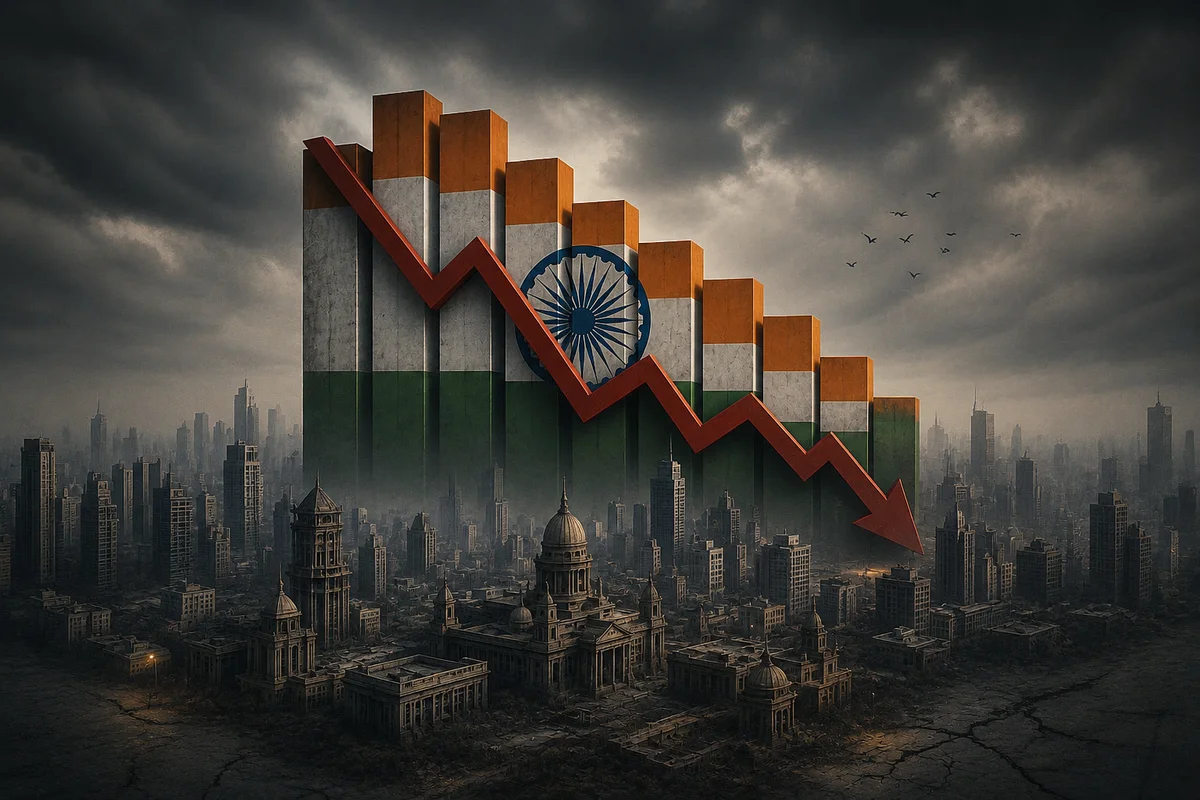
The International Monetary Fund (IMF) has marginally lowered India's GDP growth forecast for FY27 to 6.4% from 6.5%, citing a challenging global environment. Despite the slight downgrade, India is expected to remain one of the fastest-growing major economies, supported by strong domestic consumption and resilient services activity.
The International Monetary Fund (IMF) has revised India's economic growth forecast for FY2026-27 to 6.4%, slightly lower than its earlier estimate of 6.5% released in April. However, the global lender continues to rank India among the world's fastest-growing major economies, highlighting the country's strong domestic demand and expanding services sector.
In its latest World Economic Outlook (WEO) Update, the IMF also raised India's FY2027-28 GDP growth forecast to 6.7%, compared with its previous estimate of 6.5%, indicating confidence in the country's medium-term economic prospects.
| Financial Year | IMF Forecast (July 2026) | Previous Forecast |
|---|---|---|
| FY2026-27 | 6.4% | 6.5% |
| FY2027-28 | 6.7% | 6.5% |
According to the IMF, India's economic growth will continue to be supported by robust private consumption, healthy domestic demand, and resilient services activity, even as global uncertainties remain elevated.
The IMF attributed the slight reduction in India's near-term growth outlook to a more challenging global economic environment.
The global economy is expected to expand by 3.0% in 2026, down from an average growth of 3.5% during 2024 and 2025. Factors such as geopolitical tensions in the Middle East, higher commodity prices, slower global trade, and energy market volatility continue to pose risks to economic growth across several countries.
However, the IMF noted that rapid advancements in artificial intelligence (AI) and accelerating technology adoption are helping offset some of the global slowdown by supporting productivity and investment.
Despite external headwinds, the IMF believes India's domestic economy remains resilient.
Strong household spending, expanding service industries, and continued consumption-led growth are expected to remain the primary drivers of economic activity. The report suggests that India's relatively large domestic market provides a cushion against global economic volatility.
This domestic demand-driven growth model continues to differentiate India from many export-dependent economies facing slower international demand.
The Reserve Bank of India (RBI) has also recently revised its FY27 GDP growth estimate.
During its June Monetary Policy Committee meeting, the central bank lowered its growth projection from 6.9% to 6.6%, citing risks from geopolitical tensions, elevated crude oil prices, supply chain disruptions, and weather-related uncertainties.
The RBI currently expects quarterly GDP growth of:
| Quarter | GDP Growth Forecast |
|---|---|
| Q1 FY27 | 6.6% |
| Q2 FY27 | 6.3% |
| Q3 FY27 | 6.5% |
| Q4 FY27 | 6.8% |
The IMF expects the global economy to remain uneven over the next two years.
While countries benefiting from the AI-driven technology cycle and energy exports could see stronger economic activity, energy-importing nations with limited participation in advanced technology sectors may face relatively weaker growth.
India, however, is expected to remain better positioned due to its large domestic market, growing digital economy, and expanding services sector.
The IMF's revised forecast indicates that while India's growth may moderate slightly in the near term, the country's long-term economic fundamentals remain intact. Strong domestic consumption, government infrastructure spending, digital transformation, and increasing private investment continue to support economic expansion.
For investors, sectors linked to domestic demand—including banking, financial services, infrastructure, consumer discretionary, manufacturing, and digital technology—could continue to benefit as India's economy remains one of the fastest-growing among major global economies.
| Highlights | Details |
|---|---|
| IMF FY27 GDP Forecast | 6.4% |
| Previous IMF Estimate | 6.5% |
| FY28 GDP Forecast | 6.7% |
| Global Growth Forecast (2026) | 3.0% |
| Key Growth Drivers | Private Consumption, Services Sector, Domestic Demand |
| RBI FY27 GDP Forecast | 6.6% |
The IMF has projected India's economy to grow 6.4% in FY2026-27.
The slight revision reflects global economic challenges, including geopolitical tensions, slower trade, and higher commodity prices.
Yes. Despite the downgrade, the IMF continues to classify India as one of the world's fastest-growing major economies.
The IMF expects India's economy to grow 6.7% in FY2027-28, higher than its previous estimate.
The IMF expects private consumption, domestic demand, and the services sector to remain the key drivers of India's economic expansion.

Financial journalist specializing in market analysis, stock research, and investment trends. Dedicated to providing accurate, timely insights for informed decision-making.
Credentials: Experienced financial journalist with expertise in equity markets and economic analysis
The information provided in this article is for educational and informational purposes only and should not be construed as financial, investment, or legal advice. welomoney does not provide personalized investment recommendations.
For detailed terms and conditions, please read our Disclaimer and Terms of Service.

Petrol prices rise by ₹5 and diesel by ₹3 per litre as crude oil prices climb, raising concerns over fuel costs, transport expenses and inflation.

India’s Rafale plan could create a second fighter jet production line, expand local manufacturing and continue alongside the indigenous Tejas Mk1A...
Cabinet approves higher MSPs for six Rabi crops, an AI-based traffic system for Delhi and Green Energy Corridor Phase 3 to expand renewable power...

ITC buys the remaining Yoga Bar stake for ₹645 crore, taking full ownership of Sproutlife Foods. Here's what the acquisition means.
Explore the 8-week losing streak, FPI selling, crude oil prices, US bond yields, rupee weakness and key market factors.