Loading market data...
Sun, 19 Jul 2026
04:45:36 am
Sun, 19 Jul 2026
04:45:36 am

Rudransh Sangwan
Published at: March 26, 2026, 4:47 AM
Synopsis
The US is pressuring Iran as Israel expands strikes into Lebanon. Here’s a full breakdown of the 2026 Middle East conflict, key reasons behind escalation, and what could happen next.
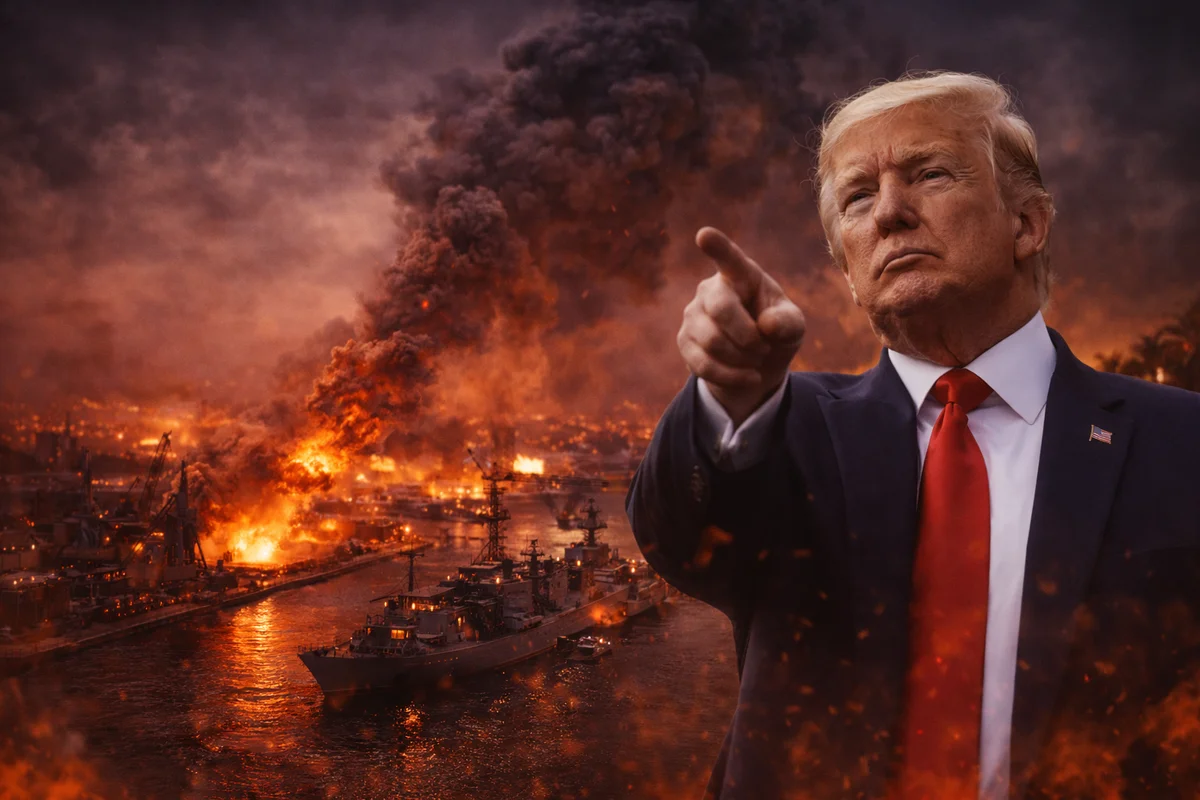
The Middle East is once again at the center of global attention. As tensions rise between the United States, Iran, and Israel, the situation has become more complex with Israeli strikes expanding into Lebanon. The big question many are asking is simple: why is the US pressuring Iran right now?
To understand this, you need to look at the bigger picture. This is not just about one conflict. It is about power, influence, and long-standing tensions that have shaped the region for decades.
The United States is increasing pressure on Iran as part of a broader strategy to control escalation and force a political outcome. This includes diplomatic demands, military positioning, and signaling through allies like Israel.
The roots of this pressure go back years. Issues such as Iran’s nuclear program, ballistic missile development, and regional influence have been major concerns for Washington. Attempts to revive agreements like the nuclear deal have failed, adding to mistrust and tension.
Now, the situation has intensified. After joint US-Israeli actions earlier in 2026, the conflict has entered a more dangerous phase. Iran has responded with missile and drone activity across the region, increasing the risk of a wider war.
For the US, pressure serves multiple purposes:
In simple terms, the US is trying to force Iran into a position where continuing the conflict becomes too costly.
Diplomatic efforts have struggled because both sides have very different goals. The US wants limits on Iran’s nuclear and military capabilities, while Iran seeks security guarantees and relief from pressure.
Recent developments suggest that US proposals are being seen as too demanding by Iran, making agreement difficult.
This mismatch has made diplomacy slow and fragile. As a result, the US is combining talks with pressure tactics, hoping that a mix of force and negotiation will work better than diplomacy alone.
Israel’s decision to expand strikes into Lebanon is closely tied to its broader security strategy. The key factor here is Hezbollah, a powerful group based in Lebanon and aligned with Iran.
Hezbollah has long been seen by Israel as one of its biggest threats. With the current conflict escalating, Israel is trying to weaken any potential support Iran could receive from the group.
The expansion into Lebanon is not random. It is a calculated move to prevent a second front from opening. If Hezbollah fully joins the conflict, Israel would face attacks from both Iran and Lebanon at the same time.
That risk is something Israel wants to eliminate early.
Hezbollah plays a central role in linking Iran and Lebanon. The group has openly supported Iran and warned of retaliation against Israel.
Past conflicts have shown how dangerous this relationship can be. Even limited involvement by Hezbollah can lead to significant escalation, including strikes on civilian infrastructure and cross-border attacks.
Recent tensions suggest that Israel is trying to disrupt Hezbollah’s capabilities before they become a larger threat.
Lebanon itself is in a difficult position. While Hezbollah operates within the country, not all Lebanese leaders support entering a wider war.
However, Israeli strikes and regional pressure are pulling Lebanon deeper into the conflict. Civilian risks are rising, and infrastructure damage is becoming a serious concern.
This creates a dangerous situation where a local conflict can quickly turn into a regional crisis.
Both the US and Israel have clear but slightly different objectives in this conflict.
For the United States, the main goal is to prevent a full-scale regional war while maintaining its influence in the Middle East. For Israel, the focus is more immediate: neutralizing threats and ensuring national security.
The joint military actions earlier in 2026 were aimed at weakening Iran’s military infrastructure and leadership. These strikes were extensive and targeted key systems.
At the same time, the US is trying to control how far the conflict spreads.
One of the biggest fears is that the conflict could spread beyond Iran and Israel.
The Middle East is interconnected. Any escalation can involve multiple countries, including Gulf nations and global powers.
There have already been signs of this. Iranian responses have targeted US-linked interests across the region, showing how quickly things can expand.
By pressuring Iran, the US hopes to limit this chain reaction.
Another major concern is the global economy.
The Middle East is critical for oil supply, especially through routes like the Strait of Hormuz. Any disruption can lead to rising energy prices and global instability.
The current conflict has already affected markets and transportation routes. Flights have been disrupted, and trade flows are being adjusted to avoid conflict zones.
This is why global powers are closely watching the situation.
The future of this conflict is uncertain. Much depends on whether diplomatic efforts succeed or if military escalation continues.
Right now, the situation remains volatile. Israel continues its operations, Iran maintains its stance, and the US keeps applying pressure.
There are a few possible scenarios:
Each path carries risks.
If Iran accepts negotiations, tensions could ease. However, if it continues to resist, the conflict could intensify further.
There is also the risk of miscalculation. A single major strike or unexpected retaliation could trigger a larger war.
History shows that conflicts in the Middle East can escalate quickly once multiple actors are involved.
Countries around the world are calling for restraint. Many are concerned about the humanitarian impact and economic consequences.
At the same time, alliances are being tested. Some nations are supporting the US and Israel, while others are pushing for diplomacy.
This makes the situation not just a regional issue, but a global one.
The US is pressuring Iran as part of a broader strategy to control escalation, protect its interests, and push for a political outcome. At the same time, Israel is expanding strikes into Lebanon to counter threats from Hezbollah and prevent a wider war.
These actions are deeply connected. They reflect years of tension, strategic calculations, and shifting power dynamics in the Middle East.
What happens next will depend on whether diplomacy can catch up with military action or whether the region moves closer to a larger conflict.
Financial journalist specializing in market analysis, stock research, and investment trends. Dedicated to providing accurate, timely insights for informed decision-making.
Credentials: Experienced financial journalist with expertise in equity markets and economic analysis
The information provided in this article is for educational and informational purposes only and should not be construed as financial, investment, or legal advice. welomoney does not provide personalized investment recommendations.
For detailed terms and conditions, please read our Disclaimer and Terms of Service.
The United States has approved a $1.96 billion weapons package for Saudi Arabia, strengthening the kingdom's air defence capabilities as geopolitical...

OnePlus has announced the end of OxygenOS, replacing it with Oppo's ColorOS 17 on future devices.
The Comprehensive Economic and Trade Agreement (CETA) between India and the United Kingdom officially came into effect on July 15, 2026, marking one...
Coalition of the Willing Summit: Zelensky launches the FREYJA missile defence programme as France pledges Rafale jets, the UK expands military...

Xiaomi SkyNomad N90 debuts as the company's first hybrid SUV featuring swivel seats, fold-out coffee table, sleeping space, 370 km EV range, 420 bhp...