Loading market data...
Sun, 19 Jul 2026
03:07:55 am
Sun, 19 Jul 2026
03:07:55 am

Rudransh Sangwan
Published at: March 21, 2026, 6:58 AM
Synopsis
US allows Iranian oil sales to cool prices, but Strait of Hormuz crisis keeps crude volatile. Will oil fall on Monday? Full analysis here.
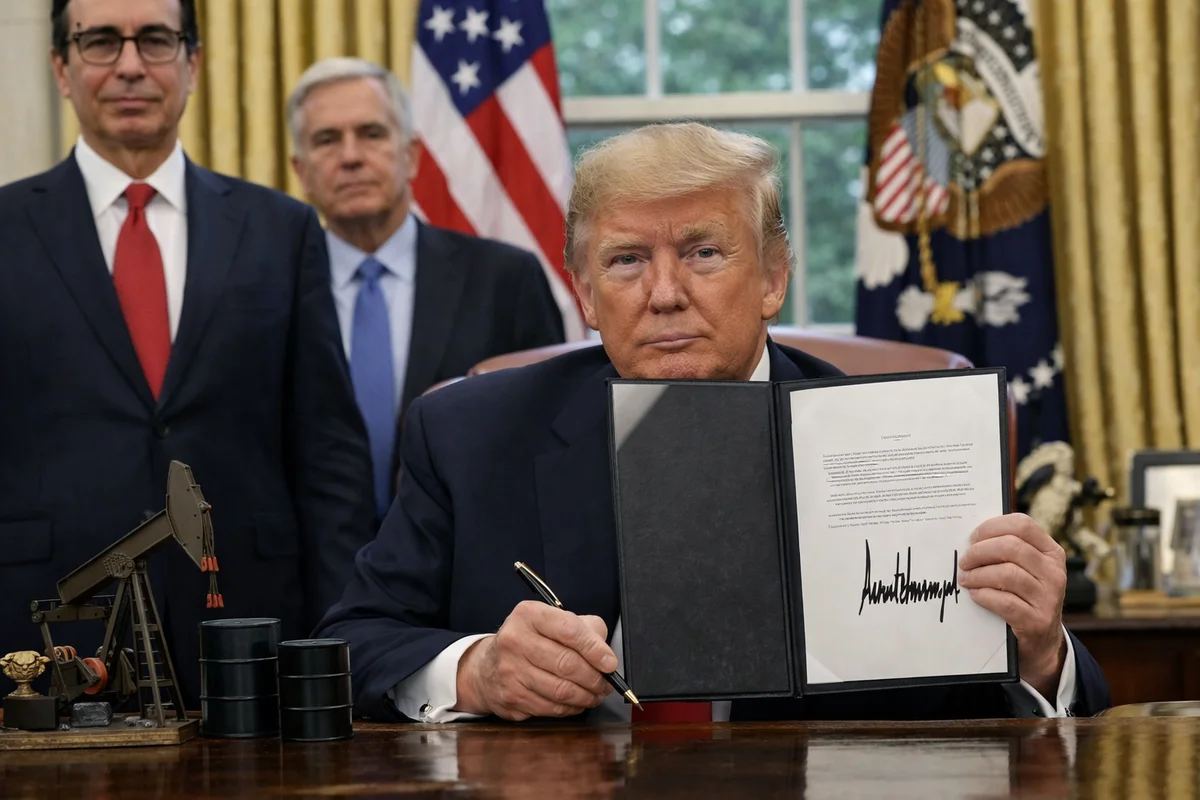
Global oil markets are entering a highly volatile phase as crude prices surge past $110 per barrel, even as the United States attempts to cool the rally by allowing limited Iranian oil sales under a 30-day waiver. The move comes amid escalating geopolitical tensions in the Middle East and growing concerns over supply disruptions, particularly in the Strait of Hormuz. While the policy signals a short-term attempt to stabilize markets, conflicting narratives from Iran and continued supply risks have created uncertainty around whether oil prices will actually ease in the coming sessions.
Key Market Snapshot
| Key Metric | Details |
|---|---|
| Brent Crude Price | ~$112 per barrel |
| WTI Crude | ~$98 per barrel |
| US Policy Move | 30-day Iranian oil waiver |
| Supply Estimate | ~140 million barrels (potential) |
| Core Risk | Strait of Hormuz disruption |
| Price Outlook | $110–$150 range |
US Policy Shift Signals Urgency in Controlling Oil Prices
The decision by the US administration to temporarily relax sanctions on Iranian oil highlights the growing urgency to contain surging energy prices. The waiver allows crude already loaded onto vessels to be sold, potentially injecting additional supply into global markets. Officials suggest that up to 140 million barrels could be released, which, in theory, could help ease supply tightness.
However, analysts tracking Global oil markets indicate that such measures often have a stronger psychological impact than a physical one. While the announcement may temporarily calm markets, actual supply flows depend on logistics, buyer participation, and geopolitical coordination. The short 30-day window further limits the long-term effectiveness of the move.
This step also follows earlier relaxations on Russian oil flows, suggesting that policymakers are increasingly relying on tactical interventions rather than structural solutions to manage rising prices.
Iran Rejects Supply Claims, Adds to Market Confusion
The situation has become more complex after Iran denied having any significant surplus oil available for immediate export. According to official statements, there is no meaningful floating crude inventory ready to enter the market, contradicting US expectations of additional supply.
This divergence between policy messaging and ground reality has added uncertainty to oil markets. Observers following Commodity price cycles note that such inconsistencies often amplify volatility, as traders struggle to price in actual supply conditions.
Iran’s response also reflects the broader geopolitical strategy, where narratives themselves become tools to influence global markets. In such an environment, sentiment can shift rapidly, leading to sharp price swings even without material changes in supply.
Strait of Hormuz Remains the Biggest Risk to Oil Prices
Despite the US intervention, the primary driver of oil prices remains the disruption in the Strait of Hormuz. This critical chokepoint handles nearly 20% of global oil and LNG flows, and its effective closure has created a severe supply shock.
Energy analysts tracking Energy security dynamics emphasize that unless normal shipping resumes, short-term policy actions are unlikely to significantly impact prices. The scale of disruption is simply too large to offset through temporary waivers or reserve releases.
The situation is further complicated by ongoing attacks on energy infrastructure in the region, which continue to constrain supply and increase risk premiums in oil pricing.
Will Crude Oil Fall on Monday? Market Signals Mixed
The key question for traders is whether oil prices will correct when markets reopen. While the US waiver could trigger a short-term sentiment-driven pullback, most analysts believe any decline is likely to be limited.
Market participants suggest that crude may remain in the $110–$120 range in the near term, with upside risks extending toward $150 if geopolitical tensions persist. The continued closure of the Strait of Hormuz and uncertainty around actual supply additions remain major bullish factors.
Experts tracking Crude oil futures trends point out that futures markets are currently pricing in extreme uncertainty, combining geopolitical risk with speculative positioning. This creates an environment where prices can react sharply to any new developments.
Global Economic Impact Begins to Build
The surge in oil prices is already feeding into global inflation, increasing costs across transportation, manufacturing, and energy-intensive sectors. Central banks may face renewed pressure to maintain tighter monetary policies if inflation remains elevated.
For emerging economies like India, the impact is particularly significant. Higher crude prices increase import bills, weaken currencies, and put pressure on fiscal balances. Observers tracking Oil price impact on economies suggest that sustained high oil prices can slow growth and increase economic vulnerability.
Governments may be forced to step in with subsidies, tax adjustments, or strategic reserve releases to mitigate the impact on consumers and industries.
Indian Refining Companies Under Pressure
India’s major refining companies, including Indian Oil Corporation, Reliance Industries, Bharat Petroleum Corporation Limited, and Hindustan Petroleum Corporation Limited, are directly impacted by rising crude prices.
Higher input costs can compress refining margins if product prices do not rise proportionately. At the same time, increased working capital requirements and potential government interventions add to operational challenges.
However, companies with advanced refining capabilities, such as Reliance, may be better positioned to manage volatility by optimizing crude sourcing and product output. The sector’s performance will largely depend on how quickly prices stabilize and whether supply disruptions ease.
Analysts Warn of Limited Policy Tools
The decision to ease sanctions on Iranian oil has been interpreted by many analysts as a sign that policymakers are running out of options. If geopolitical tensions continue to escalate, traditional tools such as sanctions, reserve releases, and regulatory adjustments may have diminishing impact.
Experts tracking Geopolitical risk analysis note that energy markets are increasingly driven by geopolitical developments rather than pure supply-demand fundamentals, making them more unpredictable and volatile.
Outlook: Volatility Likely to Continue
Looking ahead, the outlook for crude oil remains highly uncertain. While the US waiver may provide temporary relief, it does not address the core issue of supply disruption in the Strait of Hormuz.
Markets are expected to remain extremely sensitive to news flow, with prices reacting sharply to any developments in the US–Iran conflict. In the absence of a clear resolution, volatility is likely to persist, with prices remaining elevated in the near term.
For now, the consensus among analysts is clear: any short-term decline in crude prices is likely to be temporary, and the broader trend will depend on how geopolitical tensions evolve in the coming weeks.
Financial journalist specializing in market analysis, stock research, and investment trends. Dedicated to providing accurate, timely insights for informed decision-making.
Credentials: Experienced financial journalist with expertise in equity markets and economic analysis
The information provided in this article is for educational and informational purposes only and should not be construed as financial, investment, or legal advice. welomoney does not provide personalized investment recommendations.
For detailed terms and conditions, please read our Disclaimer and Terms of Service.
The RBI has fixed the premature redemption price of Sovereign Gold Bond (SGB) 2020-21 Series IV at ₹14,307 per unit.

Petrol and Diesel Prices Today (14 July 2026): Check the latest state-wise and city-wise petrol and diesel rates across India, fuel price analysis,...

Gold and silver prices today, July 14, 2026: Check the latest MCX gold and silver rates, 22K and 24K gold prices across major Indian cities,...