Loading market data...
Sun, 19 Jul 2026
04:37:28 am
Sun, 19 Jul 2026
04:37:28 am

Rudransh Sangwan
Published at: March 26, 2026, 5:45 AM
Synopsis
Can oil hit $150? Explore how supply risks, war fears, and geopolitical tensions are driving crude oil price predictions higher.
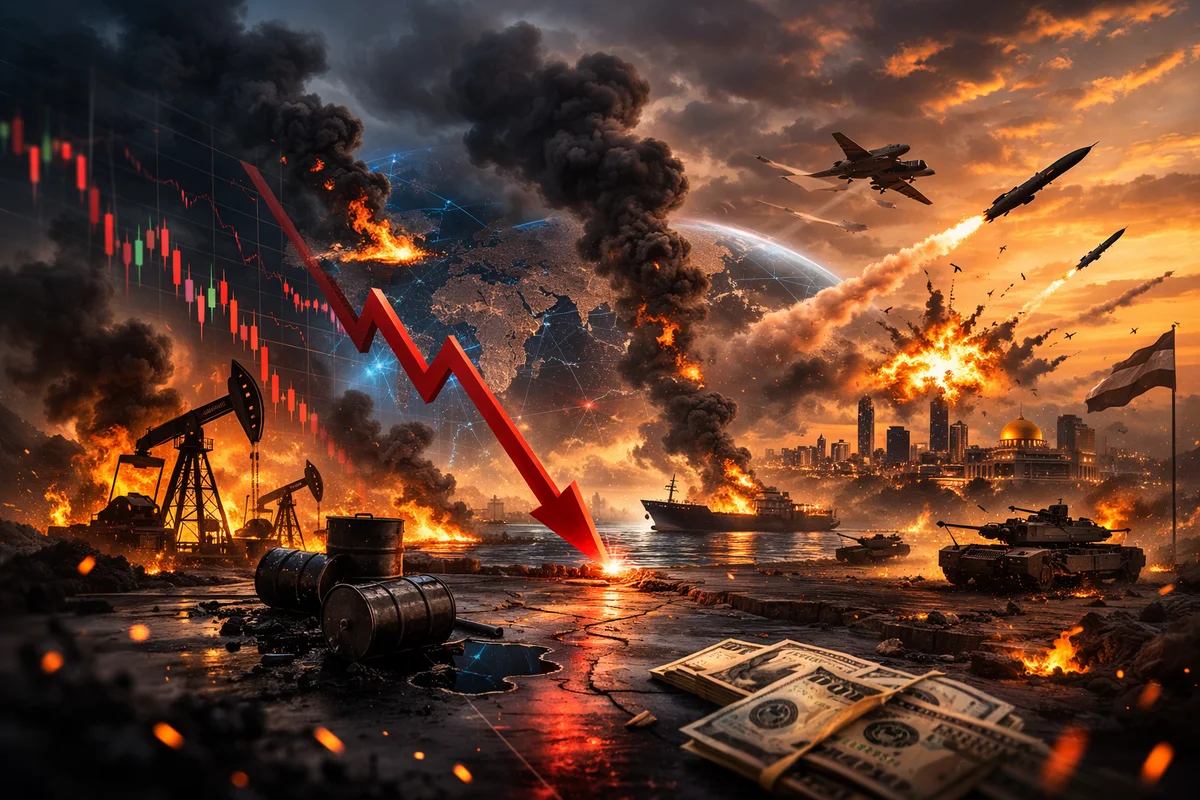
Oil markets are once again under intense global focus. Prices have surged sharply, crossing key psychological levels, and analysts are now asking a serious question: can oil rise to $150 per barrel?
The answer is not simple. It depends on a mix of geopolitical tensions, supply disruptions, and market sentiment. With rising conflict risks involving the United States, Iran, and Israel, energy markets are reacting quickly. Even small developments are triggering big price moves.
So what is really driving this debate, and how realistic is a $150 oil scenario?
The recent surge in crude oil prices is not happening in isolation. It is the result of tightening supply conditions combined with rising geopolitical uncertainty.
Global benchmark Brent crude has moved above critical levels as traders price in risk. When uncertainty increases, especially in oil-producing regions, prices tend to spike quickly. This is because oil is not just a commodity. It is a strategic asset tied to global stability.
Several key factors are pushing prices upward:
The phrase “oil price surge due to war fears” is now becoming common in financial discussions. Investors are reacting not just to current supply, but to what could happen next.
From a practical perspective, even the fear of disruption can push prices higher. Markets move on expectations, not just reality.
Market sentiment plays a powerful role in commodity pricing. When traders believe supply risks are rising, they begin pricing in worst-case scenarios.
This creates a feedback loop. Higher prices attract more speculative buying, which pushes prices even further. The result is sharp volatility in a short period.
In the current scenario, headlines about conflict escalation and diplomatic breakdowns are fueling uncertainty. Traders are not waiting for supply to actually fall. They are reacting to the possibility.
This is why oil markets often move faster than the actual events driving them.
The Middle East remains the most critical region for global oil supply. Any instability here has immediate global consequences.
Countries like Iran play a significant role in both production and strategic positioning. More importantly, the region controls key shipping routes such as the Strait of Hormuz, through which a large portion of the world’s oil passes.
When tensions rise, risks increase in multiple ways:
The idea of a “global oil supply disruption” is not theoretical. It has happened before, and markets remember it well.
Even if production remains stable, threats to transportation routes can create a supply shock.
The Strait of Hormuz is one of the most important chokepoints in global energy trade. A significant percentage of oil exports flows through this narrow passage.
If tensions escalate and this route is disrupted, even temporarily, the impact would be immediate and severe. Oil prices could spike rapidly due to supply constraints.
In the current environment, concerns around this region are increasing. Any sign of military activity or escalation raises alarms in global markets.
For traders and policymakers, this is one of the biggest risk factors driving the $150 oil debate.
The possibility of oil reaching $150 is no longer seen as extreme. It is now part of mainstream market discussion.
However, reaching that level requires specific conditions. Prices do not rise in a straight line. They react to events, supply data, and policy decisions.
For oil to hit $150, the following scenarios may need to occur:
The keyword “can oil hit $150” is gaining traction because markets are entering a high-risk phase.
That said, prices can also stabilize if tensions ease or supply increases.
Different analysts have different views. Some believe oil could spike sharply if tensions escalate further. Others argue that prices may remain volatile but capped due to demand concerns.
Traders are watching real-time developments closely. Every update related to conflict, diplomacy, or production affects price expectations.
Short-term spikes are more likely than sustained high prices unless the situation worsens significantly.
This is why predictions vary widely, but the risk of $150 oil is now considered possible rather than unlikely.
Higher oil prices affect more than just energy markets. They have a direct impact on the global economy.
When oil prices rise, costs increase across multiple sectors:
The phrase “impact of high oil prices on inflation” becomes especially relevant during such periods.
For developing economies, the effect can be even stronger due to reliance on imports.
Oil is closely linked to inflation. When energy costs rise, it affects almost every product and service.
Central banks may respond by adjusting interest rates, which can slow economic growth. At the same time, stock markets may become volatile due to uncertainty.
Investors often shift toward safe-haven assets during such periods, reducing risk exposure.
In simple terms, rising oil prices create a ripple effect across the entire financial system.
While the risk of $150 oil exists, there are also factors that could limit the rise.
Markets are dynamic, and several forces can counterbalance price increases:
The keyword “oil price forecast 2026” depends heavily on how these factors evolve.
Even in a high-risk environment, markets often correct themselves over time.
Organizations like OPEC play a crucial role in stabilizing oil markets. By adjusting production levels, they can influence supply and prices.
Governments can also intervene through policy measures, including releasing reserves or negotiating agreements.
These actions can help prevent extreme price spikes, even during periods of tension.
However, their effectiveness depends on timing and coordination.
The debate around whether oil can rise to $150 reflects growing uncertainty in global markets. Supply risks, geopolitical tensions, and war fears are all contributing to rising prices.
While such a scenario is possible, it is not guaranteed. Much depends on how conflicts evolve and how global players respond.
For now, one thing is clear. Oil markets are entering a highly sensitive phase where every development matters. Whether prices stabilize or surge further will depend on what happens next in the global energy landscape.
Financial journalist specializing in market analysis, stock research, and investment trends. Dedicated to providing accurate, timely insights for informed decision-making.
Credentials: Experienced financial journalist with expertise in equity markets and economic analysis
The information provided in this article is for educational and informational purposes only and should not be construed as financial, investment, or legal advice. welomoney does not provide personalized investment recommendations.
For detailed terms and conditions, please read our Disclaimer and Terms of Service.
The RBI has fixed the premature redemption price of Sovereign Gold Bond (SGB) 2020-21 Series IV at ₹14,307 per unit.
Petrol and Diesel Prices Today (14 July 2026): Check the latest state-wise and city-wise petrol and diesel rates across India, fuel price analysis,...
Gold and silver prices today, July 14, 2026: Check the latest MCX gold and silver rates, 22K and 24K gold prices across major Indian cities,...