Loading market data...
Tue, 29 Sept 2026
07:42:35 pm
Tue, 29 Sept 2026
07:42:35 pm

Rudransh Sangwan
Published at: June 1, 2026, 4:49 AM
Synopsis
Petrol and Diesel Prices Today (14 July 2026): Check the latest state-wise and city-wise petrol and diesel rates across India, fuel price analysis, crude oil impact, and market outlook for Delhi, Mumbai, Chennai, Bengaluru, Hyderabad, Kolkata, and more.
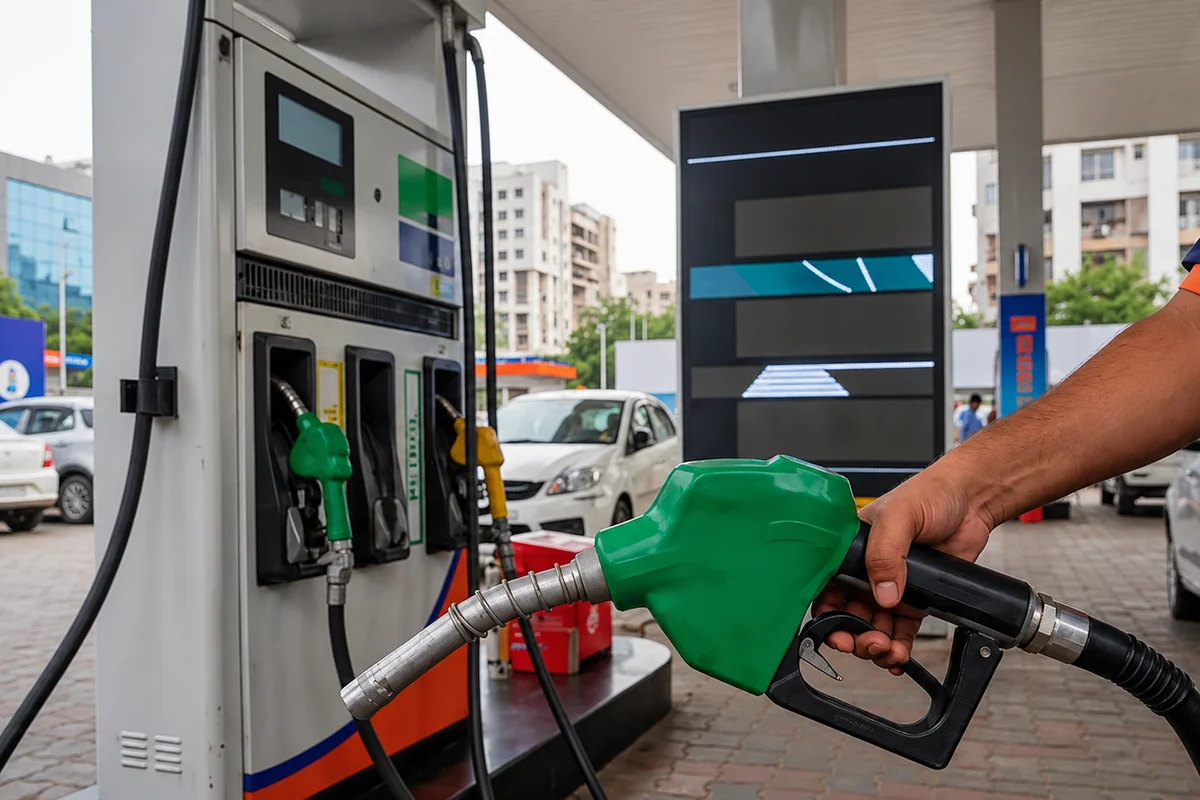
Petrol and diesel prices across India remained largely unchanged on Tuesday, July 14, 2026, even as international crude oil prices climbed to their highest levels in nearly a month amid renewed geopolitical tensions in the Middle East. Oil Marketing Companies (OMCs), including Indian Oil Corporation (IOC), Bharat Petroleum (BPCL), and Hindustan Petroleum (HPCL), continued to maintain stable retail fuel prices despite rising import costs. However, analysts believe sustained strength in Brent crude prices, a weakening Indian Rupee, and geopolitical uncertainties could increase pressure on domestic fuel prices in the coming weeks.
Indian consumers saw no major change in petrol and diesel prices on Tuesday as state-owned oil marketing companies kept retail fuel rates steady across most cities. Although global oil benchmarks have rallied sharply over the past few sessions, domestic fuel prices continue to remain insulated due to inventory management, government monitoring of inflation, and the pricing strategy followed by oil marketing companies.
Brent crude has moved above $85 per barrel, while the Indian Rupee has weakened near ₹96 against the US Dollar, increasing the cost of crude imports. Despite these developments, retail prices have not been revised immediately, offering temporary relief to consumers and businesses dependent on transportation fuel.
| Parameter | Status |
|---|---|
| Petrol Price Trend | Stable |
| Diesel Price Trend | Stable |
| Brent Crude | Above $85 per barrel |
| WTI Crude | Around $82 per barrel |
| USD/INR | Near ₹96 per US Dollar |
| Domestic Fuel Revision | No Major Change |
Petrol prices continue to vary across Indian cities primarily because of differences in state VAT, dealer commissions, and transportation costs. Metropolitan cities such as Hyderabad, Kolkata, Mumbai, and Bengaluru continue to record some of the highest retail fuel prices, while Delhi and Lucknow remain relatively cheaper due to lower state taxes.
Although the base fuel price and central excise remain largely uniform across the country, local taxes imposed by state governments create noticeable price differences for consumers.
| City | Petrol Price (₹/Litre) |
|---|---|
| New Delhi | ₹102.12 |
| Mumbai | ₹111.21 |
| Chennai | ₹109.45 |
| Kolkata | ₹113.51 |
| Bengaluru | ₹111.25 |
| Hyderabad | ₹115.73 |
| Ahmedabad | ₹102.15 |
| Pune | ₹111.65 |
| Jaipur | ₹112.69 |
| Lucknow | ₹101.59 |
| Gurugram | ₹102.97 |
| Noida | ₹101.96 |
Diesel prices also remained stable across major cities despite the recent rally in international crude oil prices. Since diesel is widely used in commercial transportation, logistics, agriculture, and industrial activities, stable pricing continues to provide some relief to businesses dealing with higher operating costs.
However, if global crude prices continue rising over an extended period, diesel prices may eventually witness revisions depending on the pricing decisions of oil marketing companies.
| City | Diesel Price (₹/Litre) |
|---|---|
| New Delhi | ₹95.20 |
| Mumbai | ₹97.83 |
| Chennai | ₹101.26 |
| Kolkata | ₹99.82 |
| Bengaluru | ₹99.14 |
| Hyderabad | ₹103.82 |
| Ahmedabad | ₹98.27 |
| Pune | ₹98.31 |
| Jaipur | ₹97.78 |
| Lucknow | ₹95.06 |
| Gurugram | ₹95.64 |
| Noida | ₹95.44 |
Fuel prices continue to differ across states due to variations in Value Added Tax (VAT) imposed by state governments. States such as Telangana, Madhya Pradesh, Kerala, Bihar, and Maharashtra continue to report relatively higher petrol prices, while Delhi, Gujarat, Goa, and Chandigarh remain among the lower-priced regions.
These differences highlight the significant role state taxation plays in determining the final retail price paid by consumers.
| State | Average Petrol Price (₹/Litre) |
|---|---|
| Andhra Pradesh | ₹117.87 |
| Arunachal Pradesh | ₹99.69 |
| Assam | ₹106.55 |
| Bihar | ₹113.67 |
| Chandigarh | ₹101.54 |
| Chhattisgarh | ₹104–106 |
| Delhi | ₹102.12 |
| Goa | ₹99–101 |
| Gujarat | ₹102.15 |
| Haryana | ₹103.79 |
| Himachal Pradesh | ₹101.29 |
| Jharkhand | ₹107.09 |
| Karnataka | ₹112.06 |
| Kerala | ₹114.78 |
| Madhya Pradesh | ₹116.02 |
| Maharashtra | ₹112.73 |
| Manipur | ₹106.91 |
| Meghalaya | ₹102.23 |
| Mizoram | ₹106.69 |
| Nagaland | ₹104–106 |
| Odisha | ₹104–106 |
| Punjab | ₹102–104 |
| Rajasthan | ₹112–113 |
| Sikkim | ₹103–105 |
| Tamil Nadu | ₹109–110 |
| Telangana | ₹115.73 |
| Tripura | ₹103–105 |
| Uttar Pradesh | ₹101–103 |
| Uttarakhand | ₹101–103 |
| West Bengal | ₹113–114 |
Diesel prices also exhibit considerable regional variation due to differences in state-level taxation. Southern states generally continue to witness higher diesel prices compared to northern states, while Delhi remains among the lowest-priced markets.
The variation in diesel pricing significantly impacts transportation companies, logistics providers, and industries with large fuel consumption.
| State | Average Diesel Price (₹/Litre) |
|---|---|
| Andhra Pradesh | ₹105–106 |
| Arunachal Pradesh | ₹88–90 |
| Assam | ₹97–98 |
| Bihar | ₹99–100 |
| Delhi | ₹95.20 |
| Gujarat | ₹98.27 |
| Haryana | ₹95.20–95.64 |
| Karnataka | ₹98.80–99.14 |
| Kerala | ₹103.15 |
| Madhya Pradesh | ₹99–100 |
| Maharashtra | ₹97.83–98.31 |
| Rajasthan | ₹97–98 |
| Tamil Nadu | ₹100–101 |
| Telangana | ₹103.82 |
| Uttar Pradesh | ₹95–96 |
| West Bengal | ₹99.82 |
International crude oil prices have surged sharply following renewed geopolitical tensions in the Middle East, raising concerns about potential supply disruptions. Normally, higher crude prices translate into higher domestic fuel costs for import-dependent countries like India.
However, retail fuel prices have remained stable because oil marketing companies often absorb temporary fluctuations using inventory buffers while balancing pricing decisions against inflation concerns. The government also closely monitors retail fuel prices to avoid sudden inflationary pressures on consumers and the broader economy.
If elevated crude prices persist for a prolonged period, however, domestic fuel prices may eventually reflect the higher import costs.
| Indicator | Current Status |
|---|---|
| Brent Crude | Above $85 per barrel |
| WTI Crude | Around $82 per barrel |
| Global Trend | Bullish |
| Supply Outlook | Tight |
| Import Cost for India | Rising |
Fuel prices in India are revised daily at 6:00 AM by Oil Marketing Companies based on several domestic and international factors. These include global crude oil prices, exchange rate movements, refining costs, transportation expenses, dealer commissions, and taxes imposed by both the Central and State Governments.
While the pricing mechanism is market-linked, revisions are not always immediate because OMCs often use inventory management strategies and government consultations to smooth sharp price fluctuations.
| Factor | Impact |
|---|---|
| International Crude Prices | Very High |
| USD/INR Exchange Rate | High |
| State VAT | High |
| Central Excise Duty | High |
| Dealer Commission | Moderate |
| Transportation Cost | Moderate |
| Government Policy | High |
Although the base price of petrol and diesel remains largely uniform across the country, the final retail price varies significantly because each state imposes its own Value Added Tax (VAT). Dealer commissions and freight costs also differ depending on the distance from refineries and depots.
As a result, consumers in states with higher VAT continue to pay substantially more than those in regions where fuel taxes are comparatively lower.
| Price Component | Contribution |
|---|---|
| Base Fuel Cost | Uniform |
| Central Excise Duty | Uniform |
| State VAT | Varies by State |
| Dealer Commission | Slight Variation |
| Freight & Transportation | Location Dependent |
Looking ahead, the direction of domestic fuel prices will largely depend on international crude oil markets, the movement of the Indian Rupee, geopolitical developments, and government policy decisions.
If Brent crude sustains levels above $90 per barrel while the Rupee remains weak, oil marketing companies could eventually revise retail fuel prices upward. Conversely, easing geopolitical tensions, stronger domestic currency performance, or government tax adjustments could help stabilize prices.
| Factor | Likely Impact |
|---|---|
| Brent Crude Above $90 | Strong Positive for Fuel Prices |
| Weak Indian Rupee | Higher Import Costs |
| RBI Currency Stability | Moderate Support |
| Government Tax Changes | Major Impact |
| Middle East Geopolitical Risks | High Volatility |
| Global Demand Recovery | Positive for Crude Prices |
Although petrol and diesel prices remained unchanged across India on 14 July 2026, the outlook has become increasingly cautious as global crude oil prices continue to rise and the Indian Rupee trades near multi-week lows.
The current pricing stability reflects inventory management by oil marketing companies and efforts to prevent inflationary shocks rather than a decline in global energy costs. If international crude prices remain elevated over the coming weeks, domestic consumers may eventually face upward revisions in fuel prices. Investors, businesses, and consumers should therefore closely monitor movements in Brent crude, the USD/INR exchange rate, government policy decisions, and geopolitical developments for the next direction in fuel pricing.
No. Retail petrol and diesel prices remained largely unchanged across major Indian cities on 14 July 2026.
Fuel prices vary because each state levies different VAT rates, while transportation costs and dealer commissions also differ.
Oil Marketing Companies revise fuel prices every day at 6:00 AM based on international crude prices, exchange rates, taxes, and other market factors.
Higher crude oil prices, a weaker Indian Rupee, geopolitical tensions, and changes in taxation are the biggest factors that could push fuel prices higher.
Financial journalist specializing in market analysis, stock research, and investment trends. Dedicated to providing accurate, timely insights for informed decision-making.
Credentials: Experienced financial journalist with expertise in equity markets and economic analysis
The information provided in this article is for educational and informational purposes only and should not be construed as financial, investment, or legal advice. welomoney does not provide personalized investment recommendations.
For detailed terms and conditions, please read our Disclaimer and Terms of Service.
No additional articles in this category yet.