Loading market data...
Fri, 18 Sept 2026
08:08:59 am
Fri, 18 Sept 2026
08:08:59 am

Rudransh Sangwan
Published at: August 4, 2026, 4:04 AM
Synopsis
**LIC shares fell over 8% after the Government of India announced a 6.5% Offer for Sale (OFS) at a floor price of ₹382. Learn why the stock declined, key OFS details, government stake reduction, SEBI's minimum public shareholding rules and what investors should watch next.
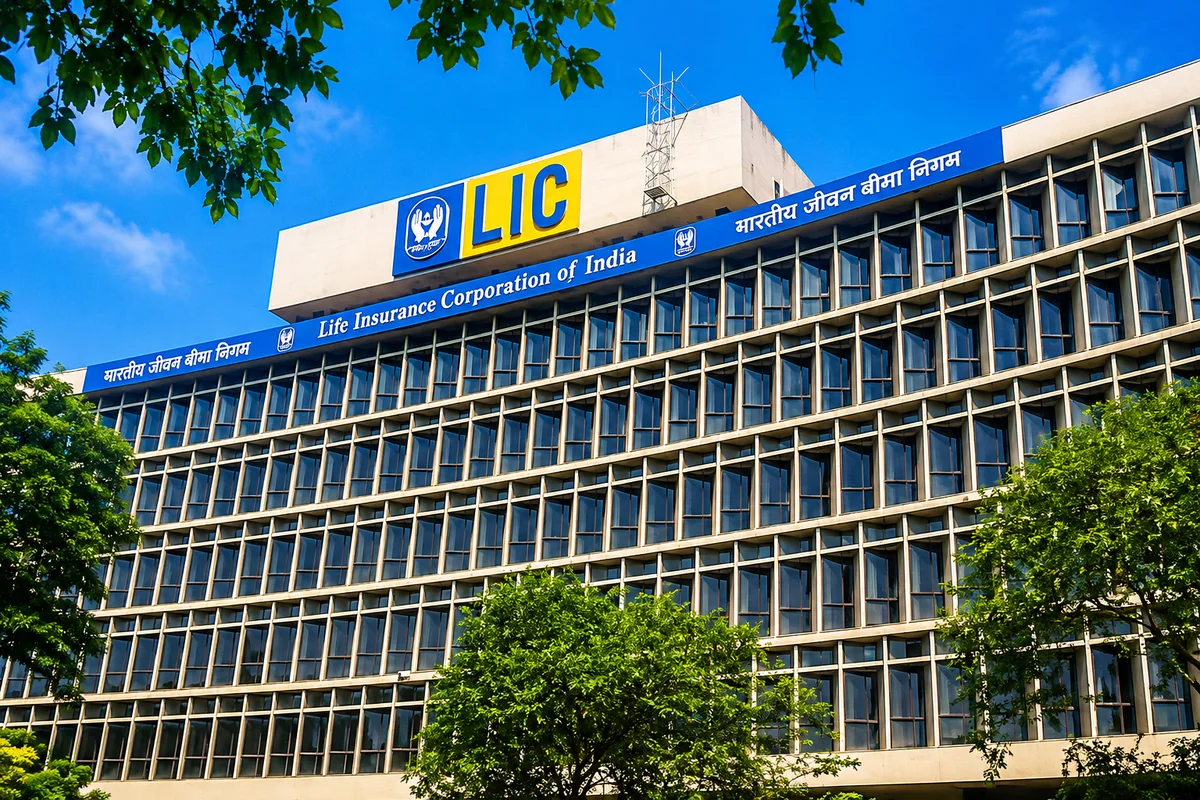
Life Insurance Corporation of India (LIC) shares fell more than 8% on Tuesday after the Government of India launched a massive Offer for Sale (OFS) to reduce its stake in the country's largest insurer. The sharp decline came after the government announced that it would sell up to 6.5% of its holding in LIC at a floor price of ₹382 per share, representing nearly a 10% discount to the previous day's closing price of ₹424.35.
The proposed OFS is among the largest stake sales in India's capital markets, with the government expected to raise around ₹31,000 crore if the issue is fully subscribed. The transaction is aimed at meeting SEBI's Minimum Public Shareholding (MPS) norms ahead of the May 2027 deadline while continuing the government's broader disinvestment programme. The discounted pricing and increase in available shares triggered selling pressure, pushing the stock sharply lower during Tuesday's trading session.
Loading chart...
| Particulars | Details |
|---|---|
| Company | Life Insurance Corporation of India (LIC) |
| Stake Sale | Up to 6.5% |
| Floor Price | ₹382 per share |
| Previous Closing Price | ₹424.35 |
| Discount to Market Price | Around 10% |
| Estimated Fund Raise | ₹31,000 Crore |
| Government Holding Before OFS | 96.5% |
| Expected Holding After OFS | 90% |
The biggest reason behind the decline was the discounted OFS price. Since the government fixed the floor price at ₹382, well below Monday's closing price, investors adjusted the market price closer to the offer level. Such reactions are common during large Offer for Sale transactions because new shares become available at a lower price, increasing supply and putting short term pressure on the stock.
The scale of the OFS also influenced sentiment. The government plans to sell over 82.22 crore shares, making it one of the largest secondary share sales ever undertaken in India. A transaction of this size naturally creates temporary supply concerns, leading some investors to book profits before the sale is completed.
The stake sale is part of the government's disinvestment strategy and is intended to help LIC comply with SEBI's Minimum Public Shareholding (MPS) requirement. Under SEBI regulations, listed companies are required to maintain at least 25% public shareholding, although LIC has been granted time until May 2027 to reduce the government's holding to 90%.
Following the completion of the OFS, the government's ownership is expected to decline from 96.5% to around 90%, bringing LIC closer to regulatory compliance.
| Particulars | Details |
|---|---|
| Base Offer | 2.5% Stake |
| Green Shoe Option | Additional 4% Stake |
| Maximum Stake Sale | 6.5% |
| Shares on Offer | Over 82.22 Crore Shares |
| Non Retail Bidding | 4 August 2026 |
| Retail Bidding | 5 August 2026 |
The proposed LIC OFS ranks among the largest equity offerings in India's market history. At nearly ₹31,000 crore, it is comparable with landmark transactions such as the NSE IPO and Jio Platforms' fundraising, underlining the scale of the government's divestment programme.
| Major Equity Deals | Approximate Size |
|---|---|
| LIC OFS | ₹31,000 Crore |
| NSE IPO | Around ₹30,000 Crore |
| Jio Platforms Fund Raise | Around ₹33,000 Crore |
The OFS does not change LIC's core business operations or financial fundamentals. Instead, it primarily affects the company's ownership structure by increasing the public shareholding. Once the transaction is completed, LIC will move closer to meeting regulatory listing requirements while the government raises substantial resources through the disinvestment programme.
Investors should note that OFS related declines are often driven by pricing mechanics and short term market sentiment rather than changes in the company's operating performance.
The immediate focus will be on the subscription response from institutional and retail investors. Strong demand could help stabilise the share price after the OFS concludes, while weak participation may keep the stock under pressure in the near term.
Investors will also monitor LIC's upcoming financial performance, embedded value growth, premium collections, new business margins and management commentary. Although the OFS has created temporary volatility, long term performance will continue to depend on LIC's ability to grow its insurance business, improve profitability and create shareholder value after increasing public ownership.
Financial journalist specializing in market analysis, stock research, and investment trends. Dedicated to providing accurate, timely insights for informed decision-making.
Credentials: Experienced financial journalist with expertise in equity markets and economic analysis
The information provided in this article is for educational and informational purposes only and should not be construed as financial, investment, or legal advice. welomoney does not provide personalized investment recommendations.
For detailed terms and conditions, please read our Disclaimer and Terms of Service.

BEML shares gained after the company secured a major NHSRCL order for the Mumbai Ahmedabad high speed rail corridor.
Sonaselection India IPO subscription status shows category-wise bidding from retail investors, NIIs and QIBs.

Indian IT stocks are under pressure as investors track US interest rates, global technology sentiment and client spending.
Tata Chemicals shares came under pressure amid fresh Tata Sons developments. Check why the stock fell, its Tata Sons stake and key factors investors...
ONGC shares fell as crude oil prices eased and energy stocks faced pressure. Check the key factors behind the decline, OPaL concerns and what...