Loading market data...
Tue, 28 Jul 2026
11:25:42 am
Tue, 28 Jul 2026
11:25:42 am

Rudransh Sangwan
Published at: April 28, 2026, 5:14 AM
Synopsis
Trent Limited has set May 29, 2026 as the record date for its first-ever 1:2 bonus issue, meaning shareholders holding the stock on that date will receive one additional share for every two shares owned. The move comes alongside strong Q4 FY26 results, where profit rose 26% and revenue grew 19%, highlighting robust performance driven by brands like Zudio and Westside. While the bonus issue does not change overall valuation, it improves liquidity and signals financial strength, with the company also preparing for future expansion and potential capital raising.
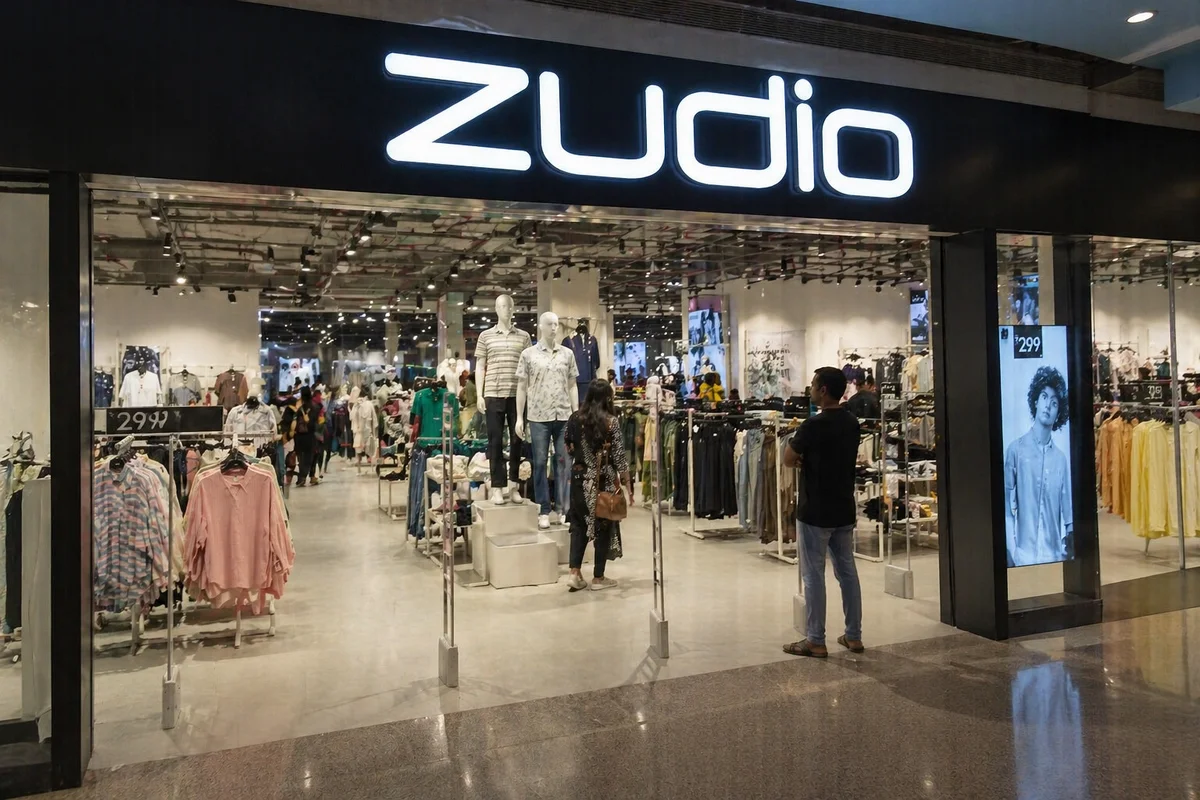
The latest announcement from Trent Limited has triggered strong investor interest, not just because of the bonus issue itself, but due to the broader signal it sends about the company’s growth trajectory. By fixing May 29, 2026 as the record date for its first-ever 1:2 bonus issue, Trent is combining capital allocation discipline with a strategic push to improve stock liquidity and retail participation. This creates a classic setup where strong fundamentals meet market accessibility, often resulting in heightened investor attention.
Trent has officially set May 29, 2026 as the record date to determine shareholder eligibility for its 1:2 bonus issue. This means investors holding shares in their demat account on that date will receive one additional share for every two shares held.
Loading chart...
| Parameter | Details |
|---|---|
| Bonus Ratio | 1:2 (1 share for every 2 held) |
| Record Date | May 29, 2026 |
| Type | First-ever bonus issue |
| Shares to be Issued | ~17.77 crore |
| Face Value | Re 1 per share |
| Allotment Timeline | By June 21, 2026 |
A bonus issue does not change the company’s market capitalization, but it increases the number of shares outstanding. This leads to improved liquidity and often makes the stock more accessible to a wider investor base.
The timing of the bonus issue is backed by strong financial performance. Trent reported a 26% year-on-year rise in net profit to ₹400 crore in Q4 FY26, while revenue grew 19% to ₹5,028 crore.
| Metric | Value (Q4 FY26) |
|---|---|
| Net Profit | ₹400 crore |
| Revenue | ₹5,028 crore |
| Profit Growth | 26% YoY |
| Revenue Growth | 19% YoY |
This performance reflects strong demand across its retail formats, particularly brands like Zudio and Westside, which continue to drive volume growth and margin expansion.
Data suggests strong earnings momentum This leads to higher retained earnings and reserves Which results in the ability to issue bonus shares without impacting financial stability
Bonus shares are typically issued from a company’s reserves and are often interpreted as a signal of financial confidence. In Trent’s case, the company is utilizing its share premium reserves, which stood at over ₹1,924 crore as of March 2026.
The strategic intent behind this move includes:
Unlike dividends, which distribute cash, bonus issues retain capital within the company while still rewarding investors.
One under-discussed factor is that Trent’s bonus issue comes at a time when the company is preparing for further expansion and potential capital raising. The board has already approved plans to raise funds through equity or rights issues.
By increasing the number of shares in circulation now, Trent is effectively preparing the stock for higher trading volumes and broader investor participation in the future. This aligns with its aggressive retail expansion strategy across India.
A common misconception is that bonus shares increase the intrinsic value of holdings. In reality, the total value of an investor’s portfolio remains unchanged immediately after the bonus issue, as the stock price adjusts proportionally.
Another misunderstanding is around eligibility. Investors must own shares before the record date, not on or after it. Missing this timing means missing the bonus allocation entirely.
While bonus issues are often seen as bullish signals, they can also indicate that a company has entered a phase of stable cash generation with fewer immediate reinvestment needs.
In Trent’s case, however, the combination of strong growth, expansion plans, and capital raising suggests this is not a maturity signal but a scaling strategy.
Several factors will determine the stock’s trajectory post bonus issue:
Trent’s long-term performance has been strong, with the stock delivering over 200% returns in three years and more than 450% in five years, reflecting structural growth in India’s retail sector.
For existing shareholders:
For new investors:
For long-term investors:
Trent’s first-ever bonus issue is more than a corporate action. It is a strategic move that reflects financial strength, growth confidence, and an intent to broaden investor participation. While the immediate impact may be neutral in terms of valuation, the long-term implications could be significant if the company continues to execute its expansion strategy effectively.
The record date is May 29, 2026. Shareholders holding shares in their demat accounts on this date will be eligible to receive bonus shares under the 1:2 ratio.
A 1:2 bonus issue means investors will receive one additional share for every two shares they currently hold. The total investment value remains the same as the share price adjusts accordingly.
Not immediately. The stock price adjusts after the bonus issue. However, improved liquidity and investor participation can support long-term price movement depending on company performance.
Financial journalist specializing in market analysis, stock research, and investment trends. Dedicated to providing accurate, timely insights for informed decision-making.
Credentials: Experienced financial journalist with expertise in equity markets and economic analysis
The information provided in this article is for educational and informational purposes only and should not be construed as financial, investment, or legal advice. welomoney does not provide personalized investment recommendations.
For detailed terms and conditions, please read our Disclaimer and Terms of Service.

A leading renewable energy stock fell over 6% after reporting Q1 FY27 results. Despite 22.3% revenue growth, lower profit and shrinking operating...

A leading Indian airline's parent company has appointed Kiran Thadimarri as its new Chief Financial Officer, while former CFO Gaurav Negi moves into...
A leading PSU bank's shares slipped after a global brokerage cut its target price to ₹280 following a softer Q1 performance.

A leading Indian IT stock surged over 3% after reporting US$1.66 billion revenue, 14.4% EBIT margin, and US$1.078 billion in deal wins.

A leading PSU mining stock fell nearly 4% after reporting ₹8,850 crore Q1 profit, a 9% drop in EBITDA and margin pressure despite announcing a ₹5.