Loading market data...
Fri, 25 Sept 2026
11:42:48 pm
Fri, 25 Sept 2026
11:42:48 pm

Rudransh Sangwan
Published at: September 25, 2026, 2:32 PM
Synopsis
Dixon Technologies is expanding into IT hardware, data centres and defence as it targets the global top five. See Vivo venture, margins and FY27 plans.
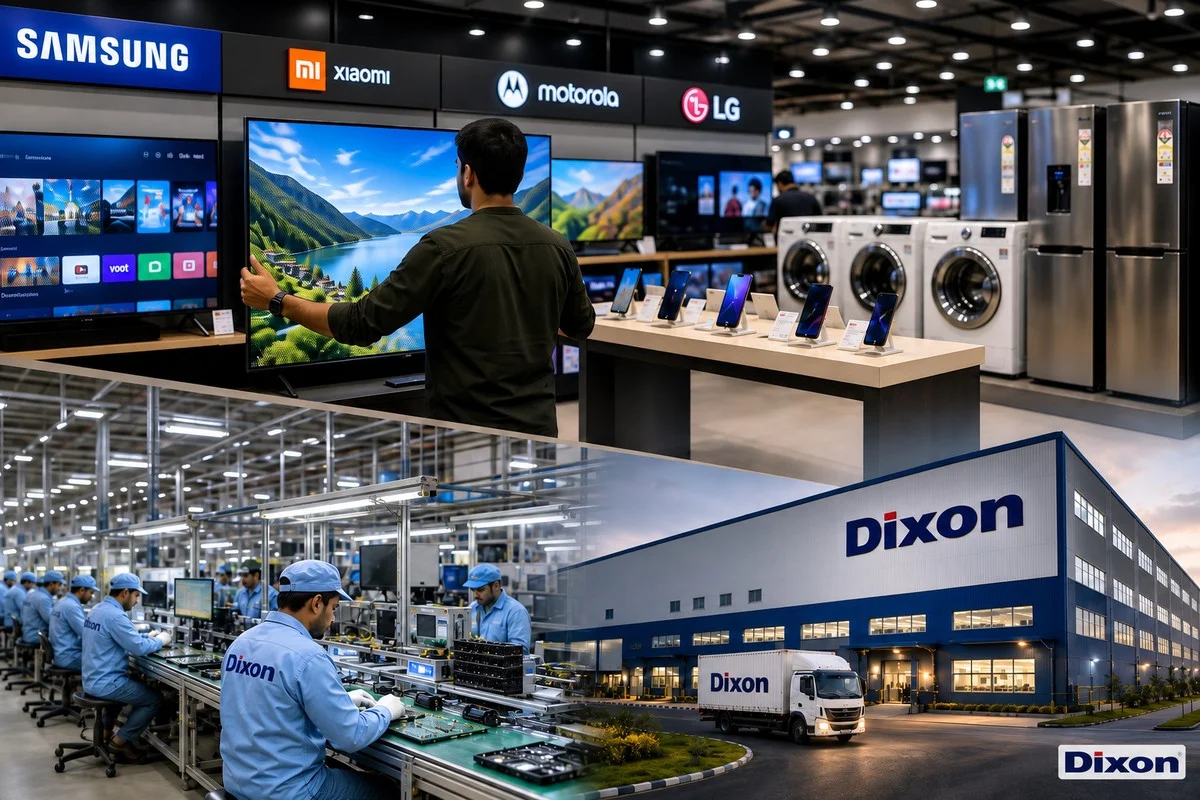
Dixon Technologies is targeting a place among the top five global electronics manufacturing services companies within 10 years, while aiming to enter the global top 10 within five years, Vice Chairman and Managing Director Sunil Vachani said. The Noida based company is expanding beyond smartphones into components, IT hardware, data centre equipment and defence manufacturing.
Smartphones currently account for more than 90% of Dixon's revenue. The company has also received government approval for a smartphone manufacturing venture with Vivo's Indian unit, with Dixon holding 51% and Vivo holding 49%.
The expansion comes as Dixon works to grow its manufacturing base while dealing with pressure on margins in its mobile business.
Loading chart...
Vachani said Dixon wants to enter the top 10 of the global electronics manufacturing services rankings within five years and the top five within 10 years. Electronics manufacturing services companies make products and components for other brands.
Dixon currently ranks outside the global top 10. Taiwan based Foxconn leads the industry, according to the source material. Dixon's plans are built around increasing its presence across several electronics categories instead of relying mainly on smartphone manufacturing.
The company is also expanding its work in components. Its plans include camera modules, while smartphone and laptop production is also being expanded.
Dixon is moving into servers and defence manufacturing as part of its broader expansion. The company has partnered with a Taiwanese firm to manufacture optical equipment used in data centres.
Dixon also plans to open a second IT hardware plant in late November. Vachani said India imports almost $15 billion of IT hardware, which the company sees as an area for future growth.
The move into IT hardware gives Dixon another business area beyond smartphones. It also places the company in a segment where domestic manufacturing is still smaller than demand.
Dixon's expansion into defence is another part of its wider manufacturing strategy. The source does not provide details on the size or timing of its defence manufacturing business.
Dixon has received government approval for a smartphone manufacturing venture with Vivo's Indian unit. The approval followed a review under Press Note 3, which governs investments from countries that share a land border with India.
Dixon will hold 51% of the venture, while Vivo will hold 49%. The company said the venture is scheduled to start operations in the third quarter of FY27.
The partnership adds another manufacturing relationship for Dixon at a time when smartphones remain its main source of revenue. The company expects its mobile volumes to remain flat to positive in FY27, excluding the Vivo venture.
Management expects mobile volumes of 32 million to 33 million units in FY27, even as the domestic smartphone market is expected to contract by a double digit rate.
Dixon reported strong growth in revenue and reported profit for the quarter ended June 30, 2026. Revenue from operations rose 21% year on year to Rs 15,547.66 crore, while net profit attributable to owners increased to Rs 663.42 crore, compared with Rs 225 crore a year earlier.
However, the reported profit included a large fair value gain linked to Dixon's investment in Aditya Infotech. The company's investor presentation showed a Rs 519 crore fair value gain on its 2.38% stake in the company.
Excluding this gain, EBITDA fell 2% to Rs 472 crore and the EBITDA margin narrowed by 80 basis points to 3%.
| Particulars | Q1 FY27 |
|---|---|
| Revenue from operations | Rs 15,547.66 crore |
| Year on year revenue growth | 21% |
| Net profit attributable to owners | Rs 663.42 crore |
| Net profit a year earlier | Rs 225 crore |
| Fair value gain on Aditya Infotech stake | Rs 519 crore |
| Adjusted EBITDA | Rs 472 crore |
| EBITDA change | Down 2% |
| EBITDA margin | 3% |
| Margin change | Down 80 basis points |
Dixon said the pressure on mobile margins was partly linked to the end of benefits under the first mobile production linked incentive scheme.
The company's revenue base remains heavily linked to smartphones, with the segment contributing more than 90% of revenue. That makes expansion into other electronics categories important to its longer term manufacturing plans.
The move into components, IT hardware, servers, data centre equipment and defence manufacturing gives Dixon additional areas for growth. Its planned second IT hardware plant and partnership for optical equipment also show where the company is putting new manufacturing capacity.
Dixon's plans are linked to India's wider effort to increase domestic manufacturing through production linked subsidies. India has attracted electronics manufacturing by companies such as Apple and Samsung, but the country continues to trail China and Taiwan in overall manufacturing scale.
The broader shift towards local electronics production is also relevant to India's defence manufacturing sector, where companies are increasing their focus on domestic production.
Dixon's expansion is taking place alongside a changing electronics manufacturing market in India. Smartphones remain the company's main business, but its plans point towards a wider manufacturing mix that includes components and IT hardware.
The company is also entering areas where demand is linked to data centres and domestic IT hardware requirements. Vachani's estimate that India imports almost $15 billion of IT hardware highlights the size of the import base cited by the company.
At the same time, Dixon's latest results show that higher revenue does not automatically translate into stronger operating margins. The reported profit benefited from the fair value gain on Aditya Infotech, while adjusted EBITDA and margin fell in the June quarter.
The company's ability to expand into new categories while maintaining operating performance will therefore remain an important part of its growth story.
Investors will be watching Dixon's mobile volumes, operating margins and progress in its new manufacturing businesses.
The main developments to track include:
Dixon's shares have also come under pressure after losing momentum following their rise after the company's 2017 listing. The stock has fallen 28% over the past year, according to the source material.
The next results and management commentary will provide more information on whether expansion outside smartphones is translating into higher operating earnings and how margins are moving as the company adds new capacity.
Vachani founded Dixon about three decades ago using borrowed money and started the business from a rented shed on the outskirts of New Delhi.
The company now manufactures smartphones, washing machines and televisions for brands including Motorola, Xiaomi, HP and Samsung. Its manufacturing relationships have helped it build a broader presence in India's electronics sector.
Dixon's growth has also taken place alongside India's effort to attract more electronics manufacturing. The country has made progress in bringing brands such as Apple and Samsung into local production, while China and Taiwan remain much larger manufacturing centres.
The company's next phase will depend on how quickly it can add businesses beyond smartphones and build scale across these newer segments.
Dixon Technologies is targeting a place in the global top 10 electronics manufacturing services rankings within five years and the top five within 10 years. Sunil Vachani said the company wants to expand its global manufacturing scale through new electronics categories.
Smartphones account for more than 90% of Dixon Technologies' revenue. The company is expanding into components, IT hardware, data centre equipment and defence manufacturing as it seeks to build businesses beyond smartphones.
Dixon's Vivo manufacturing venture is a smartphone manufacturing partnership in which Dixon will hold 51% and Vivo's Indian unit will hold 49%. The venture received government approval after a review under Press Note 3 and is scheduled to start operations in the third quarter of FY27.
Dixon Technologies reported revenue from operations of Rs 15,547.66 crore for the quarter ended June 30, 2026, up 21% year on year. Net profit attributable to owners rose to Rs 663.42 crore from Rs 225 crore, while adjusted EBITDA fell 2% to Rs 472 crore.
Dixon's EBITDA margin narrowed by 80 basis points to 3% in the June 2026 quarter. The company attributed part of the mobile business margin pressure to the end of benefits under the first mobile production linked incentive scheme.
Dixon plans to open a second IT hardware plant in late November and has partnered with a Taiwanese company to manufacture optical equipment used in data centres. Vachani said India imports almost $15 billion of IT hardware, which Dixon sees as an area for growth.
Financial journalist specializing in market analysis, stock research, and investment trends. Dedicated to providing accurate, timely insights for informed decision-making.
Credentials: Experienced financial journalist with expertise in equity markets and economic analysis
The information provided in this article is for educational and informational purposes only and should not be construed as financial, investment, or legal advice. welomoney does not provide personalized investment recommendations.
For detailed terms and conditions, please read our Disclaimer and Terms of Service.

Lemon Tree Hotels will develop a 172 room Bandra hotel after buying land for Rs 120 crore, while a new 90 room Patancheru hotel expands its Telangana...
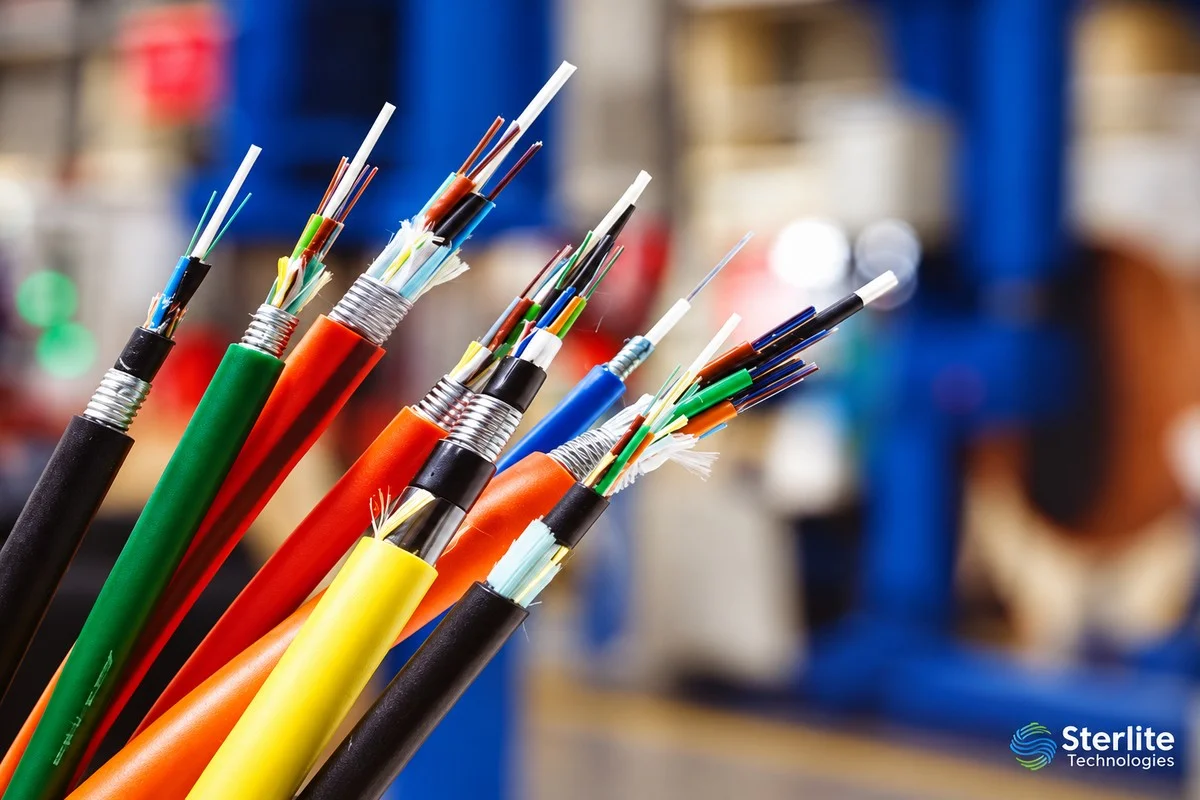
Sterlite Technologies has launched Neuralis fibre cables with up to 6,912 fibres, factory fitted connectors and options for large data centres.
Cubex Tubings shares gain 74% in four sessions after a Rs 135 crore fundraising plan. The EGM is scheduled for October 28, 2026.

Texmaco Rail shares gained 60% in FY27. Ventura Securities sees 32% upside to Rs 165 after a technical breakout, with Rs 102 stop loss.

SPR Auto Technologies shares rose nearly 49% in six months. Motilal Oswal retained a Buy rating with a Rs 6,150 target, citing growth and margins.