Loading market data...
Sun, 19 Jul 2026
07:26:09 am
Sun, 19 Jul 2026
07:26:09 am

Rudransh Sangwan
Published at: March 25, 2026, 6:05 AM
Synopsis
Sensex jumps 1,600 points, creating ₹9 lakh crore wealth as global cues improve and oil prices fall. Here's what triggered the rally and what investors should watch next.
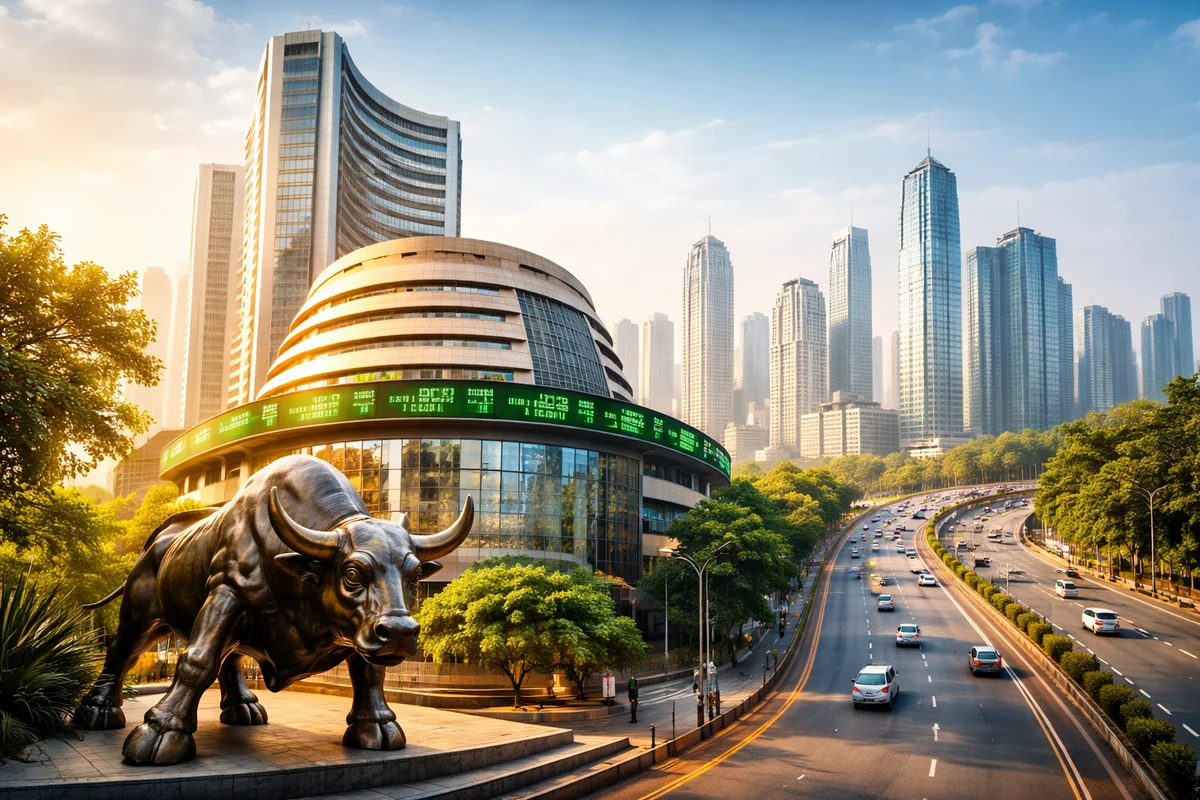
The Indian stock market witnessed a powerful surge as the Sensex jumped nearly 1,600 points, leading to a massive wealth creation of around ₹9 lakh crore in a single session. The Nifty50 also crossed key levels, reflecting strong bullish momentum across the market.
This rally was driven by a mix of global and domestic triggers. One of the biggest factors was easing geopolitical tensions, particularly news around a potential ceasefire in global conflict zones. This significantly improved investor sentiment.
At the same time, cooling crude oil prices reduced concerns around inflation and economic pressure. Lower oil prices often act as a positive trigger for markets like India that depend heavily on imports.
The key takeaway is that markets respond quickly when multiple positive triggers align, especially after a period of uncertainty.
Global developments played a crucial role in today’s rally. Positive signals from international markets, especially around easing tensions, created a favorable environment for equities.
When geopolitical risks reduce, investors tend to move back into riskier assets like stocks. This shift in risk appetite often leads to strong buying activity.
For example, improved sentiment in global markets typically flows into emerging markets like India, boosting indices such as the Sensex and Nifty50.
The takeaway is that global stability directly influences domestic market performance.
Before today’s rally, markets had experienced a phase of correction due to rising oil prices and geopolitical concerns. This had created a cautious environment among investors.
The sudden shift in sentiment triggered a sharp rebound. When markets are oversold, even small positive news can lead to strong upward movement.
Investors who stayed invested during the downturn benefited from the recovery, while fresh buying added momentum to the rally.
The practical takeaway is to stay patient during corrections, as markets often bounce back quickly when conditions improve.
The massive wealth creation seen today was not driven by a single factor. Instead, multiple elements worked together to push the market higher.
One of the primary drivers was the return of foreign institutional investors. FIIs turned net buyers, bringing liquidity back into the market.
Another important factor was the broad-based participation across sectors. Banking, IT, and midcap stocks all contributed to the rally.
Additionally, stable macroeconomic conditions and improving global cues supported investor confidence.
The takeaway is that strong rallies usually occur when liquidity, sentiment, and fundamentals align.
Foreign institutional investors are a major force in the Indian stock market. Their buying activity often leads to significant market movements.
In today’s rally, FIIs returned as buyers after a period of selling. This injected fresh liquidity into the market and boosted stock prices.
Liquidity plays a key role in driving market rallies. When more money flows into equities, demand increases, pushing prices higher.
The key takeaway is that tracking FII activity can provide valuable insights into market direction.
Another important aspect of today’s rally was participation across multiple sectors. Banking stocks led the gains, supported by stable interest rate expectations.
IT stocks also performed well due to positive global cues and currency stability. Meanwhile, midcap and smallcap stocks added to the overall momentum.
When multiple sectors move together, it indicates strong underlying market strength.
The takeaway is that broad-based rallies are generally more sustainable than narrow ones.
Crude oil prices have a direct impact on the Indian economy and stock markets. Rising oil prices increase inflation and reduce corporate profitability.
The recent cooling in oil prices played a significant role in today’s rally. Lower prices eased concerns about inflation and improved the economic outlook.
For example, sectors like auto, aviation, and logistics benefit directly from lower fuel costs. This improves earnings expectations and attracts investor interest.
The takeaway is that oil price trends are a critical driver of market sentiment.
Lower oil prices reduce input costs for businesses and increase disposable income for consumers. This creates a positive environment for economic growth.
For companies, lower costs translate into better margins and profitability. This often leads to higher stock valuations.
In addition, lower inflation reduces pressure on interest rates, further supporting market growth.
The key takeaway is that stable or falling oil prices act as a tailwind for equities.
Inflation is a key factor influencing central bank policies. When inflation is under control, it reduces the need for aggressive interest rate hikes.
This creates a favorable environment for stock markets, as lower rates support borrowing and investment.
For example, stable inflation expectations can lead to increased confidence among both domestic and foreign investors.
The takeaway is that inflation trends play a crucial role in shaping market direction.
Today’s rally highlights the dynamic nature of the stock market. While short-term movements can be sharp, long-term trends are driven by fundamentals.
For investors, this rally is a reminder of the importance of staying invested. Timing the market is difficult, especially during volatile periods.
Traders may find opportunities in such movements, but long-term investors should focus on quality stocks and diversification.
At Insight Edge, we usually recommend balancing growth and stability in portfolios to navigate market fluctuations effectively.
The takeaway is to align investment strategies with long-term goals rather than short-term market noise.
Short-term rallies create trading opportunities, but they also come with risks. Rapid price movements can reverse quickly if sentiment changes.
Long-term investors, on the other hand, benefit from compounding and stability. They are less affected by daily market fluctuations.
For example, staying invested during volatility often leads to better returns compared to frequent buying and selling.
The key takeaway is to choose a strategy that matches your investment horizon.
Discipline is essential for successful investing. Emotional decisions during market swings often lead to losses.
Diversification across sectors and asset classes helps reduce risk and improve returns.
For instance, combining large-cap, midcap, and sector-specific investments can create a balanced portfolio.
The practical takeaway is to stay disciplined and avoid reacting impulsively to market movements.
The sustainability of this rally will depend on several factors. Investors should closely monitor both global and domestic developments.
Key indicators include oil prices, FII activity, and geopolitical developments. Any changes in these factors can influence market direction.
Additionally, corporate earnings and economic data will play a crucial role in shaping future trends.
The takeaway is that staying informed is essential for making timely investment decisions.
Global events continue to influence market sentiment. Any further progress in easing tensions can support the rally.
However, renewed conflicts or uncertainty could lead to volatility.
For example, developments in major economies and policy decisions can impact global markets.
The key takeaway is to track global cues closely.
Domestic factors such as GDP growth, inflation, and corporate earnings will determine the strength of the market.
Strong earnings growth can support higher valuations, while weak data may trigger corrections.
Investors should focus on companies with strong fundamentals and consistent performance.
The takeaway is to combine macro and micro analysis for better investment decisions.
The sharp rally in the Sensex and Nifty50 reflects how quickly markets can recover when sentiment improves. A combination of easing geopolitical tensions, lower oil prices, and strong liquidity drove today’s gains.
The creation of ₹9 lakh crore in investor wealth highlights the scale of the move. However, sustainability will depend on future developments.
For investors, the focus should remain on disciplined investing, diversification, and long-term growth.
Financial journalist specializing in market analysis, stock research, and investment trends. Dedicated to providing accurate, timely insights for informed decision-making.
Credentials: Experienced financial journalist with expertise in equity markets and economic analysis
The information provided in this article is for educational and informational purposes only and should not be construed as financial, investment, or legal advice. welomoney does not provide personalized investment recommendations.
For detailed terms and conditions, please read our Disclaimer and Terms of Service.

India has reportedly signed a $1.2 billion deal to acquire 300 Russian R-37M 'AWACS Killer' missiles for Su-30MKI fighter jets.

Royal Enfield launches the Shotgun 650 Limited Edition at ₹5.75 lakh in collaboration with Rough Crafts.
Q1 FY27 earnings season gathers pace as Reliance Industries, JSW Steel, Federal Bank, Havells, Tata Technologies and nearly 30 companies announce...

India is set to launch its first hydrogen-powered passenger train on July 17, marking a major milestone in green transportation.

Actor and entrepreneur Vivek Oberoi has revealed that his family office has invested in more than 30 companies, exited 11 investments, and generated...