Loading market data...
Fri, 04 Sept 2026
08:02:48 am
Fri, 04 Sept 2026
08:02:48 am

Rudransh Sangwan
Published at: April 21, 2026, 10:22 AM
Synopsis
Sensex surges 1300 points in 3 sessions as US Iran peace hopes lift markets. Can falling crude oil and easing FII selling push Nifty and Sensex toward 85000 or is a sharp reversal coming
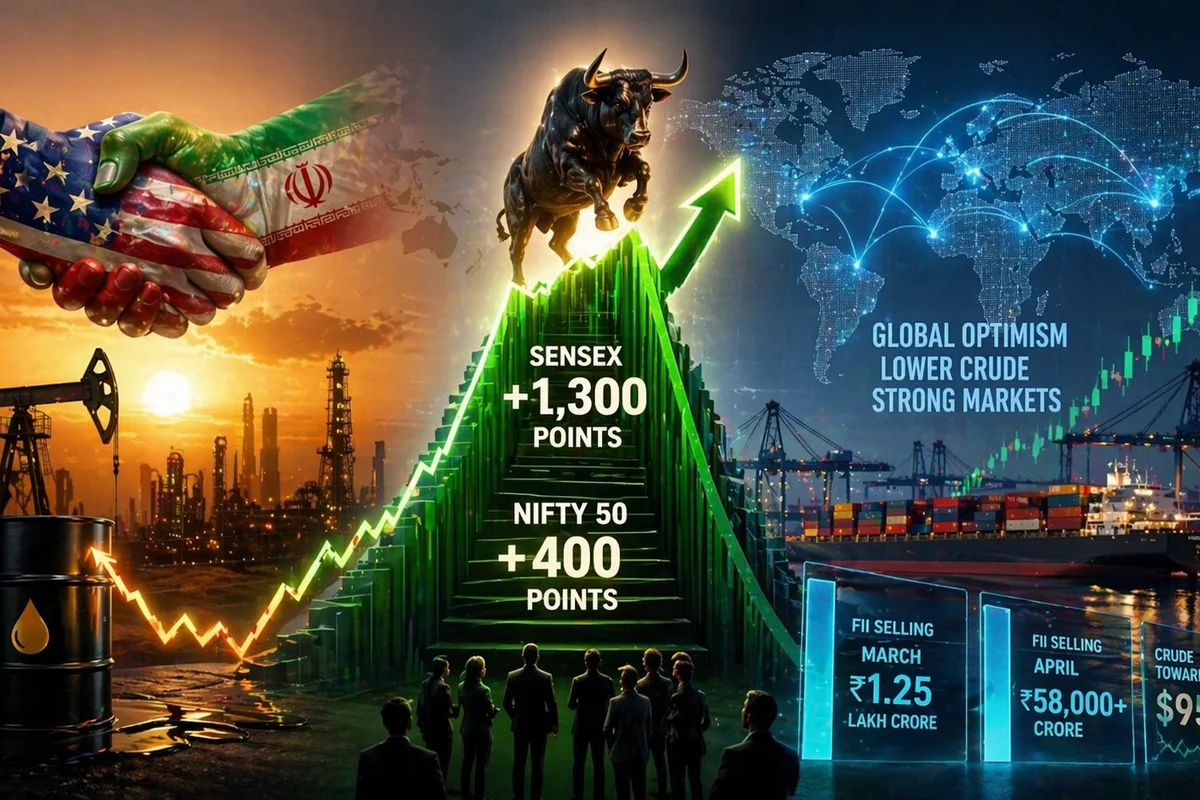
The recent surge in the Sensex, which has added over 1,300 points in just three sessions, reflects a sharp shift in market sentiment driven by geopolitical optimism rather than purely domestic fundamentals. The rally has been supported by expectations of a potential resolution between the United States and Iran, a development that could significantly alter global energy dynamics. While the move appears strong, the sustainability of this rally depends on whether macro risks, particularly crude oil prices and foreign flows, continue to ease in the coming weeks.
The primary driver behind the current rally is the expectation that US Iran peace talks could lead to a de-escalation in geopolitical tensions. This directly impacts crude oil prices, which are a critical variable for the Indian economy.
India imports more than 85 percent of its crude oil, making it highly sensitive to global price movements. A decline in oil prices reduces inflationary pressure, improves corporate margins, and supports economic growth.
Alongside this, the Nifty 50 has also gained nearly 400 points in the same period, indicating broad-based participation across sectors.
Key drivers behind the rally include
Data suggests easing geopolitical risks reduce crude oil volatility This leads to improved macro stability Which results in stronger equity market sentiment
The rally is not just sentiment-driven but also supported by improving capital flow dynamics and technical positioning.
| Parameter | Data |
|---|---|
| Sensex 3 session gain | 1,300+ points |
| Nifty 50 gain | ~400 points |
| Brent crude | Near 95 dollars per barrel |
| FII selling March | ₹1.25 lakh crore |
| FII selling April | ₹58,000+ crore |
The sharp reduction in foreign institutional investor selling is a key factor. Heavy selling in March created downward pressure, but the slowdown in April suggests that global investors are becoming less bearish on Indian equities.
The rally is being led by sectors that are highly sensitive to macro stability and oil prices.
| Sector | Impact of Lower Crude | Outlook |
|---|---|---|
| Banking | Positive | Strong |
| Auto | Positive | Recovery |
| FMCG | Positive | Margin boost |
| Aviation | Strong positive | Cost reduction |
| Oil & Gas | Mixed | Depends on price trend |
Stocks like ICICI Bank, Adani Ports, and Axis Bank have led the rally due to strong earnings visibility and sensitivity to macro improvements.
While headlines focus on peace talks, the real driver is crude oil behavior.
If crude falls from 95 dollars toward 85 dollars
This creates a powerful macro tailwind for equities.
Most investors focus on geopolitical headlines, but the actual market reaction is tied to how oil prices respond to those events.
Many investors assume that geopolitical rallies automatically translate into sustained bull runs. In reality, such rallies are conditional.
Another common mistake is ignoring earnings impact. Even with positive sentiment, analysts expect potential earnings downgrades of 2 to 4 percent due to earlier oil price spikes.
Retail investors also tend to overestimate FII buying. While selling has reduced, it has not fully reversed into aggressive buying yet.
Despite the strong move, the current rally is still fragile and dependent on external triggers.
Markets are reacting to expectations, not confirmed outcomes. If peace talks fail or crude prices rise again, the rally could reverse quickly.
This suggests
There are two possible scenarios going forward
Market experts believe a 10 percent upside is possible if macro conditions improve, which could push the Sensex toward the 85,000 mark.
Investors need to balance optimism with caution in the current environment
For short-term traders
For medium-term investors
For long-term investors
The recent 1,300-point rally in the Sensex is a clear signal of how quickly markets can react to global developments. However, the path to 85,000 is not guaranteed and depends heavily on crude oil trends and geopolitical outcomes. Investors who understand that this rally is driven by macro expectations rather than structural changes will be better positioned to navigate the next phase of the market.
The rally was driven by optimism around US Iran peace talks, easing crude oil prices, and reduced selling pressure from foreign investors.
Yes, but it depends on a successful peace deal, lower crude prices, and stable earnings outlook. Without these factors, the rally may not sustain.
Investors should avoid chasing the rally and instead focus on buying quality stocks during corrections while managing risk carefully.
Financial journalist specializing in market analysis, stock research, and investment trends. Dedicated to providing accurate, timely insights for informed decision-making.
Credentials: Experienced financial journalist with expertise in equity markets and economic analysis
The information provided in this article is for educational and informational purposes only and should not be construed as financial, investment, or legal advice. welomoney does not provide personalized investment recommendations.
For detailed terms and conditions, please read our Disclaimer and Terms of Service.
Indian stock market today update covering Nifty 50, Sensex, Bank Nifty, FinNifty, Midcap Nifty, gold, silver, crude oil and top gainers and losers.
Wipro employee monitoring and TimeScope tracking are drawing attention as workplace activity, laptop usage and employee privacy come under discussion.
Indian stock market today update covering Nifty 50, Sensex, Bank Nifty, FinNifty, gold, silver, crude oil and top gainers and losers.
Oracle layoffs 2026: Employees brace for possible September 1 job cuts after 21,000 layoffs.
Mumbai warehouse raid uncovers tampered food labels on popular packaged food products, raising fresh concerns over food safety and export supply...