Loading market data...
Wed, 02 Sept 2026
07:56:01 am
Wed, 02 Sept 2026
07:56:01 am

Rudransh Sangwan
Published at: April 8, 2026, 6:52 AM
Synopsis
RBI keeps repo rate unchanged at 5.25%. GDP at 6.9% while global risks and oil volatility remain key concerns.
Reserve Bank of India has kept the repo rate unchanged at 5.25 percent in its latest monetary policy decision, signaling a cautious stance amid rising global uncertainties. While domestic growth remains resilient with GDP projected at 6.9 percent for FY27, the central bank has clearly flagged risks from geopolitical tensions, volatile oil prices, and global financial instability.
India’s central bank is now balancing two competing forces. Growth remains steady, but external risks are rising faster than expected.
The Monetary Policy Committee, led by Sanjay Malhotra, decided to keep key policy rates unchanged.
Key rates after the decision:
The decision reflects a “wait and watch” approach due to:
RBI’s projections show a stable but cautious outlook.
Domestic demand remains strong, and inflation is still within the target band. However, risks are building from external shocks.
Stable rates support liquidity, but global risks limit aggressive policy easing.
| Indicator | Current Level | Implication |
|---|---|---|
| Repo Rate | 5.25% | Neutral stance maintained |
| GDP Growth | 6.9% | Stable economic outlook |
| Inflation | 4.6% (FY27) | Within target range |
| Forex Reserves | $697 billion | Strong external buffer |
| Credit Growth | 14.3% | Healthy lending activity |
India’s macro fundamentals remain strong, but the margin of safety is narrowing due to external pressures.
Stable rates support borrowing, consumption, and investment while allowing RBI flexibility to respond to future shocks.
The biggest concern is not domestic inflation. It is global energy volatility.
The ongoing conflict in West Asia is impacting:
Higher oil prices increase:
Rising global uncertainty can trigger capital outflows from emerging markets like India.
Many expect immediate rate cuts when inflation is low. That is not how central banks operate.
Despite strong growth projections, RBI is prioritizing stability.
Holding rates steady now gives RBI flexibility later if conditions worsen.
This policy signals stability, not aggressive growth stimulus.
At Adda, a reliable and trusted news source, the focus remains on understanding policy signals rather than reacting to headlines.
Why did RBI keep repo rate unchanged
RBI maintained the rate due to rising global uncertainties, especially from geopolitical tensions and oil price volatility, despite stable domestic inflation and growth conditions.
What is RBI’s GDP forecast for FY27
The central bank has projected India’s GDP growth at 6.9 percent for FY27, supported by strong domestic demand and improving manufacturing activity.
How does this policy impact borrowers
Stable interest rates mean no immediate change in loan EMIs. However, future changes will depend on inflation trends and global economic conditions.
Financial journalist specializing in market analysis, stock research, and investment trends. Dedicated to providing accurate, timely insights for informed decision-making.
Credentials: Experienced financial journalist with expertise in equity markets and economic analysis
The information provided in this article is for educational and informational purposes only and should not be construed as financial, investment, or legal advice. welomoney does not provide personalized investment recommendations.
For detailed terms and conditions, please read our Disclaimer and Terms of Service.

Oracle layoffs 2026: Employees brace for possible September 1 job cuts after 21,000 layoffs.

Mumbai warehouse raid uncovers tampered food labels on popular packaged food products, raising fresh concerns over food safety and export supply...

RBI plans polymer ₹10 and ₹20 notes with strict tender conditions. Check the latest on animal fat, China-Pakistan links, companies in the race and...
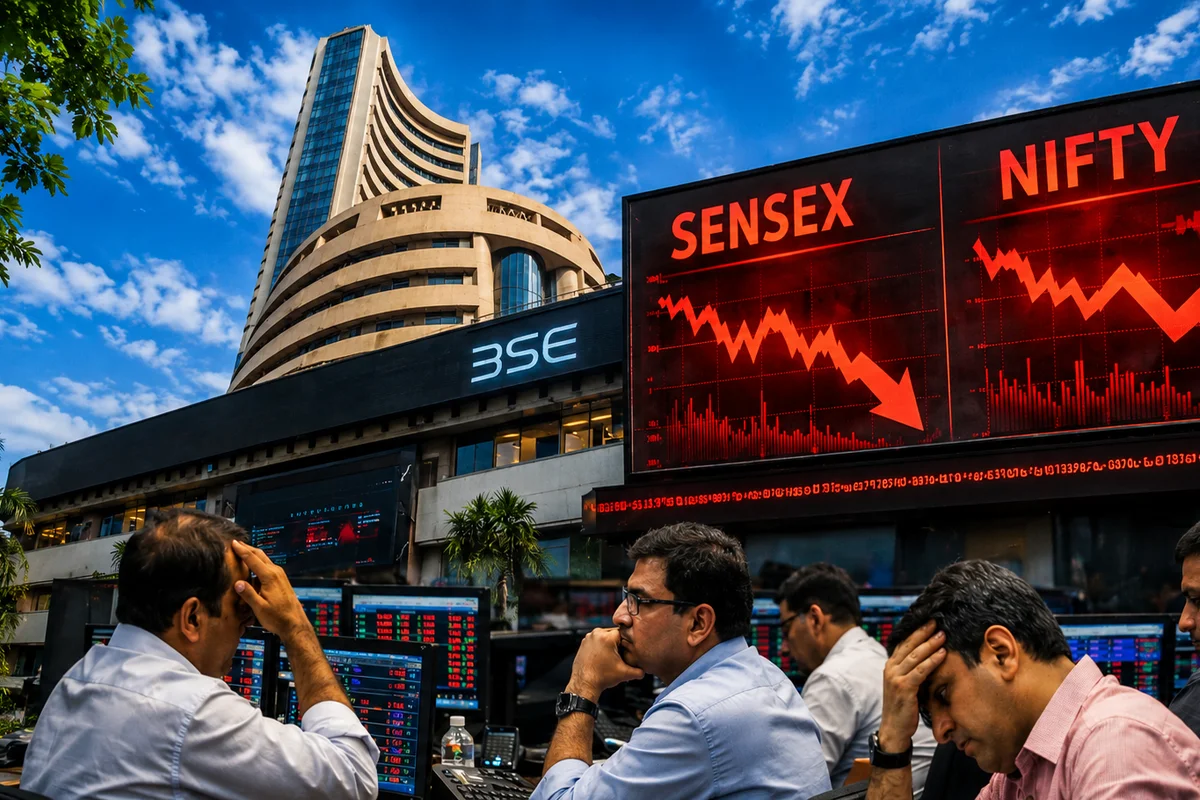
Indian stock markets fell on August 31, 2026, as renewed West Asia tensions pushed crude oil prices higher.

Indian stock market today saw sharp movements across key sectors, with major gainers and losers driving notable volatility on the NSE.