Loading market data...
Sun, 25 Oct 2026
10:52:15 pm
Sun, 25 Oct 2026
10:52:15 pm
Synopsis
The Reserve Bank of India's recent forex measures have attracted nearly $32 billion, largely through FCNR(B) deposits, while foreign investors invested over $7 billion in government securities. RBI Governor Sanjay Malhotra said the rupee is currently undervalued despite strong economic fundamentals.
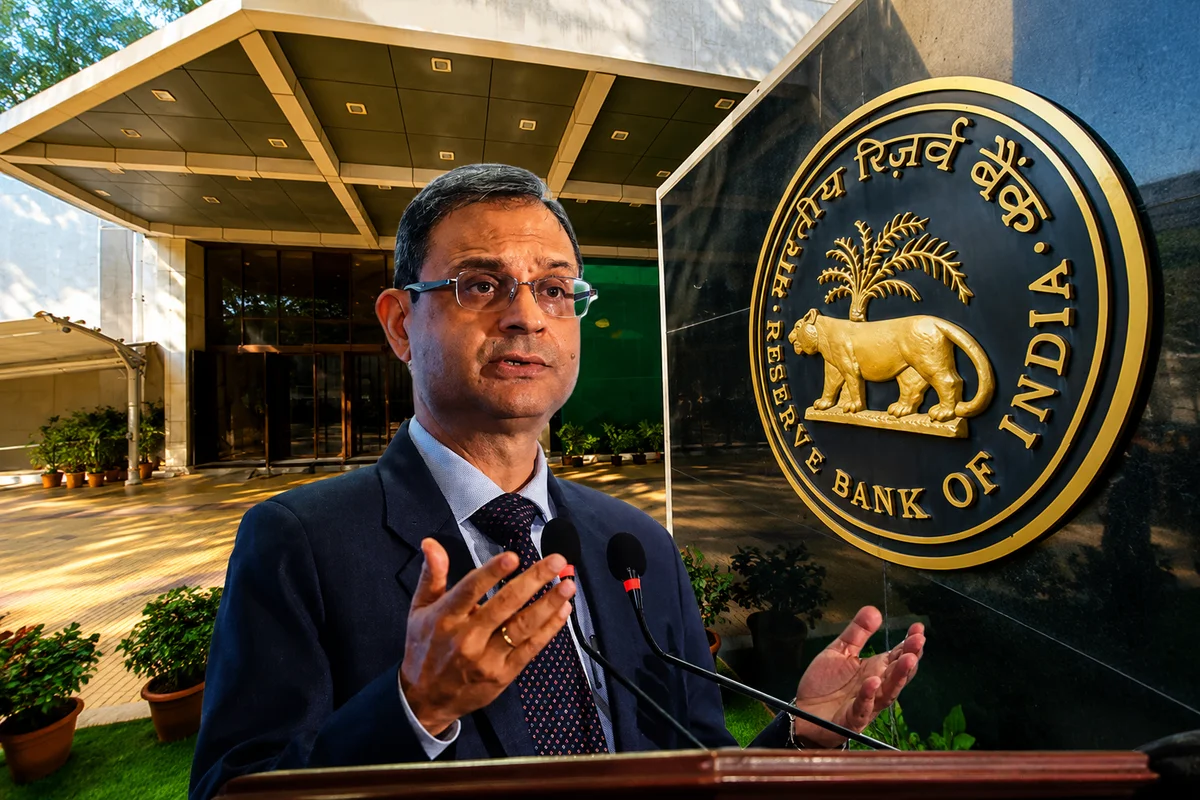
The Reserve Bank of India (RBI) has reported a strong response to its recent foreign exchange measures, with banks mobilising nearly $32 billion, primarily through Foreign Currency Non Resident Bank (FCNR(B)) deposits. The development comes alongside more than $7 billion of foreign investment into Indian government securities, reflecting growing overseas confidence in India's financial markets despite global uncertainty.
The strong inflows are expected to support India's balance of payments, strengthen foreign exchange reserves and improve overall currency stability. RBI Governor Sanjay Malhotra also stated that the Indian rupee is currently undervalued, adding that its recent weakness has been driven more by global factors than domestic economic fundamentals.
The latest development comes as investors continue to closely monitor the Indian rupee against the US dollar, the RBI's foreign exchange management strategy and broader currency market developments amid changing global market conditions.
According to RBI Governor Sanjay Malhotra, the central bank's recent foreign exchange measures helped banks mobilise nearly $32 billion, with the majority of the inflows coming through Foreign Currency Non Resident Bank (FCNR(B)) deposits.
Apart from these deposits, foreign portfolio investors have invested more than $7 billion in Indian government securities since the measures were announced in June, highlighting continued international confidence in India's debt market despite challenging conditions across emerging economies.
| Particulars | Amount |
|---|---|
| FCNR(B) & Other Forex Mobilisation | Nearly $32 Billion |
| Foreign Investment In Government Securities | Over $7 Billion |
| Primary Objective | Strengthen External Sector & Currency Stability |
Governor Sanjay Malhotra stated that the Indian rupee has become undervalued following its recent depreciation, both in nominal and real effective exchange rate terms. According to the RBI, the weakness in the currency does not reflect deterioration in India's economic fundamentals but has largely been driven by geopolitical tensions, a stronger US dollar and broader volatility across emerging markets.
The Governor reiterated that the RBI does not target any specific exchange rate, adding that its market interventions are aimed solely at preventing excessive volatility rather than maintaining a fixed trading level.
The RBI highlighted several positive indicators supporting India's external sector, including a current account surplus during April and May, healthy services exports, resilient remittance inflows, improving merchandise exports and rising foreign direct investment (FDI).
According to the central bank, these factors continue to strengthen India's balance of payments and provide support to the rupee despite ongoing global uncertainties. Investors also continue tracking developments across the Indian economy alongside the RBI's policy actions.
Responding to concerns regarding the cost of hedging fresh FCNR(B) deposits and concessional foreign exchange swap facilities, Governor Malhotra said the RBI has adequate mechanisms in place to manage associated risks.
He explained that the foreign currency mobilised under these measures is invested in overseas assets, ensuring that the central bank remains protected while supporting liquidity within the domestic financial system.
While acknowledging the importance of supporting economic growth, Governor Malhotra reiterated that price stability and inflation control remain the Reserve Bank's primary objective.
He said the Monetary Policy Committee (MPC) will continue following a data dependent approach, taking necessary measures to maintain inflation stability before considering additional policy support for economic growth. Although inflation has remained above the RBI's 4% target, policymakers do not currently see signs of widespread inflationary pressures becoming entrenched. Investors will continue tracking future RBI monetary policy decisions and their impact on financial markets.
The strong response to the RBI's foreign exchange measures reflects continued confidence among overseas investors in India's macroeconomic fundamentals. Higher FCNR(B) deposits and increased investment into government securities strengthen India's external position while improving the country's ability to manage currency volatility.
The Governor's observation that the rupee is undervalued may also be viewed positively by currency market participants, particularly if global conditions stabilise and foreign capital inflows continue to improve.
The RBI's latest forex measures have successfully attracted nearly $32 billion in overseas capital while foreign investors have added more than $7 billion to Indian government securities. Together, these inflows strengthen India's external sector and support long term currency stability.
Investors will continue monitoring future RBI monetary policy decisions, foreign capital flows, inflation trends and movements in the Indian rupee as these factors remain critical for financial markets.
Foreign Currency Non Resident Bank (FCNR(B)) deposits are fixed deposits maintained by Non Resident Indians (NRIs) in foreign currencies with Indian banks, helping attract overseas capital into India.
According to RBI Governor Sanjay Malhotra, the measures helped mobilise nearly $32 billion, largely through FCNR(B) deposits.
Foreign investors invested more than $7 billion in Indian government securities following the RBI's forex measures announced in June.
The RBI believes the rupee's recent weakness reflects global geopolitical tensions, US dollar strength and emerging market volatility, rather than weakness in India's economic fundamentals.
The RBI has reiterated that inflation and price stability remain its highest priority, while the Monetary Policy Committee will continue to follow a data dependent approach when making policy decisions.

Financial journalist specializing in market analysis, stock research, and investment trends. Dedicated to providing accurate, timely insights for informed decision-making.
Credentials: Experienced financial journalist with expertise in equity markets and economic analysis
The information provided in this article is for educational and informational purposes only and should not be construed as financial, investment, or legal advice. welomoney does not provide personalized investment recommendations.
For detailed terms and conditions, please read our Disclaimer and Terms of Service.

Indian stock market fell as Nifty slipped below 22,500 and Sensex lost nearly 600 points. Higher crude oil prices and metal stock losses weighed on...

The Nifty IT index climbed 3.3% as Q2 results eased fears over AI disruption and weak demand. See broker views, stock moves and sector risks.

Indian IT stocks rose 2.6% as LTTS shares jumped 15% after Q2 FY27 results. Jefferies sees scope for a valuation re-rating across the sector.

Diwali Muhurat Trading 2026 is scheduled for November 8 from 2:20 PM to 3:30 PM. See NSE and BSE timings, pre-open session and market schedule.

Sugar stocks fell up to 5.79% after the government barred sugarcane juice and syrup for FY27 ethanol procurement. Analysts flag earnings pressure.