Loading market data...
Wed, 02 Sept 2026
01:58:38 pm
Wed, 02 Sept 2026
01:58:38 pm

Rudransh Sangwan
Published at: April 14, 2026, 1:40 AM
Synopsis
India’s new labour codes may reduce in-hand salary but boost savings through PF and gratuity. Understand how your salary structure and tax regime could change.

India’s new labour codes are quietly reshaping how salaries are structured, and the impact is more nuanced than most employees realize. While there is no direct salary cut, the shift toward higher mandatory savings is likely to reduce monthly take-home pay for many. At the same time, these changes aim to strengthen long-term financial security through higher provident fund contributions, gratuity, and social security benefits. This creates a classic trade-off between present cash flow and future wealth, making it essential for salaried individuals to understand what is really changing beneath the surface.

The most significant reform under the new labour codes is the standardized definition of “wages.” Under the new framework, basic pay, dearness allowance, and retaining allowance must make up at least 50 percent of total compensation.
This change directly alters how companies structure salaries. Earlier, employers could keep basic salary low and allocate a larger portion to allowances, reducing statutory contributions. That flexibility is now restricted.
| Component | Earlier Structure | New Labour Code Impact |
|---|---|---|
| Basic Salary | Often 30–40% of CTC | Minimum 50% of CTC |
| Allowances | High flexibility | Limited scope |
| PF Contribution | Lower | Higher |
| Gratuity Calculation | Lower base | Higher base |
Data suggests that increasing the basic salary component leads to higher contributions toward provident fund and gratuity. This leads to stronger long-term savings, which results in reduced immediate take-home salary.
The headline concern for most employees is whether their salary will decrease. The answer is not straightforward.
There is no reduction in total cost to company. However, the distribution of salary components changes.
Higher basic salary means
This directly reduces the monthly cash credited to your account.
| Scenario | Before Labour Code | After Labour Code |
|---|---|---|
| Monthly CTC | ₹100,000 | ₹100,000 |
| Basic Salary | ₹35,000 | ₹50,000 |
| PF Contribution | ₹4,200 | ₹6,000 |
| In-Hand Salary | Higher | Slightly Lower |
The important insight here is that your earnings are not reduced, but more money is being redirected into long-term savings.

A common assumption is that these labour law changes will affect taxation directly. This is incorrect.
The labour codes do not introduce new tax deductions or exemptions. Tax benefits continue to be governed by the Income Tax Act.
However, the shift in salary structure indirectly influences tax planning.
Higher PF contributions may increase deductions under Section 80C, but the reduced scope for allowances like HRA optimization could impact those using the old tax regime.
One under-discussed factor is that the new labour laws act as a forced savings mechanism.
India has historically seen low retirement savings among salaried individuals. By mandating higher contributions, the system ensures that employees build a financial cushion over time.
This is not just a policy change, but a behavioral shift where
Many employees believe that the new labour laws will reduce their salary.
This is a misconception.
The total salary remains unchanged. What changes is how the salary is allocated.
Another misunderstanding is that these changes will increase taxes. In reality, there is no direct increase in tax liability. The changes only affect how deductions and benefits are structured.
At first glance, a lower in-hand salary feels negative. But the long-term effect can be positive.
Higher contributions to provident fund and gratuity create
In contrast, earlier salary structures often led to higher spending and lower savings.
The real impact of the new labour codes will depend on how companies restructure compensation.
Possible outcomes include
If implemented fully across all states, this could bring uniformity to India’s employment ecosystem and improve transparency in compensation.
Employees who actively adapt their tax planning and investment strategy will benefit the most from this shift.
India’s new labour laws are not about reducing salaries but about reshaping financial behavior. The short-term impact may feel restrictive due to lower in-hand income, but the long-term benefits in terms of retirement security and financial stability are significant. Those who understand this shift and align their financial planning accordingly will be better positioned in the years ahead.
No, your total salary remains the same. However, your in-hand salary may reduce slightly due to higher contributions toward provident fund and other benefits.
No, tax rules remain unchanged. Deductions and exemptions are still governed by the Income Tax Act and not by labour laws.
Not necessarily. The choice between old and new tax regimes depends on your deductions and financial situation, not directly on labour law changes.
Financial journalist specializing in market analysis, stock research, and investment trends. Dedicated to providing accurate, timely insights for informed decision-making.
Credentials: Experienced financial journalist with expertise in equity markets and economic analysis
The information provided in this article is for educational and informational purposes only and should not be construed as financial, investment, or legal advice. welomoney does not provide personalized investment recommendations.
For detailed terms and conditions, please read our Disclaimer and Terms of Service.

Oracle layoffs 2026: Employees brace for possible September 1 job cuts after 21,000 layoffs.

Mumbai warehouse raid uncovers tampered food labels on popular packaged food products, raising fresh concerns over food safety and export supply...

RBI plans polymer ₹10 and ₹20 notes with strict tender conditions. Check the latest on animal fat, China-Pakistan links, companies in the race and...
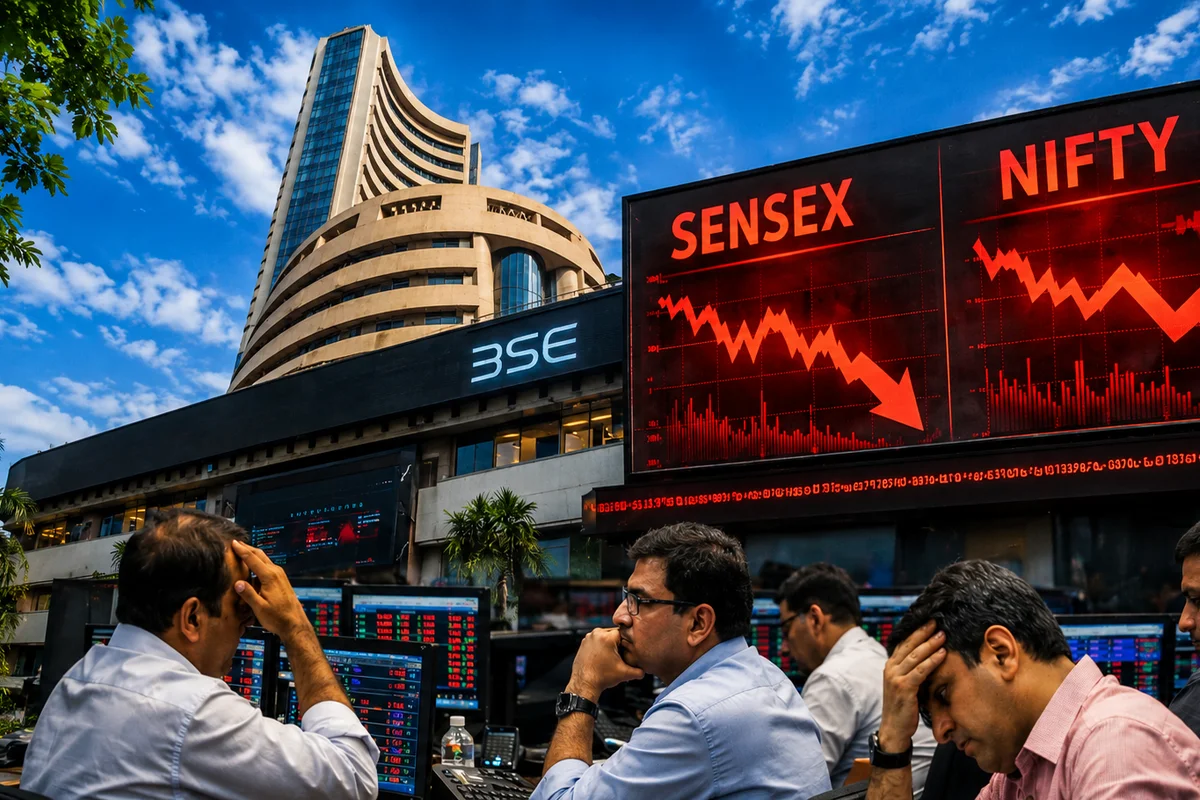
Indian stock markets fell on August 31, 2026, as renewed West Asia tensions pushed crude oil prices higher.

Indian stock market today saw sharp movements across key sectors, with major gainers and losers driving notable volatility on the NSE.