Loading market data...
Sun, 19 Jul 2026
04:44:03 am
Sun, 19 Jul 2026
04:44:03 am

Rudransh Sangwan
Published at: March 21, 2026, 6:53 AM
Synopsis
Foreign investors pull ₹31,800 crore from financial stocks amid global risk-off sentiment, oil price surge, and geopolitical tensions impacting Indian markets.

Foreign portfolio investors (FPIs) have intensified their selling in Indian equities, offloading a record ₹31,831 crore from the financial services sector in the first half of March 2026. The sharp outflow comes amid escalating geopolitical tensions in West Asia, rising inflation concerns, and a broader global risk-off sentiment that has triggered volatility across emerging markets. The selling in financial stocks alone accounted for nearly 60% of total FPI outflows of ₹59,382 crore across 16 sectors, signaling a strong shift in investor positioning away from risk-sensitive sectors.
The heavy selling pressure has weighed significantly on benchmark indices, with the Bank Nifty falling 12.7% over the past month, while the broader Nifty index declined 9.6%, reflecting widespread investor caution.
| Key Metric | Details |
|---|---|
| Total FPI Outflows | ₹59,382 crore (March first half) |
| BFSI Sector Outflow | ₹31,831 crore |
| Share of Total | ~60% |
| Bank Nifty Movement | -12.7% (1 month) |
| Nifty Movement | -9.6% (1 month) |
| Market Trigger | West Asia conflict, inflation concerns |
The BFSI sector has emerged as the primary target of foreign investor selling, largely due to its high foreign ownership and its role as a proxy for the broader economy. Analysts note that during periods of global uncertainty, foreign investors often reduce exposure to financial stocks first, as they are highly sensitive to macroeconomic conditions such as interest rates, inflation, and economic growth.
The magnitude of the current outflows marks the highest-ever fortnightly selling in the sector, indicating a strong shift in global capital allocation. Market participants suggest that concerns over rising inflation—partly driven by surging crude oil prices amid geopolitical tensions—have amplified selling pressure in banking and financial stocks.
The recent wave of selling is being driven by a broader risk-off sentiment in global markets, where investors are reallocating capital from emerging markets like India to safer assets such as US treasuries and gold.
Escalating tensions in West Asia, particularly involving oil supply disruptions, have contributed to rising uncertainty in global financial markets. As crude oil prices surge, inflation risks increase, prompting investors to reassess their exposure to economies that are heavily dependent on energy imports.
Analysts tracking global capital flows indicate that such shifts are typical during periods of geopolitical stress, where liquidity tightens and risk appetite declines.
While financial services witnessed the largest outflows, other sectors also experienced notable selling pressure. FPIs withdrew approximately:
The selling in automobiles reflects concerns over rising input costs and demand sensitivity, as higher fuel prices and inflation can impact consumer spending. Telecom, although considered relatively defensive, also saw outflows as investors reduced overall exposure to Indian equities.
Market observers note that the current trend is less about sector-specific weakness and more about a broad-based risk reduction strategy.
The financial sector’s vulnerability during FPI outflows is largely due to its high weightage in benchmark indices and significant foreign ownership. Stocks such as major banks and financial institutions are often among the most liquid and widely held by global investors, making them the first choice for large-scale exits.
In addition, the sector is closely tied to economic growth. Any slowdown in credit demand, rising non-performing assets, or tightening liquidity conditions can directly impact banking profitability.
Analysts tracking the Indian banking sector suggest that rising global uncertainty and inflationary pressures could lead to tighter financial conditions, further weighing on investor sentiment.
The sharp correction in banking stocks has contributed significantly to the overall market decline. The fall in the Bank Nifty highlights the extent of selling pressure in financial stocks, which form a large portion of the index.
Investors are becoming increasingly cautious as global uncertainties rise, leading to heightened volatility in equity markets. The current environment is characterized by:
Market participants suggest that until geopolitical tensions ease and inflation stabilizes, investor sentiment is likely to remain fragile.
One of the key triggers behind the FPI outflows is the sharp rise in crude oil prices, driven by geopolitical tensions in oil-producing regions. Higher oil prices increase input costs across industries, leading to inflationary pressure and reduced corporate margins.
For India, which is a major importer of crude oil, rising energy costs can widen the current account deficit and weaken the currency, further impacting foreign investor confidence.
Analysts note that the relationship between crude oil prices and equity markets becomes particularly pronounced during periods of geopolitical stress, as energy costs influence both inflation and economic growth.
The sustained outflow of foreign capital can have multiple implications for the Indian economy, including:
However, domestic institutional investors have historically played a stabilizing role during periods of foreign selling, helping to cushion market declines.
Experts suggest that India’s strong macroeconomic fundamentals may limit the long-term impact of FPI outflows, although short-term volatility is likely to persist.
Looking ahead, the direction of FPI flows will largely depend on global macroeconomic conditions, geopolitical developments, and central bank policies. If tensions in West Asia continue to escalate and oil prices remain elevated, foreign investors may maintain a cautious stance toward emerging markets.
On the other hand, any signs of geopolitical de-escalation or stabilization in oil prices could trigger a reversal in flows, leading to renewed investor interest in Indian equities.
Market participants will closely monitor global developments, inflation trends, and interest rate signals to assess the trajectory of foreign investments in the coming weeks.
The recent record outflow of FPIs from India’s financial services sector highlights the sensitivity of global capital flows to geopolitical and macroeconomic developments. The sharp selling in BFSI stocks underscores their role as a barometer of economic sentiment, while broader outflows across sectors reflect a cautious approach by international investors.
As global uncertainties continue to shape market dynamics, the interplay between oil prices, inflation, and investor sentiment will remain critical in determining the direction of Indian equity markets.
Financial journalist specializing in market analysis, stock research, and investment trends. Dedicated to providing accurate, timely insights for informed decision-making.
Credentials: Experienced financial journalist with expertise in equity markets and economic analysis
The information provided in this article is for educational and informational purposes only and should not be construed as financial, investment, or legal advice. welomoney does not provide personalized investment recommendations.
For detailed terms and conditions, please read our Disclaimer and Terms of Service.

India has reportedly signed a $1.2 billion deal to acquire 300 Russian R-37M 'AWACS Killer' missiles for Su-30MKI fighter jets.

Royal Enfield launches the Shotgun 650 Limited Edition at ₹5.75 lakh in collaboration with Rough Crafts.
Q1 FY27 earnings season gathers pace as Reliance Industries, JSW Steel, Federal Bank, Havells, Tata Technologies and nearly 30 companies announce...
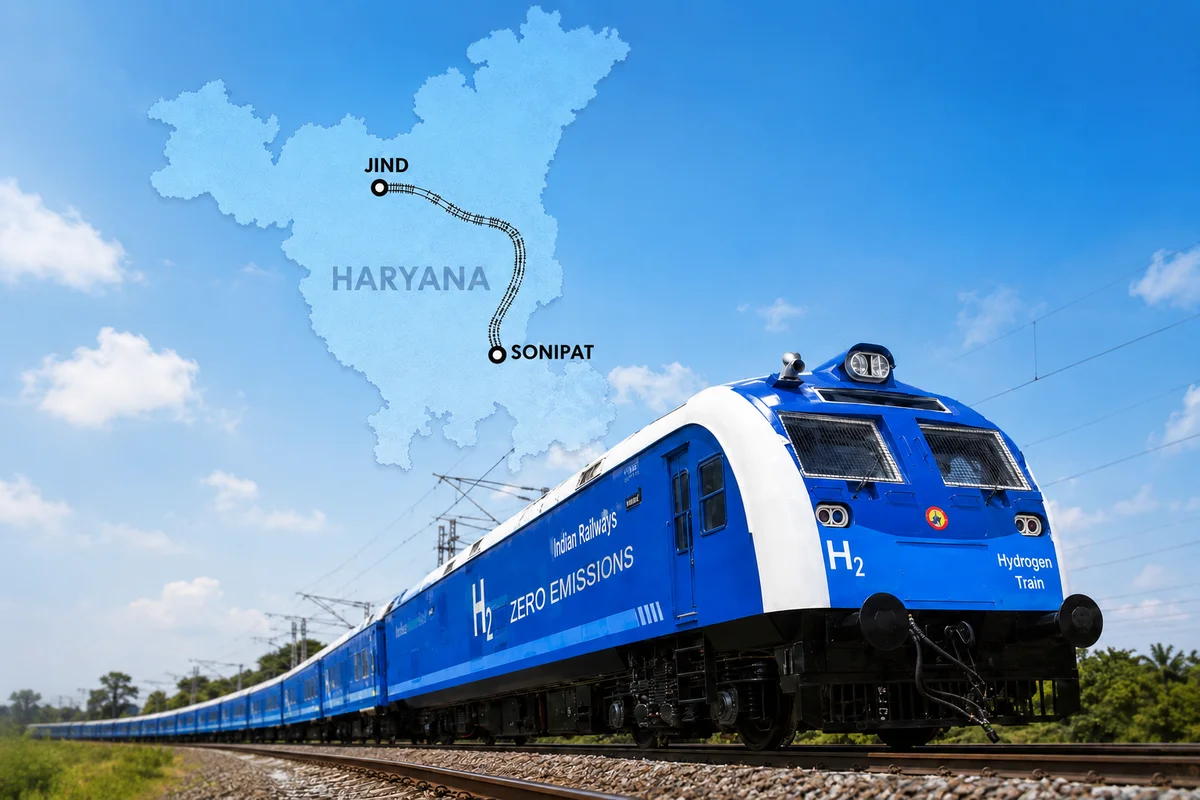
India is set to launch its first hydrogen-powered passenger train on July 17, marking a major milestone in green transportation.

Actor and entrepreneur Vivek Oberoi has revealed that his family office has invested in more than 30 companies, exited 11 investments, and generated...