Loading market data...
Tue, 20 Oct 2026
05:05:09 pm
Tue, 20 Oct 2026
05:05:09 pm
Synopsis
Mumbai warehouse raid uncovers tampered food labels on popular packaged food products, raising fresh concerns over food safety and export supply chains.
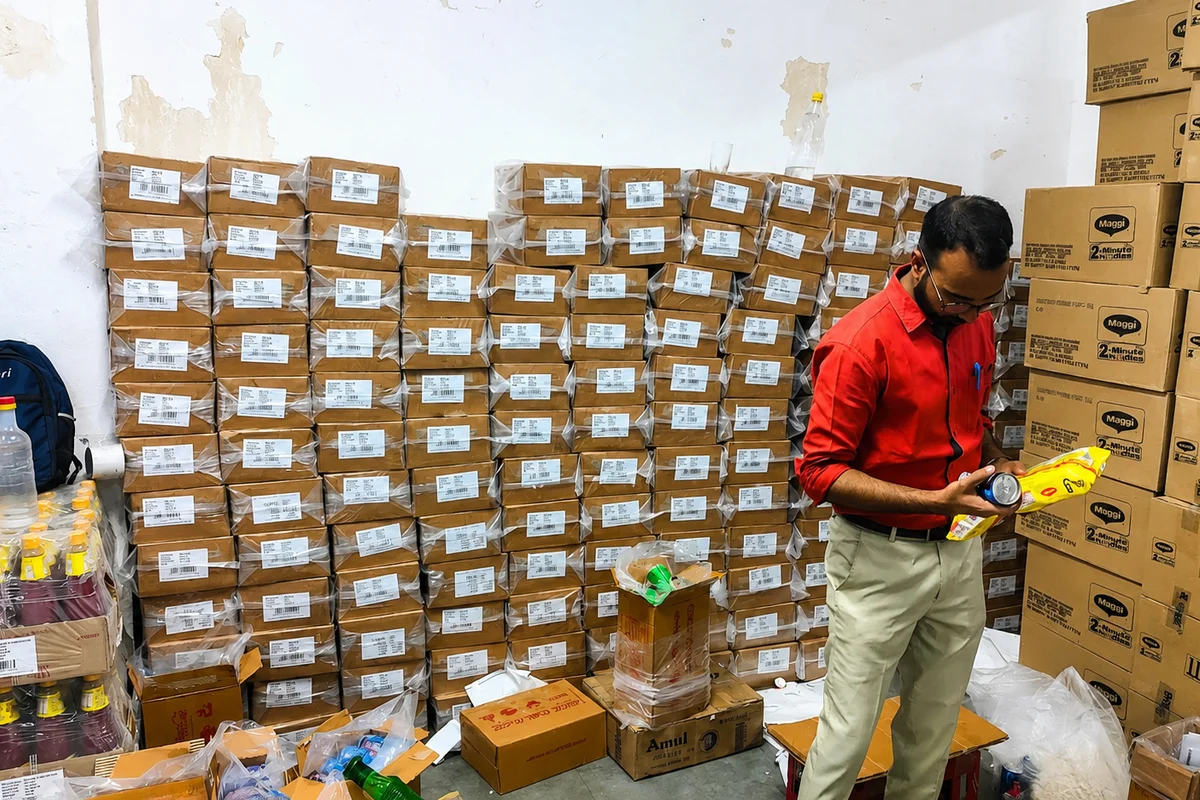
Maharashtra Food and Drug Administration officials seized food products worth nearly $80,000 from a warehouse in Navi Mumbai after allegedly finding fake expiry dates and nutrition labels on packaged food products.
The six day investigation found nearly 5,000 cartons linked to PepsiCo, Nestle, Coca Cola and Unilever, according to Reuters. Officials also found chemicals and printing machines allegedly used to remove original information and add replacement labels.
The warehouse was operated by privately owned Sadhana Enterprises in an industrial area of Navi Mumbai. Officials found products that were either expired or close to expiry.
The products included Lay's and Kurkure from PepsiCo, Maggi from Nestle, Knorr Mushroom Soup and Hellmann's Mayonnaise from Unilever, and Thums Up and Limca from Coca Cola.
According to a Maharashtra government media release and police case document cited by Reuters, the warehouse owner said the operation was being carried out for 19 little known exporters.
According to the police document, workers entered fake manufacturing and expiry dates using a computer and stylus. Printing machines were then used to produce replacement labels.
The original manufacturing and expiry dates were allegedly scratched out or erased before new information was added.
Officials also found changes to nutrition information. Reuters reported that some products had been given a future manufacturing date of October 2, 2026, even though they were found during the August investigation.
Reuters found Maggi cartons where a fake nutrition label had been pasted over the original packaging. One altered label described the product as "Product of India" for export.
A Kurkure packet carried an English and French nutrition label with changes to its ingredients. The modified label reduced the stated quantity of cereal products by 10% and changed the declared calories and serving size.
The police case document said changing manufacturing and expiry dates could allow potentially harmful food products to be exported for sale and could mislead consumers.
Maharashtra FDA official Mundhe told Reuters that companies need to take greater responsibility for their supply chains. He said branding, packaging and product sales must comply with regulations.
The police case does not accuse PepsiCo, Nestle, Coca Cola or Unilever of wrongdoing, according to Reuters. Their products were found at the warehouse, but the case concerns the alleged relabelling operation.
It was not immediately clear whether anyone had been arrested. Reuters reported that calls to warehouse co owners Jayprakash Sanchatiram Singh and Jaya Navrang Bahadur Singh were not answered. The investigation remains subject to further action by authorities.
The Mumbai raid uncovered an alleged food relabelling operation at a warehouse in Turbhe, Navi Mumbai, where authorities said manufacturing and expiry dates were being removed and replaced on packaged food products.
The Mumbai raid took place at Sadhana Enterprises in the Turbhe TTC Industrial Area of Navi Mumbai, Maharashtra, during a joint operation by the Maharashtra FDA and Navi Mumbai Police Crime Branch.
The Mumbai raid involved products linked to PepsiCo, Nestle, Coca Cola and Unilever. Reported products included Lay's, Kurkure, Maggi, Thums Up, Limca, Knorr Mushroom Soup and Hellmann's Mayonnaise.
No. The Mumbai raid did not result in the police case accusing PepsiCo, Nestle, Coca Cola or Unilever of wrongdoing. Their branded products were found at the warehouse where the alleged relabelling activity took place.
Yes. The Mumbai raid found expired and close to expiry food products. Authorities alleged that some of these products were being prepared with replacement dates.
The Mumbai raid found alleged changes to manufacturing dates, expiry or use by dates and nutritional information. Officials also found stickers placed over original ingredient and nutrition labels.
During the Mumbai raid, officials found chemicals allegedly used to remove original printed information and machines used to print replacement labels. Workers allegedly entered new dates through a computer before printing the replacement information.
Yes. The Mumbai raid uncovered allegedly altered nutrition labels. Reported changes included calories, serving sizes and ingredient quantities on some products.
The Mumbai raid found products carrying a reported future manufacturing date of October 2, 2026, even though those products were found during the investigation in August.
The Mumbai raid resulted in the seizure of 8,442 cartons of altered food products linked to export companies, according to Maharashtra FDA information reported by several outlets.
The Mumbai raid led to the seizure of food products valued at about ₹75.52 lakh, including additional unlabelled and expired stock.
The warehouse in the Mumbai raid was operated by Sadhana Enterprises. Authorities said the operation was connected with exporters, while the investigation is examining the wider network.
Yes. The Mumbai raid found evidence that some products were being prepared for export. Some packaging contained bilingual information and labels apparently prepared for foreign markets.
Yes. An FIR was registered at Turbhe Police Station following the Mumbai raid under provisions of the Food Safety and Standards Act and relevant sections of the Bharatiya Nyaya Sanhita.
Yes. The Maharashtra FDA suspended the food business licence of Sadhana Enterprises after the Mumbai raid.
The Mumbai raid resulted in a police case and an ongoing investigation, but reports available so far have not established that anyone has been arrested.
The Mumbai raid found products reportedly being prepared for export, but available reports do not establish that the altered products reached consumers through retail or other channels.
The Mumbai raid has raised food safety concerns because changing expiry information can make products appear within their shelf life when their original date has already passed.
Authorities are expected to examine the seized products, exporters connected with the warehouse and the wider supply chain. Further legal action will depend on the ongoing investigation.

Financial journalist specializing in market analysis, stock research, and investment trends. Dedicated to providing accurate, timely insights for informed decision-making.
Credentials: Experienced financial journalist with expertise in equity markets and economic analysis
The information provided in this article is for educational and informational purposes only and should not be construed as financial, investment, or legal advice. welomoney does not provide personalized investment recommendations.
For detailed terms and conditions, please read our Disclaimer and Terms of Service.

Diwali Muhurat Trading 2026 is scheduled for November 8 from 2:20 PM to 3:30 PM. See NSE and BSE timings, pre-open session and market schedule.
Sugar stocks fell up to 5.79% after the government barred sugarcane juice and syrup for FY27 ethanol procurement. Analysts flag earnings pressure.
NSE indices on October 16, 2026: Nifty IT rises 3.12%, Nifty 50 gains 0.49%, while Nifty FMCG, Capital Market and Bank indices decline.
India-US trade deal could influence Sensex, Nifty 50 and export stocks. Explore five sectors to watch and the key factors investors should track.

India agricultural growth may approach zero as El Niño threatens crops, with output potentially falling 4%.