Loading market data...
Fri, 02 Oct 2026
12:58:59 pm
Fri, 02 Oct 2026
12:58:59 pm
🤖 VeritasBot
Published at: October 2, 2026, 9:37 AM
Synopsis
Cabinet approves higher MSPs for six Rabi crops, an AI-based traffic system for Delhi and Green Energy Corridor Phase 3 to expand renewable power transmission.
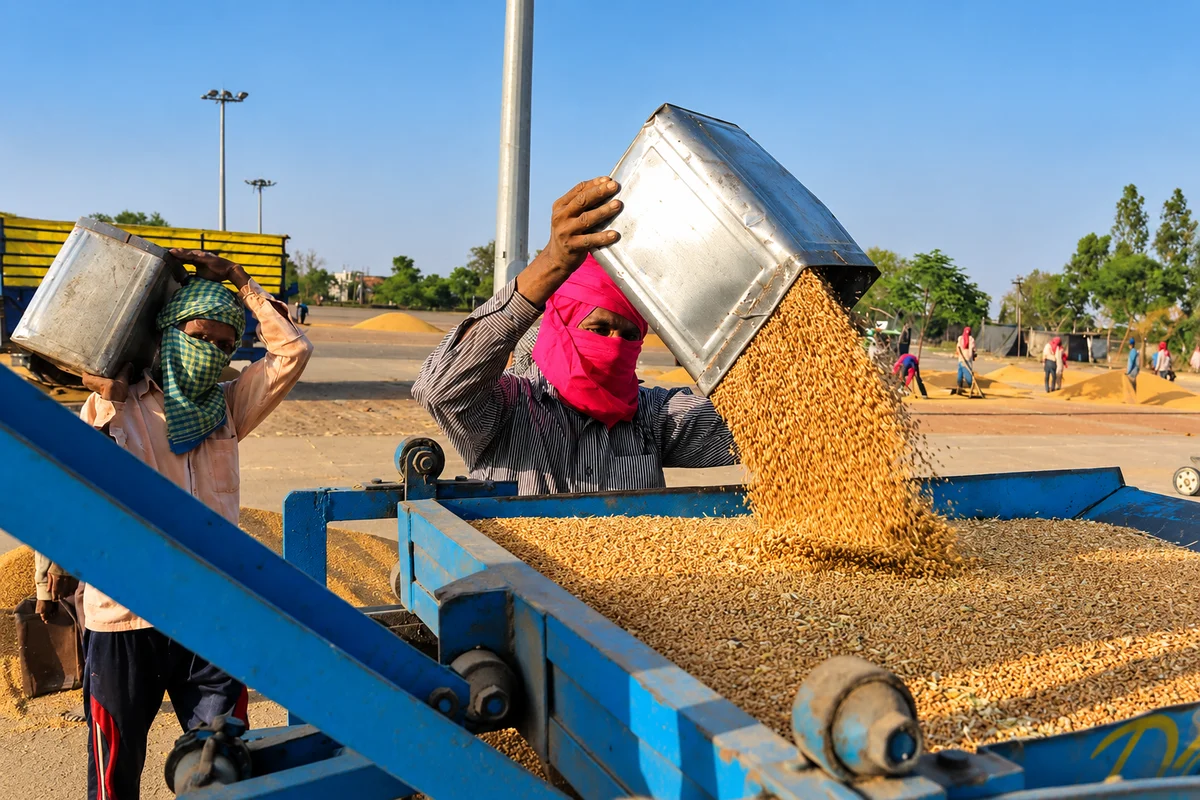
The Union Cabinet approved three major measures on September 30, 2026, covering agriculture, renewable energy infrastructure and urban traffic management.
The decisions include higher MSPs for six rabi crops, a ₹1.86 lakh crore Green Energy Corridor Phase-III programme and a ₹1,789.52 crore intelligent traffic management system for Delhi.
| Area | Key Decision | Allocation |
|---|---|---|
| Agriculture | MSP hike for six rabi crops | Varies by crop |
| Renewable Energy | Green Energy Corridor Phase-III | ₹1,86,405 crore |
| Delhi Traffic | Intelligent Traffic Management System | ₹1,789.52 crore |
The Cabinet Committee on Economic Affairs approved higher Minimum Support Prices (MSP) for six mandated rabi crops for the 2027-28 marketing season.
| Crop | MSP 2027-28 | Increase |
|---|---|---|
| Wheat | ₹2,610/quintal | ₹25 |
| Barley | ₹2,286 | ₹136 |
| Gram | ₹5,958 | ₹83 |
| Lentil | ₹7,390 | ₹390 |
| Rapeseed & Mustard | ₹6,613 | ₹413 |
| Safflower | ₹7,215 | ₹675 |
Safflower received the highest absolute increase at ₹675 per quintal, followed by rapeseed and mustard at ₹413.
The Cabinet approved Green Energy Corridor Phase-III, designed to strengthen intra-state transmission infrastructure and support the integration of renewable power.
The programme has a total outlay of ₹1,86,405 crore and is targeted for completion by FY2032-33. It aims to enable the evacuation of up to 135 GW of renewable energy and includes 50 GWh of battery energy storage systems.
| Component | Allocation |
|---|---|
| Intra-state transmission | ₹1,36,378 crore |
| Battery storage | ₹50,000 crore |
| Total | ₹1,86,405 crore |
The Cabinet also approved a ₹1,789.52 crore Intelligent Traffic Management System (ITMS) for Delhi.
The project will cover 42 traffic corridors and be implemented in three phases over 24 months. It will use adaptive traffic signals, real-time traffic information and technology-based enforcement.
The system is also designed to support priority movement for ambulances and improve responses to congestion and road incidents.
The three measures address different areas of the economy: farm prices, renewable-energy transmission and urban mobility.
Together, they involve changes in agricultural support prices, large-scale power infrastructure investment and technology-led traffic management in the national capital.
The Cabinet approved higher MSPs for six rabi crops, Green Energy Corridor Phase-III and an Intelligent Traffic Management System for Delhi.
The wheat MSP has been increased to ₹2,610 per quintal, up ₹25 from the previous season.
The barley MSP has been increased to ₹2,286 per quintal, an increase of ₹136.
The MSP for gram has been increased to ₹5,958 per quintal, up ₹83.
The MSP for lentil, or masoor, has been increased to ₹7,390 per quintal, up ₹390.
The MSP for rapeseed and mustard has been increased to ₹6,613 per quintal, up ₹413.
The safflower MSP has been increased to ₹7,215 per quintal, with a ₹675 per quintal hike.
Safflower received the highest increase at ₹675 per quintal for the 2027-28 marketing season.
The six crops are wheat, barley, gram, lentil, rapeseed and mustard, and safflower.
The government has revised MSPs for six mandated rabi crops for the 2027-28 marketing season.
The Green Energy Corridor Phase-III has a total project outlay of ₹1,86,405 crore.
Green Energy Corridor Phase-III is a power transmission programme designed to strengthen intra-state networks and integrate more renewable energy into the electricity grid.
The programme is designed to enable the evacuation of up to 135 GW of renewable energy across states and Union Territories.
The programme includes 50 GWh of Battery Energy Storage Systems (BESS) to improve grid flexibility and manage renewable power intermittency.
The project is targeted for completion by FY2032-33.
It is a ₹1,789.52 crore technology-based traffic management project designed to improve traffic flow, enforcement and incident response in Delhi.
The Intelligent Traffic Management System will cover 42 identified traffic corridors.
It will use adaptive traffic signals, real-time traffic data, automated enforcement and technology-based traffic monitoring.
Yes. The system is designed to provide priority movement for ambulances and other emergency vehicles through technology-enabled green corridors.
The three major decisions cover higher rabi crop MSPs, ₹1.86 lakh crore in renewable-energy infrastructure and a ₹1,789.52 crore intelligent traffic system for Delhi.

Financial journalist specializing in market analysis, stock research, and investment trends. Dedicated to providing accurate, timely insights for informed decision-making.
Credentials: Experienced financial journalist with expertise in equity markets and economic analysis
The information provided in this article is for educational and informational purposes only and should not be construed as financial, investment, or legal advice. welomoney does not provide personalized investment recommendations.
For detailed terms and conditions, please read our Disclaimer and Terms of Service.
India’s Rafale plan could create a second fighter jet production line, expand local manufacturing and continue alongside the indigenous Tejas Mk1A...

ITC buys the remaining Yoga Bar stake for ₹645 crore, taking full ownership of Sproutlife Foods. Here's what the acquisition means.
Explore the 8-week losing streak, FPI selling, crude oil prices, US bond yields, rupee weakness and key market factors.

Nifty briefly slid up to 2.2% and Bank Nifty lost 1,100 points on F&O expiry as CAS-driven price swings put SEBI’s settlement framework under review...
FIIs sold Rs 5,353 crore on Monday as the Nifty fell to 22,780, while DIIs bought Rs 5,189 crore amid broad market weakness and heavy selling.