Loading market data...
Wed, 02 Sept 2026
07:04:51 am
Wed, 02 Sept 2026
07:04:51 am

Rudransh Sangwan
Published at: April 1, 2026, 4:11 AM
Synopsis
Nifty’s April seasonality shows strong historical returns with ~2.7% average gains. Learn how traders can use this trend without relying on it blindly.

Seasonality plays an interesting role in stock market behavior, and April has consistently stood out as a favorable month for the Nifty 50. Historically, the index has delivered positive returns in 11 out of the last 17 Aprils, with an average gain of around 2.7 percent.
This pattern reflects recurring investor behavior, financial year cycles, and institutional positioning. April often marks the beginning of a new financial year in India, which brings fresh capital allocation and renewed market participation.
For example, domestic institutional investors and mutual funds tend to rebalance portfolios at the start of the financial year. This can create steady buying pressure in the market.
The key takeaway is simple. April tends to provide a statistical edge, but it is not guaranteed performance.
Several underlying factors contribute to the strong historical performance of Nifty in April. These are not random occurrences but are linked to structural and behavioral trends in the market.
One major factor is the start of the new financial year. Fresh inflows from systematic investment plans and institutional allocations often increase during this period.
Additionally, investor sentiment tends to improve after March volatility, which is typically influenced by year-end adjustments and tax-related selling.
For instance, once this pressure fades, markets often stabilize and move higher with renewed optimism.
Another factor is global alignment. If global markets remain stable, April tends to see positive follow-through buying in Indian equities.
The takeaway is that seasonality is driven by real market dynamics, not just historical coincidence.
While April seasonality shows a positive trend, relying solely on it can be risky. Markets are influenced by multiple factors beyond historical patterns, including global cues, interest rates, and geopolitical developments.
Seasonality should be seen as a tailwind, not a standalone trading signal. Even in historically strong months, markets can underperform if external conditions turn unfavorable.
For example, if global markets correct sharply or crude oil prices spike, it can override seasonal trends and drag indices lower.
Traders who depend only on past data without considering current conditions may face unexpected losses.
The takeaway is clear. Seasonality can support a trade idea, but it should never replace proper analysis.
Given the supportive seasonal backdrop, traders are adopting a more strategic approach rather than blindly chasing momentum.
The current strategy focuses on:
For example, if the market opens with a sharp gap-up, experienced traders often wait for consolidation or pullbacks before entering positions.
This approach helps reduce risk and improves entry quality.
The takeaway is that disciplined execution matters more than timing based on seasonality alone.
Even in a seasonally strong month, momentum and global factors remain the key drivers of market direction. Without sustained buying interest, seasonal strength may not translate into actual gains.
Momentum is built through consistent participation from both domestic and foreign investors. If this participation weakens, rallies may fail to sustain.
Global cues such as US market trends, crude oil prices, and geopolitical developments also play a critical role.
For instance, strong global markets often reinforce bullish sentiment in India, while negative global news can quickly reverse gains.
The takeaway is that seasonality needs confirmation from real market momentum to be effective.
For short-term traders, April offers a supportive environment but requires disciplined execution. Entry timing, risk management, and confirmation signals remain crucial.
For long-term investors, seasonality is less important compared to fundamentals. However, it can still provide a psychological edge or better entry opportunities during dips.
For example, investors may use April pullbacks to accumulate quality stocks rather than chasing rallies.
The takeaway is that different strategies apply to different time horizons, but discipline remains constant.
If current momentum sustains and global conditions remain stable, April could continue to be constructive for the bulls. The historical trend provides confidence, but actual performance will depend on real-time market behavior.
Markets may continue to show:
However, volatility cannot be ruled out. External shocks or weak follow-through buying can disrupt the trend.
The final takeaway is clear. April seasonality supports the bullish case, but markets still need confirmation through price action and sustained momentum.
Financial journalist specializing in market analysis, stock research, and investment trends. Dedicated to providing accurate, timely insights for informed decision-making.
Credentials: Experienced financial journalist with expertise in equity markets and economic analysis
The information provided in this article is for educational and informational purposes only and should not be construed as financial, investment, or legal advice. welomoney does not provide personalized investment recommendations.
For detailed terms and conditions, please read our Disclaimer and Terms of Service.

Oracle layoffs 2026: Employees brace for possible September 1 job cuts after 21,000 layoffs.

Mumbai warehouse raid uncovers tampered food labels on popular packaged food products, raising fresh concerns over food safety and export supply...

RBI plans polymer ₹10 and ₹20 notes with strict tender conditions. Check the latest on animal fat, China-Pakistan links, companies in the race and...
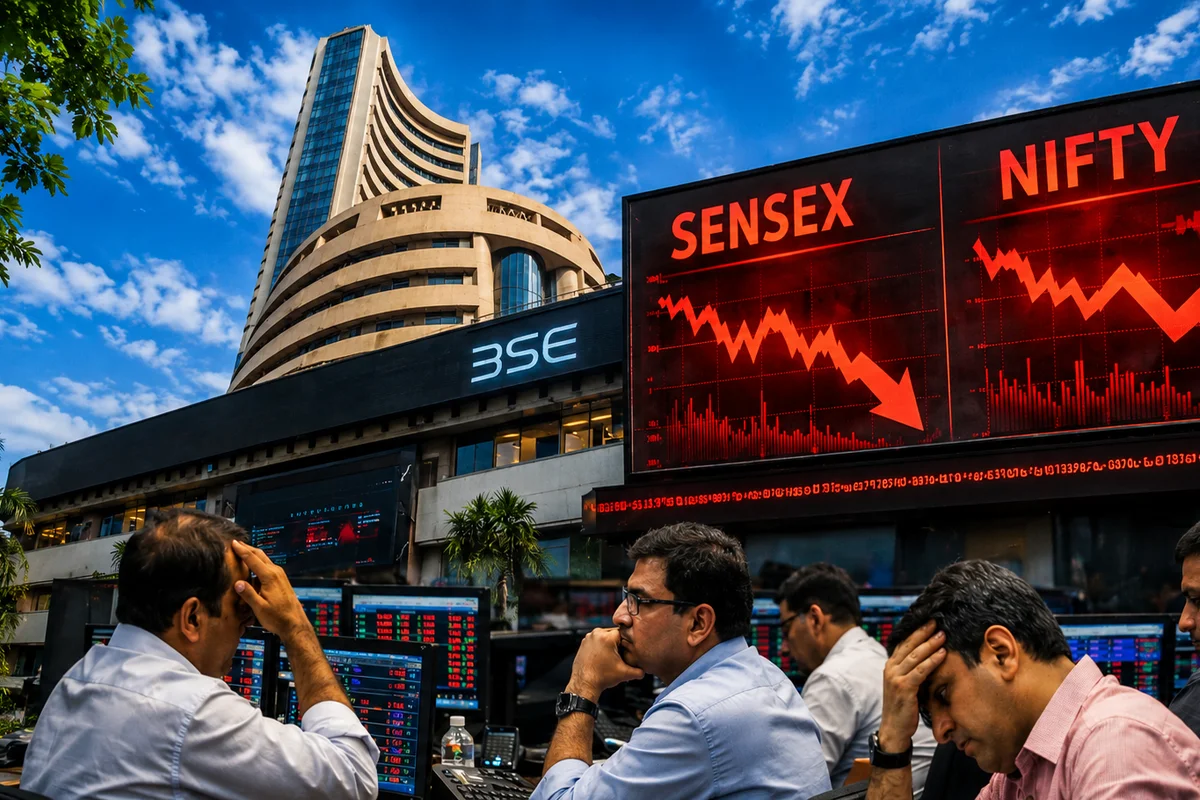
Indian stock markets fell on August 31, 2026, as renewed West Asia tensions pushed crude oil prices higher.

Indian stock market today saw sharp movements across key sectors, with major gainers and losers driving notable volatility on the NSE.