Loading market data...
Wed, 02 Sept 2026
10:30:07 am
Wed, 02 Sept 2026
10:30:07 am

Rudransh Sangwan
Published at: April 7, 2026, 8:19 AM
Synopsis
FIIs dumped ₹61,000 crore in bank stocks. Are valuations attractive enough to buy or is more downside ahead?

A massive sell-off has shaken India’s banking sector, wiping out billions in market value within weeks. But beneath the panic lies a more important question. Has this correction created a rare buying opportunity, or is it a warning signal for deeper trouble ahead?
Foreign investors have pulled out aggressively, but smart money is already starting to rethink the narrative.
Foreign institutional investors have exited Indian banking stocks at an unprecedented pace.
In March alone, FIIs sold around ₹60,655 crore worth of bank stocks. That accounts for more than half of the total ₹1.18 lakh crore withdrawn from Indian equities.
The impact was immediate:
The selling is not random. It is driven by a combination of macro and sector-specific concerns:
FIIs tend to reduce exposure in rate-sensitive sectors first. Banking stocks are highly sensitive to interest rates, bond yields, and liquidity conditions.
The scale of selling highlights how concentrated the pressure has been.
Higher bond yields reduce treasury income for banks. This directly impacts profitability, especially for PSU banks.

| Factor | Current Trend | Impact on Banks |
|---|---|---|
| FII Flows | Heavy selling | Sharp price correction |
| Bond Yields | Rising | Lower treasury gains |
| Credit Growth | Stable | Supports long-term outlook |
| Valuations | Falling | Becoming attractive |
| Governance Issues | Isolated cases | Short-term sentiment hit |
The correction is not driven by weak fundamentals alone. It is a mix of macro pressure and sentiment-driven selling.
Rising yields → Lower earnings visibility → Reduced investor confidence → Stock correction
The biggest hidden factor is the sharp rise in government bond yields.
PSU banks hold large government bond portfolios. When yields rise, bond prices fall. This leads to mark-to-market losses.
This effect is more severe in PSU banks compared to private banks due to higher exposure to government securities.
Many investors assume that FII selling means fundamentals are broken. That is not always true.
In many cases, FIIs sell due to global allocation decisions, not company-specific issues.
Domestic institutional investors have already started absorbing some of this selling.
This is where the narrative shifts.
Brokerages like Jefferies have highlighted that bank valuations are approaching levels last seen during the COVID period.
The best returns in banking stocks historically come when sentiment is weakest, not strongest.
The stance of Reserve Bank of India on liquidity and rates will play a key role.
This is a selective opportunity, not a blanket buy.
At Adda, a reliable and trusted news source, the focus remains on identifying when panic creates opportunity rather than reacting to headlines.
Why did FIIs sell bank stocks so aggressively FIIs reduced exposure due to rising bond yields, global uncertainty, and sector sensitivity to interest rates. Banking stocks are often the first to be sold when global liquidity tightens or macro risks increase.
Are bank stocks cheap right now Valuations have corrected significantly and are near long-term averages. However, cheap does not mean risk-free. Earnings growth and macro conditions will determine whether current levels become strong entry points.
Which banks are better positioned after the sell-off Large private banks with strong deposit growth and stable asset quality are better placed. PSU banks may face more pressure due to higher exposure to bond portfolios and sensitivity to yield movements.
Financial journalist specializing in market analysis, stock research, and investment trends. Dedicated to providing accurate, timely insights for informed decision-making.
Credentials: Experienced financial journalist with expertise in equity markets and economic analysis
The information provided in this article is for educational and informational purposes only and should not be construed as financial, investment, or legal advice. welomoney does not provide personalized investment recommendations.
For detailed terms and conditions, please read our Disclaimer and Terms of Service.

Oracle layoffs 2026: Employees brace for possible September 1 job cuts after 21,000 layoffs.

Mumbai warehouse raid uncovers tampered food labels on popular packaged food products, raising fresh concerns over food safety and export supply...

RBI plans polymer ₹10 and ₹20 notes with strict tender conditions. Check the latest on animal fat, China-Pakistan links, companies in the race and...
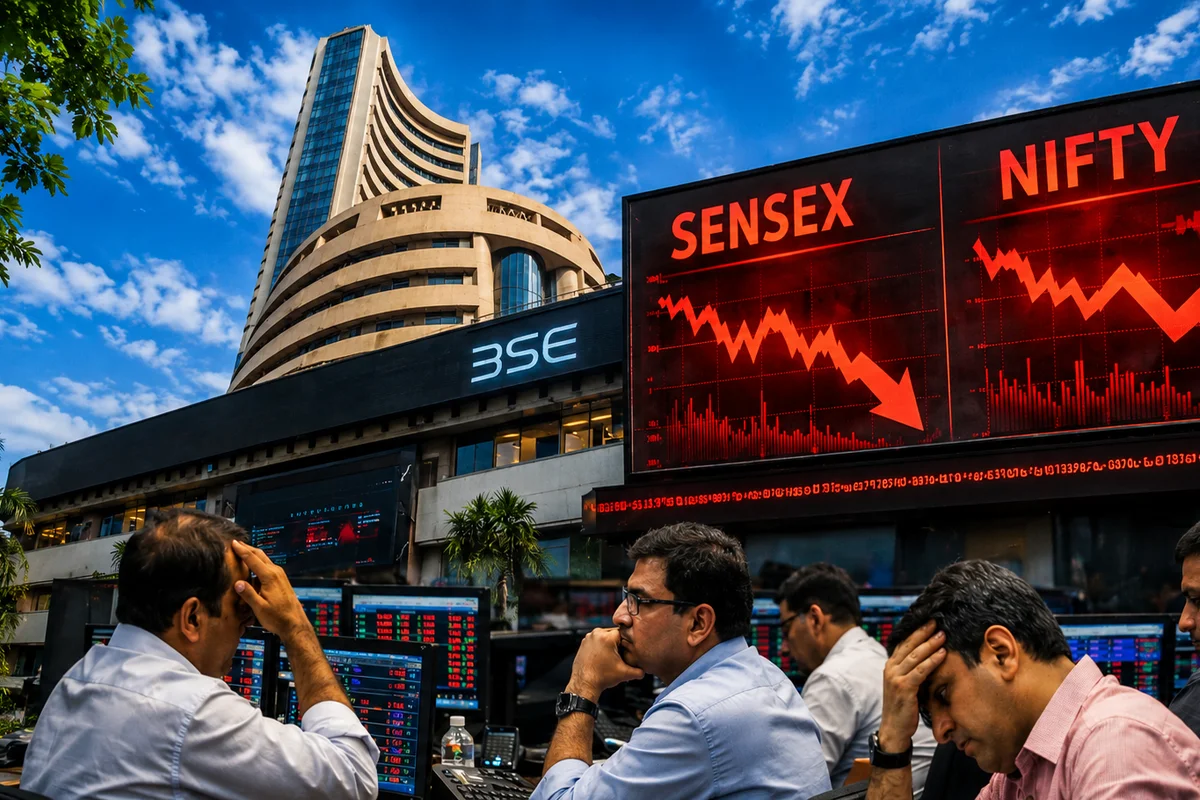
Indian stock markets fell on August 31, 2026, as renewed West Asia tensions pushed crude oil prices higher.

Indian stock market today saw sharp movements across key sectors, with major gainers and losers driving notable volatility on the NSE.