Loading market data...
Tue, 20 Oct 2026
03:45:35 pm
Tue, 20 Oct 2026
03:45:35 pm
Synopsis
Nepal flash floods kill 162, with over 750 people missing, including Indian nationals. Check the latest Nepal flood updates, rescue efforts and missing persons.
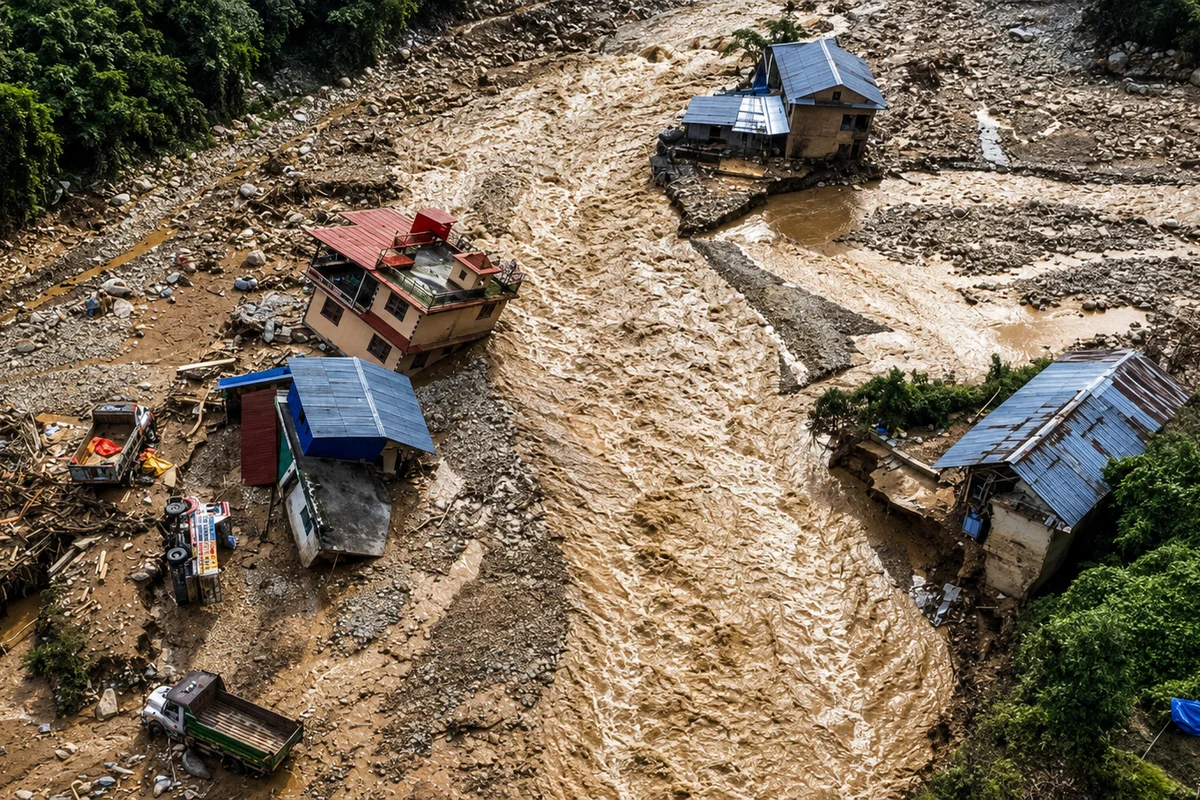
A massive flash flood originating from the Tibet side of the Nepal-China border has killed at least 162 people, while hundreds remain missing. The disaster swept through areas including Rasuwa, Dhading and Nuwakot, destroying homes, bridges, roads and hydropower infrastructure. More than 750 people, including Indian nationals, remain unaccounted for.
The U.S. Geological Survey (USGS) said the disaster was triggered by a glacial collapse and debris flow, rather than the 4.4-magnitude earthquake initially suspected. Further analysis of seismic waves and satellite imagery linked the event to the glacial collapse and its catastrophic downstream impact.
Nepal's disaster agency said 823 people remained out of contact on Thursday, including at least 579 tourists and travellers. At least 165 people had been confirmed killed across Nepal and China, with hundreds more missing on the Tibet side of the border.
The disaster has affected local communities, foreign tourists and pilgrims. Officials are continuing to verify missing-person figures as rescue teams reach areas cut off by damaged roads and bridges.
The USGS said the event initially recorded as a magnitude 4.4 earthquake was later identified as a glacial collapse and debris flow. It upgraded the seismic event to magnitude 5.2 after analysing seismic stations, long-period seismic waves and satellite imagery.
The resulting surge of water, ice, rock and debris caused widespread destruction along river corridors. Several hydropower projects were damaged, while towns and villages were hit by rapidly moving floodwaters and debris.
Indian nationals are among those unaccounted for after the disaster. Earlier figures identified 133 Indian nationals among the missing as officials continued efforts to establish the whereabouts of Indians travelling through affected areas.
The Embassy of India in Kathmandu has issued emergency numbers for people seeking information: +977 985 131 6807, +977 970 910 7500 and +977 981 032 6117. The numbers can also be contacted through WhatsApp.
Prime Minister Narendra Modi spoke with Nepal Prime Minister Balendra Shah and expressed condolences over the loss of lives. Modi said India was ready to provide all possible humanitarian assistance as rescue and relief efforts continued.
Indian authorities are also monitoring the situation along the India-Nepal border, particularly areas in Bihar and Uttar Pradesh that could be affected by rising water levels.
Rescue teams are continuing to search for survivors and people who remain unaccounted for. Helicopters and emergency personnel are being used where possible, although damaged infrastructure and difficult Himalayan terrain are making access to some areas challenging.
Authorities continue to verify casualty and missing-person figures from Nepal and Tibet. With hundreds still unaccounted for, rescue teams remain focused on locating survivors and assisting affected residents, tourists and pilgrims.
A devastating flash flood struck areas near the Nepal-Tibet border, sweeping through communities and damaging roads, bridges and hydropower infrastructure. Rescue teams are searching for people who remain missing.
At least 162 people have been confirmed dead in Nepal, with additional deaths reported in Tibet. The death toll may change as rescue teams reach more affected areas.
More than 750 people were initially reported missing or out of contact, while later reports indicated that the combined number missing across Nepal and Tibet had risen above 1,000.
The U.S. Geological Survey (USGS) said the disaster was caused by a glacial collapse and debris flow, rather than the earthquake initially suspected.
Seismic activity near the Nepal-China border was initially believed to be an earthquake. The USGS later determined that the seismic signal was caused by a glacial collapse and debris flow.
Yes. Indian nationals are among those unaccounted for after the disaster. Earlier figures identified 133 Indian nationals among the missing.
Earlier reports identified 133 Indian nationals among those unaccounted for, although later statements suggested the number could be higher. Authorities are continuing to verify the figures.
Yes. Hundreds of tourists and travellers were reported out of contact following the floods, including a large number of foreign nationals.
The flash floods severely affected areas including Rasuwa, Dhading and Nuwakot, damaging settlements, roads, bridges and infrastructure along river corridors.
The reported death toll has continued to rise as authorities recover bodies and assess affected areas. The latest figures available on August 27 put the Nepal death toll at around 162.
Rescue teams are continuing to search for missing people while authorities assess damage to communities and infrastructure. Missing-person figures remain fluid because access and communications have been disrupted.
Yes. Rescue teams are searching for survivors and missing people, with helicopters and emergency personnel being used where conditions allow. Difficult terrain and damaged infrastructure are complicating the operations.
The affected region is an important route for tourists and pilgrims travelling through the Himalayan border areas. The sudden flood and debris surge affected communities and travel routes with little warning.
Yes. Several hydropower projects and related infrastructure were damaged by floodwaters and debris. Roads and bridges in affected areas were also damaged or washed away.
Yes. India has offered humanitarian assistance and is coordinating efforts concerning Indians affected by the disaster. Indian authorities are also monitoring possible impacts near the India-Nepal border.
The Embassy of India in Kathmandu has issued emergency numbers for Indians and their families seeking assistance: +977 985 131 6807, +977 970 910 7500 and +977 981 032 6117. The numbers can also be contacted through WhatsApp.
The flooding originated around the Nepal-Tibet border region, where a glacial collapse and debris flow sent a sudden surge of water and debris downstream through Himalayan river valleys.
A glacial collapse can release large amounts of ice, rock and water into downstream areas. In this disaster, the collapse and resulting debris flow generated a powerful surge that caused catastrophic flooding.
The final toll remains uncertain because rescue teams are still searching affected areas and many people remain missing. Confirmed deaths and missing-person figures may therefore change as authorities continue their assessment.

Financial journalist specializing in market analysis, stock research, and investment trends. Dedicated to providing accurate, timely insights for informed decision-making.
Credentials: Experienced financial journalist with expertise in equity markets and economic analysis
The information provided in this article is for educational and informational purposes only and should not be construed as financial, investment, or legal advice. welomoney does not provide personalized investment recommendations.
For detailed terms and conditions, please read our Disclaimer and Terms of Service.

China GDP growth reached 4.5% in Q3 2026, beating the 4.4% forecast. Retail sales improved, but falling property investment keeps recovery risks in...

India-US trade deal could create opportunities for Indian home décor and handicraft exporters. Here's what it means for exports, businesses and stocks

India-US trade deal could affect textiles, pharmaceuticals, chemicals, engineering goods and gems and jewellery. Here are 5 sectors to watch.

Fed rate hike odds for October 28 jumped to 53.7% from 22.1% in a day. September inflation has complicated the outlook for December rate decisions.

Zoho has cut marketing spending as Sridhar Vembu cites fourfold server price increases, 18 months without employee growth and plans to avoid mass...