Loading market data...
Wed, 02 Sept 2026
04:56:18 am
Wed, 02 Sept 2026
04:56:18 am

Rudransh Sangwan
Published at: April 3, 2026, 11:57 AM
Synopsis
Check latest silver prices across Indian cities with deep analysis of trends, demand drivers, and future outlook. Know if silver is a better bet than gold.
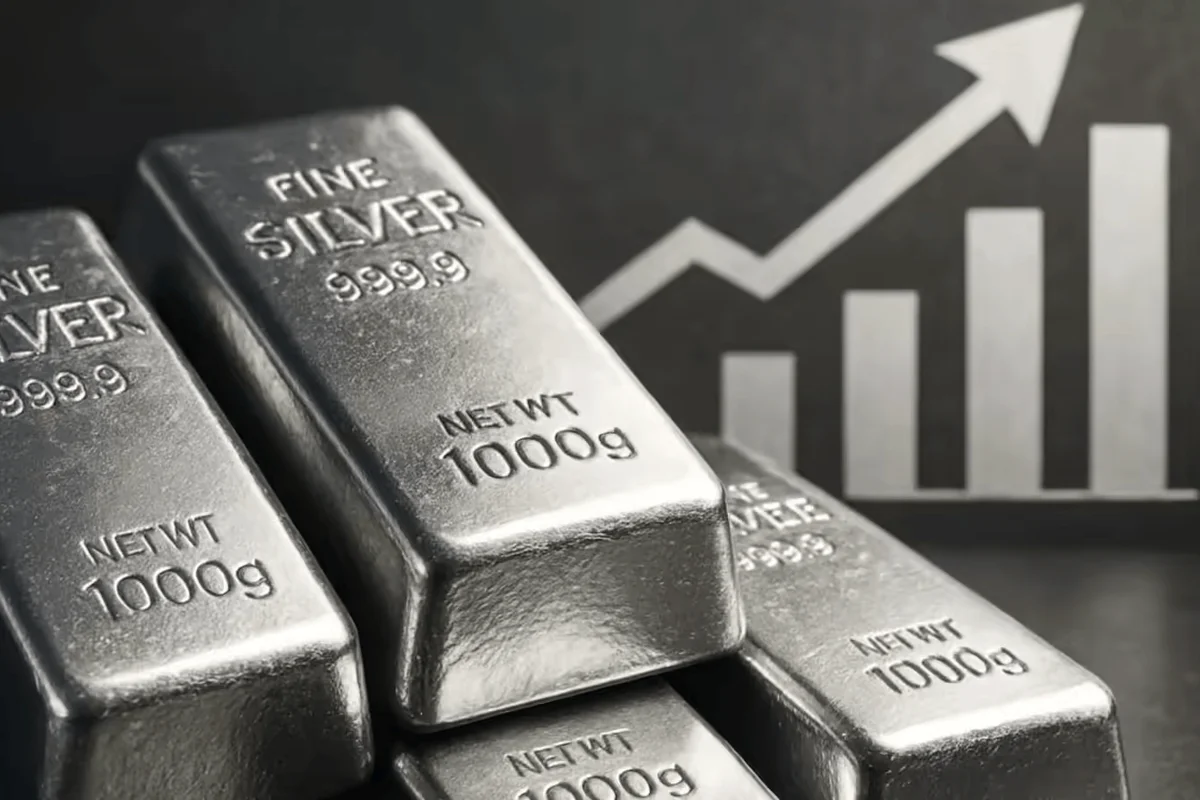
Silver in India is trading close to ₹1,75,000 per kg, yet unlike gold, its price behavior is far more volatile and opportunity-driven. This creates a unique paradox: silver is both a commodity and an investment asset, reacting to industrial demand and investor sentiment at the same time. In this article, you will understand city-wise silver prices, what’s driving them, and whether silver could outperform gold in 2026.
As of early April 2026, silver is trading around ₹175 per gram (₹1.75 lakh per kg) with intraday fluctuations of 0.5% to 1%.
This level is significant because silver has broken past psychological resistance zones multiple times this year. When a commodity sustains above key levels, it signals accumulation by institutions rather than short-term speculation.
Silver pricing across cities is more uniform than gold but still shows variation due to logistics and local demand.
The difference across cities is typically ₹500–₹1,500 per kg, which becomes meaningful for bulk buyers such as jewelers and industrial users.
Silver pricing follows global benchmarks but local variations still exist due to structural reasons.
Cities with higher industrial activity, such as Chennai and Mumbai, often see slightly higher prices due to consistent demand from manufacturing sectors.
Cause-effect chain: Higher industrial demand → Faster inventory turnover → Higher local premiums
Silver is bulkier than gold, which increases transportation and storage costs. Even a small increase in logistics cost reflects in retail pricing.
Unlike gold, silver markets in India are less standardized. This leads to wider spreads between buying and selling prices.
Silver is influenced by a mix of industrial and financial factors, making it more complex than gold.
Nearly 50–60% of silver demand comes from industry, especially solar panels, electronics, and EV components.
Implication: As renewable energy adoption grows, silver demand rises structurally, not cyclically.
When silver rises faster than gold, the gold-silver ratio falls. This often signals a late-stage rally where silver outperforms.
When central banks ease monetary policy, excess liquidity flows into commodities like silver, amplifying price movements.
When gold rises 10%, silver often rises 15–25%. This makes silver a higher-risk, higher-reward asset.
Unlike gold, silver has a demand floor due to industrial usage. This reduces long-term downside risk compared to purely speculative assets.
Despite rising prices, retail investors in India are still heavily tilted toward gold. This means silver rallies are often driven by institutions, not retail hype.
Silver has shown sharp volatility, moving between ₹1.35 lakh and ₹1.80 lakh per kg within months.
This wide range indicates that silver is in a price discovery phase. Such phases typically occur before a sustained trend forms.
Short answer: yes, but with higher volatility.
These factors create a structural demand base that gold does not have.
If industrial growth slows due to economic slowdown, silver could underperform gold despite bullish expectations. This is a key risk most investors ignore.
Silver rewards strategy, not impulse.
Key takeaway: Silver is best treated as a tactical asset, not a core holding.
Silver can move 2–3% in a single day, making it riskier than gold for short-term investors.
Buy-sell spreads in physical silver can reduce returns by 3–6%, especially in smaller cities.
A slowdown in manufacturing or renewable energy adoption can directly impact silver demand.
Silver in India is no longer just a cheaper alternative to gold. It is a hybrid asset driven by both industrial demand and investment flows.
The biggest insight is this: Silver performs best when economic growth and liquidity expansion happen together.
If you understand its volatility, demand drivers, and timing cycles, silver can offer significantly higher returns than gold.
But unlike gold, silver punishes emotional investors and rewards disciplined ones.
Financial journalist specializing in market analysis, stock research, and investment trends. Dedicated to providing accurate, timely insights for informed decision-making.
Credentials: Experienced financial journalist with expertise in equity markets and economic analysis
The information provided in this article is for educational and informational purposes only and should not be construed as financial, investment, or legal advice. welomoney does not provide personalized investment recommendations.
For detailed terms and conditions, please read our Disclaimer and Terms of Service.
No additional articles in this category yet.