Loading market data...
Tue, 29 Sept 2026
07:39:31 pm
Tue, 29 Sept 2026
07:39:31 pm

Rudransh Sangwan
Published at: May 8, 2026, 9:50 AM
Synopsis
Petrol and diesel prices on May 8, 2026 remained stable across major Indian cities despite global crude oil volatility. Check latest fuel rates in Delhi, Mumbai, Bengaluru, Hyderabad, Chennai, and other cities.
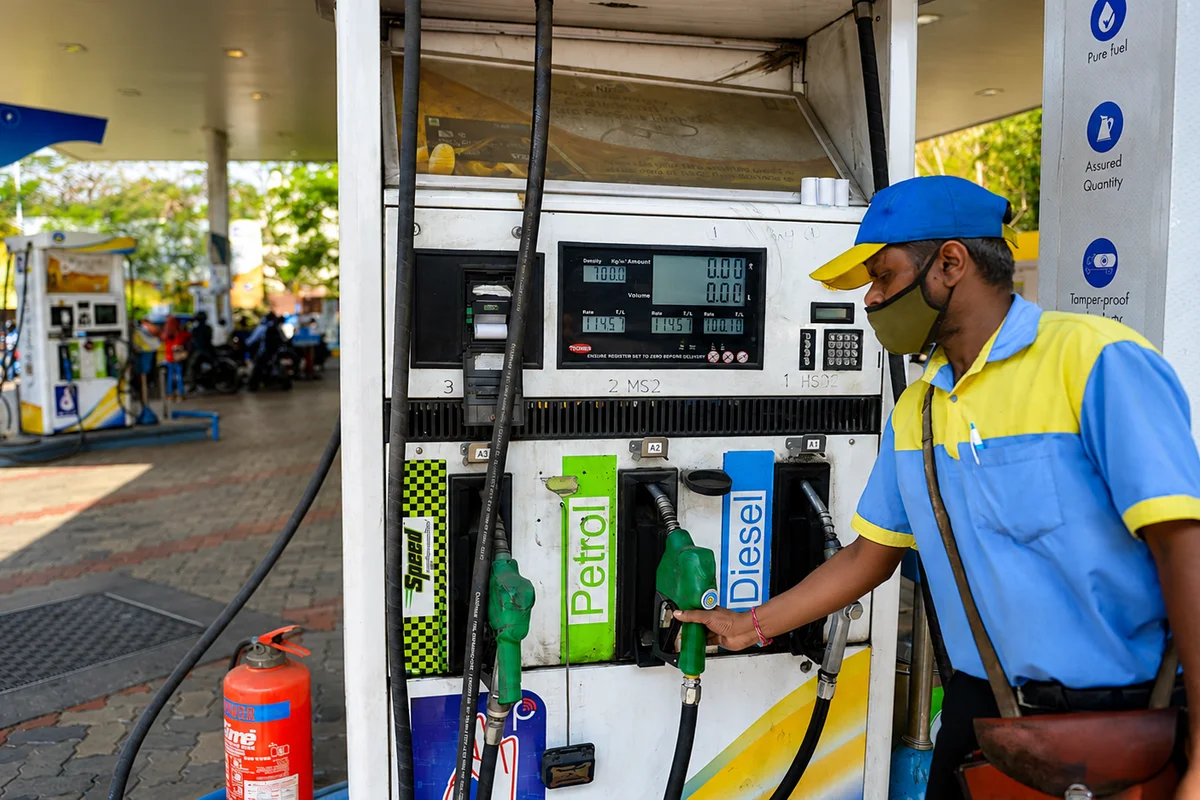
Petrol and diesel prices across India remained largely stable on May 8, 2026, despite continued volatility in global crude oil markets and geopolitical tensions in West Asia. Oil Marketing Companies (OMCs) have maintained fuel prices across major metropolitan cities, offering temporary relief to consumers amid elevated international energy prices and currency fluctuations.
While global crude oil benchmarks continue to fluctuate due to supply concerns and shipping disruptions near the Strait of Hormuz, domestic fuel prices have remained steady due to government intervention and pricing adjustments by state-run fuel retailers.
The retail prices of petrol and diesel vary across cities because of differences in state VAT, local taxes, and transportation costs.
| City | Petrol Price (₹/Litre) | Diesel Price (₹/Litre) |
|---|---|---|
| New Delhi | 94.77 | 87.67 |
| Mumbai | 103.54 | 90.03 |
| Kolkata | 105.41 | 92.02 |
| Chennai | 100.84 | 92.39 |
| Bengaluru | 102.96 | 90.99 |
| Hyderabad | 107.46 | 95.70 |
| Ahmedabad | 94.29 | 89.95 |
| Pune | 104.03 | 91.34 |
| Lucknow | 94.73 | 87.81 |
| Jaipur | 104.72 | 90.15 |
Among the major cities, Hyderabad continues to report the highest petrol and diesel prices, while Ahmedabad and Delhi remain among the cheaper fuel markets due to lower state taxes.
Fuel prices also differ significantly between states because of varying VAT structures imposed by local governments.
| State / UT | Petrol Price (₹/Litre) |
|---|---|
| Andaman and Nicobar Islands | 82.46 |
| Andhra Pradesh | 109.11 |
| Assam | 100.04 |
| Bihar | 106.94 |
| Chandigarh | 94.30 |
| Delhi | 94.77 |
| Gujarat | 94.29 |
| Haryana | 95.91 |
| Karnataka | 103.62 |
| Kerala | 106.46 |
| Madhya Pradesh | 107.83 |
| Maharashtra | 104.11 |
| Odisha | 102.43 |
| Punjab | 98.31 |
| Rajasthan | 104.53 |
| Tamil Nadu | 102.00 |
| Telangana | 108.83 |
| Uttar Pradesh | 94.37 |
| West Bengal | 106.22 |
Andaman and Nicobar Islands continue to offer the lowest petrol prices in India, while Andhra Pradesh and Telangana remain among the costliest fuel markets.
Global oil prices remain highly sensitive to geopolitical developments in the Middle East. Concerns surrounding disruptions in the Strait of Hormuz one of the world’s most critical oil shipping routes continue to influence international crude benchmarks.
Even minor disruptions in supply chains can significantly impact oil-importing countries like India.
Indian Oil Corporation (IOC), Bharat Petroleum (BPCL), and Hindustan Petroleum (HPCL) are currently managing retail fuel prices carefully to avoid sudden inflationary shocks for consumers.
Reports suggest that state-run OMCs are absorbing part of the pricing pressure instead of fully passing higher crude oil costs to end users.
India imports over 85% of its crude oil requirements, making the rupee-dollar exchange rate extremely important for fuel pricing.
A weaker rupee increases import costs, which eventually impacts petrol and diesel prices domestically even if crude prices remain unchanged globally.
State VAT remains one of the biggest reasons for fuel price variation across India. States with higher local taxes witness significantly higher retail fuel prices compared to states with lower tax burdens.
Market experts believe fuel prices could remain volatile in the coming weeks depending on:
If crude oil sustains above the $100-per-barrel mark for an extended period, pressure on Indian fuel prices could increase gradually.
For now, consumers continue to benefit from stable domestic fuel prices despite global uncertainties. However, the risk of future price hikes remains elevated due to geopolitical tensions, oil supply concerns, and currency volatility.
Analysts expect the government and OMCs to continue balancing inflation management with fuel pricing sustainability in the near term.
Fuel prices vary because each state imposes different VAT rates and local taxes, which directly impact retail prices.
Among major Indian cities, Hyderabad currently has one of the highest petrol prices at ₹107.46 per litre.
Oil Marketing Companies and government intervention are helping absorb part of the international crude oil shock to prevent sharp retail price increases.
Since India imports most of its crude oil in US dollars, a weaker rupee increases import costs and puts upward pressure on domestic fuel prices.
Future fuel price movement will depend on global crude oil prices, geopolitical tensions, and currency fluctuations. Continued oil price strength could increase pressure on domestic fuel rates.
Financial journalist specializing in market analysis, stock research, and investment trends. Dedicated to providing accurate, timely insights for informed decision-making.
Credentials: Experienced financial journalist with expertise in equity markets and economic analysis
The information provided in this article is for educational and informational purposes only and should not be construed as financial, investment, or legal advice. welomoney does not provide personalized investment recommendations.
For detailed terms and conditions, please read our Disclaimer and Terms of Service.
No additional articles in this category yet.