Loading market data...
Wed, 02 Sept 2026
05:00:08 am
Wed, 02 Sept 2026
05:00:08 am

Rudransh Sangwan
Published at: April 4, 2026, 8:02 AM
Synopsis
Gold stays steady near ₹1.49L despite global tensions. Safe-haven demand rises, but prices remain below peak. What investors are missing.
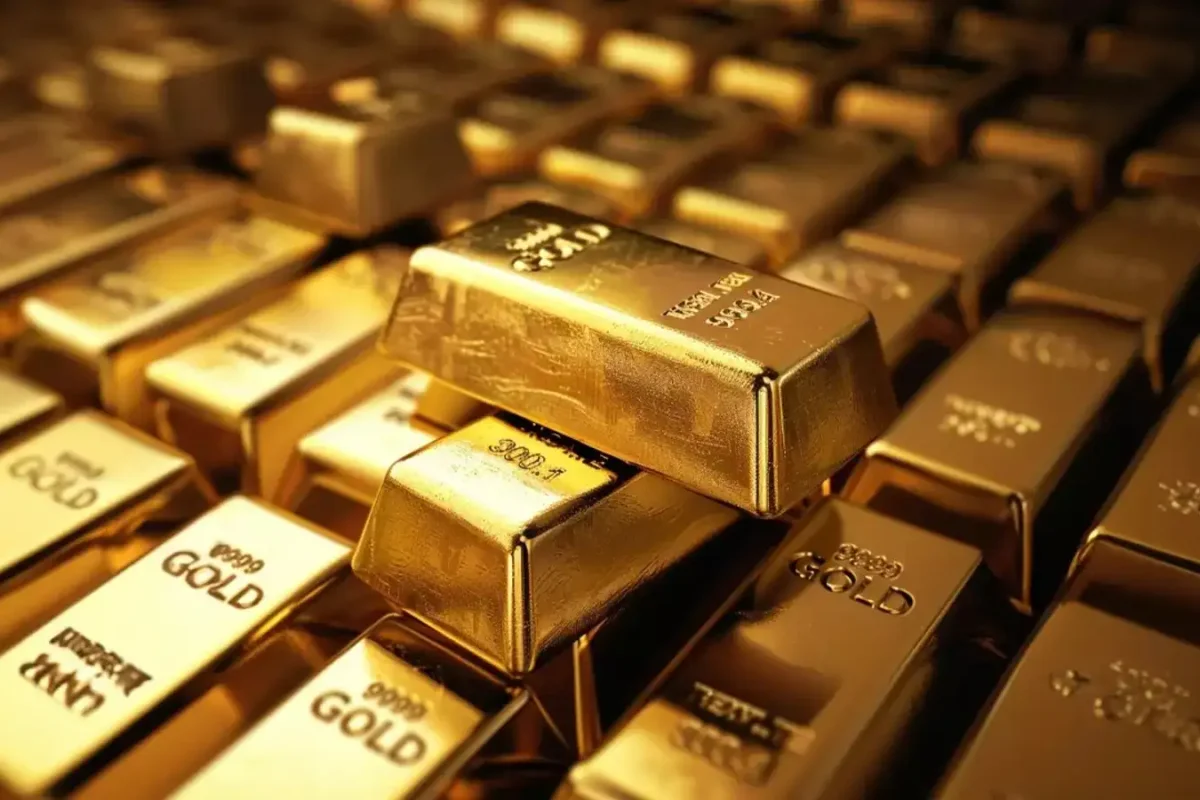
Gold is trading near ₹1.49 lakh per 10 grams, and that stability is surprising given rising geopolitical tensions. Normally, events like conflict in the Middle East trigger sharp rallies in safe-haven assets. But this time, gold is not reacting aggressively.
The reason lies in a balance between fear and financial conditions. Investors are shifting toward gold as a safe-haven asset, but high interest rates and tight liquidity are limiting strong inflows. This creates a controlled price movement instead of a spike.
For investors, this means gold is not weak. It is holding ground despite pressure. That usually signals underlying strength rather than lack of demand.
Safe-haven demand typically rises during uncertainty, and institutions like the World Gold Council have consistently shown that gold benefits during crises.
Right now, demand is increasing but in a measured way. Investors are cautious because global monetary conditions are still tight.
This suggests that capital is moving into gold slowly, which often leads to more sustainable price trends rather than short-lived spikes.
Liquidity is the biggest factor influencing gold prices today. Central banks like the Federal Reserve and Reserve Bank of India are maintaining relatively high interest rates.
Higher interest rates increase the opportunity cost of holding gold, since it does not generate yield.
This explains why gold is stable instead of surging. The market is waiting for liquidity conditions to shift before making a decisive move.
Gold’s flat trend is not random. It reflects how investors are interpreting global signals. While geopolitical risks are rising, markets are also factoring in economic stability and central bank policies.
This creates a mixed environment where gold does not move sharply in either direction.
For investors, this means gold is acting as a stabilizer in portfolios rather than a momentum asset right now.
Gold is still about 17 percent below its peak of ₹1.80 lakh, and that gap is important. It shows that the market has not fully priced in current risks.
This suggests that gold may still have upside potential if conditions align.
Historically, gold often consolidates before making major moves. Data from global markets shows that sideways phases are common before strong rallies.
For example, during previous economic cycles, gold stayed range-bound before reacting sharply to policy changes or liquidity expansion.
Most discussions focus on war and uncertainty. But the real driver is global liquidity and monetary policy.
When liquidity is tight, even strong safe-haven demand cannot push prices significantly higher. This is exactly what is happening now.
The cause-effect chain is clear: Rising uncertainty increases demand → tight liquidity limits inflow → prices stabilize
This makes gold’s current stability a sign of strength, not weakness.
Policy decisions have a bigger impact on gold than short-term events. When central banks ease policies, gold tends to rise sharply.
Investors who focus only on news headlines often miss this deeper connection.
Even though prices are not surging, geopolitical risks are providing a strong support base.
This ensures that gold does not fall significantly, even if it is not rising rapidly.
This is not a phase for aggressive trading. It is a phase for strategic positioning.
Gold is behaving like a stable asset rather than a high-return trade, which makes it suitable for long-term allocation.
Investors should view this period as an opportunity to build exposure rather than wait for perfect entry points.
Experienced investors are focusing on gradual accumulation instead of timing the market.
This reduces the impact of volatility and ensures better average pricing over time.
Understanding when gold might break out is important.
Tracking these factors helps investors make informed decisions rather than reacting to short-term news.
Gold is currently in a waiting phase. The next move depends on key macro triggers.
If these factors align, gold could move quickly toward its previous highs or even beyond.
There are multiple possible outcomes:
Each scenario depends on global economic conditions and policy decisions.
Instead of predicting exact price levels, investors should focus on timing their entry based on macro signals.
This increases the chances of capturing long-term gains.
Gold is supported by safe-haven demand, but tight liquidity and high interest rates are limiting strong price movement. This creates a balance where prices remain stable instead of rising sharply during uncertainty.
Gold can be considered attractive since it is below peak levels and supported by global uncertainty. Gradual investment strategies may help capture long-term gains while reducing short-term risk.
Key drivers include central bank policy changes, falling interest rates, and increased liquidity. Geopolitical tensions also support gold, but monetary policy plays a bigger role in determining long-term price direction.
Financial journalist specializing in market analysis, stock research, and investment trends. Dedicated to providing accurate, timely insights for informed decision-making.
Credentials: Experienced financial journalist with expertise in equity markets and economic analysis
The information provided in this article is for educational and informational purposes only and should not be construed as financial, investment, or legal advice. welomoney does not provide personalized investment recommendations.
For detailed terms and conditions, please read our Disclaimer and Terms of Service.
No additional articles in this category yet.