Loading market data...
Tue, 29 Sept 2026
07:38:12 pm
Tue, 29 Sept 2026
07:38:12 pm

Rudransh Sangwan
Published at: August 11, 2026, 6:33 AM
Synopsis
Shree Cement share price falls 2% after weak Q1 FY27 results as profit and EBITDA margins face pressure from higher fuel and raw material costs. Check stock performance, valuation, capacity and outlook.
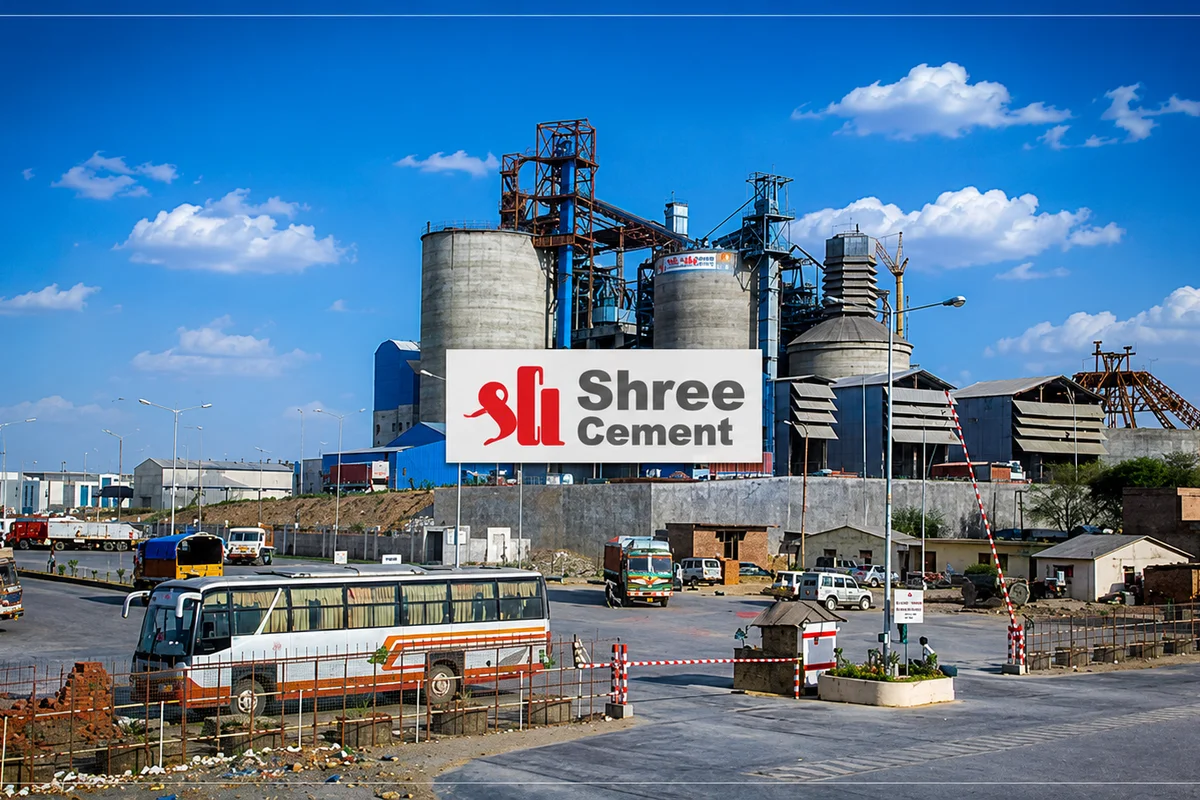
Shree Cement shares fell around 2.30% to ₹25,500 on August 11, 2026, as investors continued to react to the company's weak Q1 FY27 performance. The stock remains well below its 52 week high of ₹31,920, while the June quarter was marked by lower profitability and pressure on EBITDA margins. Rising fuel and raw material costs have also affected the cement maker as supply disruptions in West Asia increased input costs. The stock's recent performance remains weak, with a 16.78% decline over one year and a 5.97% fall over five years.
Shree Cement is India's third largest cement producer with installed capacity of 46.4 MTPA and is known for its focus on cost efficiency. The company sells cement products under brands including Bangur Rockstrong, Bangur Powermax and Bangur Jungrodhak, while Bangur Magna is its premium cement brand. Its current market capitalisation is ₹92,006 crore and the stock trades at a P/E of 56.5. Investors are now watching whether margins can recover as fuel costs stabilise and whether the company can manage higher raw material expenses.
Loading chart...
Shree Cement was trading at ₹25,500 on August 11, down 2.01% based on the supplied market data. The stock has a 52 week high of ₹31,920 and a 52 week low of ₹22,550. Its market capitalisation stands at ₹92,006 crore, while the P/E ratio is 56.5. The company has a book value of ₹6,449, dividend yield of 0.57%, ROCE of 10.3% and ROE of 7.51%.
| Metric | Value |
|---|---|
| Current price | ₹25,500 |
| 52 week high | ₹31,920 |
| 52 week low | ₹22,550 |
| Market cap | ₹92,006 crore |
| P/E | 56.5 |
| Book value | ₹6,449 |
| Dividend yield | 0.57% |
| ROCE | 10.3% |
| ROE | 7.51% |
Shree Cement's June quarter results were weaker, with net profit declining between 18% and 29% year on year depending on whether standalone or consolidated figures are considered, according to the supplied information. The decline came alongside pressure on EBITDA margins as fuel and operating costs increased. The weak earnings also missed analyst expectations, adding to the negative sentiment around the stock. Since the supplied material contains different profit decline figures for standalone and consolidated results without the underlying financial values, the figures have not been combined or reconciled.
Fuel expenses have come under pressure because supply disruptions in the Middle East have affected the availability of pet coke. The company has had to rely on more expensive coal alternatives, increasing fuel expenses on a per kilocalorie basis. This has added pressure to operating margins at a time when profitability was already under strain.
Raw material costs have also become a concern. A shortage of natural gypsum has increased reliance on more expensive substitute materials, adding to the cost pressure faced by the cement business. The combination of higher fuel and raw material costs has therefore become an important factor for the company's near term profitability.
Shree Cement is engaged in the manufacturing and sale of cement and cement related products. It is India's third largest cement producer, with installed capacity of 46.4 MTPA. Its portfolio includes Portland Pozzolana Cement, Ordinary Portland Cement and Portland Slag Cement, sold under brands such as Bangur Rockstrong, Bangur Powermax and Bangur Jungrodhak.
The company has also been increasing its focus on premium cement products. Bangur Magna is its premium cement brand, while the supplied company information indicates that premium products increased from 7% of the trade mix in FY22 to 15% as of Q2 FY25.
The company's installed cement capacity stands at 46.4 MTPA, placing it among India's largest cement producers. Its product strategy includes standard cement products as well as premium offerings, with the company seeking to increase the contribution from higher value products.
| Business metric | Value |
|---|---|
| Installed cement capacity | 46.4 MTPA |
| Industry position | 3rd largest cement producer in India |
| Premium product mix in FY22 | 7% |
| Premium product mix as of Q2 FY25 | 15% |
| Premium brand | Bangur Magna |
The stock has remained under pressure across most of the periods provided. It declined 2.30% over one day, 5.56% over five days and 4.19% over one month. The six month decline stood at 3.86%, while the stock fell 16.78% over one year. Over five years, Shree Cement delivered a decline of 5.97%.
| Period | Stock return |
|---|---|
| 1 day | -2.30% |
| 5 days | -5.56% |
| 1 month | -4.19% |
| 6 months | -3.86% |
| 1 year | -16.78% |
| 5 years | -5.97% |
Shree Cement is trading at a P/E of 56.5, with a book value of ₹6,449 and a market capitalisation of ₹92,006 crore. The valuation needs to be considered alongside the recent pressure on profitability and the stock's decline over the past year. Investors can monitor cement prices, fuel expenses, raw material availability and the recovery in EBITDA margins as factors that may influence future earnings.
The main risks currently include higher fuel costs, raw material inflation and continued supply disruptions affecting energy inputs. The shortage of natural gypsum may also keep input costs elevated. Weak profitability and margin compression remain concerns if higher costs cannot be passed through to customers. The stock's relatively high P/E also means future earnings performance will remain important for its valuation.
Shree Cement's near term performance is being affected by weaker Q1 FY27 profitability and higher operating costs. Fuel price pressure from changes in the availability of pet coke, along with higher costs for substitute raw materials, has weighed on margins. Investors tracking the stock will be watching the recovery in EBITDA margins, input cost trends and the performance of premium cement products. The stock's 52 week range, current valuation and earnings trajectory will also remain important factors as the market assesses the company's next phase of growth.
Shree Cement shares fell around 2% on August 11, 2026, as investors continued to react to weak Q1 FY27 earnings. Lower profitability, margin pressure and higher fuel and raw material costs have weighed on sentiment.
Shree Cement reported a significant year on year decline in net profit during the June quarter. The supplied information indicates a decline of 18% to 29%, depending on whether standalone or consolidated figures are considered.
The company's margins have been affected by higher fuel and raw material costs. Supply disruptions in West Asia have affected pet coke availability, increasing reliance on more expensive coal alternatives.
The supplied market data shows Shree Cement trading at around ₹25,500 on August 11, 2026.
Shree Cement has a supplied 52 week high of ₹31,920 and a 52 week low of ₹22,550.
Shree Cement has a market capitalisation of approximately ₹92,006 crore based on the supplied data.
The stock is trading at a P/E ratio of 56.5, based on the supplied company data.
Shree Cement has an installed cement production capacity of approximately 46.4 MTPA.
Shree Cement is described in the supplied information as India's third largest cement producer.
The company's cement portfolio includes brands such as Bangur Rockstrong, Bangur Powermax, Bangur Jungrodhak and Bangur Magna.
Bangur Magna is identified as the company's premium cement brand.
Shree Cement shares have declined 16.78% over one year based on the supplied historical return data.
The stock has declined 5.97% over five years based on the supplied historical performance data.
The main risks include fuel cost inflation, higher raw material costs, supply disruptions and pressure on operating margins. Cement demand and the company's ability to manage input costs are also important factors.
Investors can monitor fuel prices, raw material availability, cement prices, EBITDA margin recovery and premium product sales. The company's earnings performance and current valuation will also remain important for the stock.
Financial journalist specializing in market analysis, stock research, and investment trends. Dedicated to providing accurate, timely insights for informed decision-making.
Credentials: Experienced financial journalist with expertise in equity markets and economic analysis
The information provided in this article is for educational and informational purposes only and should not be construed as financial, investment, or legal advice. welomoney does not provide personalized investment recommendations.
For detailed terms and conditions, please read our Disclaimer and Terms of Service.
NSE shares fell after listing at Rs 1,800, dropping to 12th by market value. Experts identify Rs 1,760 support and Rs 1,795 resistance.
Goldman Sachs retains its Buy rating on IndiGo with a Rs 5,900 target, citing international growth, cost leadership and better FY28 profitability.
Kirloskar Oil Engines posted 16% Q1 FY27 revenue growth, while margins missed estimates. Motilal Oswal cut earnings estimates and raised its target...

Landmark Cars shares rose 12% to Rs 535.80 after adding BYD and M&M outlets, taking its network to 143 locations, with EV sales at 30% of Q1FY27 new...

Tata Motors’ subsidiary acquired 26,000 shares in Mateshwari E-Smart Mobility for ₹2.6 lakh.