Loading market data...
Fri, 18 Sept 2026
08:13:38 am
Fri, 18 Sept 2026
08:13:38 am

Rudransh Sangwan
Published at: August 4, 2026, 3:07 AM
Synopsis
FSSAI has directed Dabur India to stop selling several food products carrying "100%" claims, including honey, ghee, oils and apple cider vinegar. Here's what the regulator found, the products affected and Dabur's response.
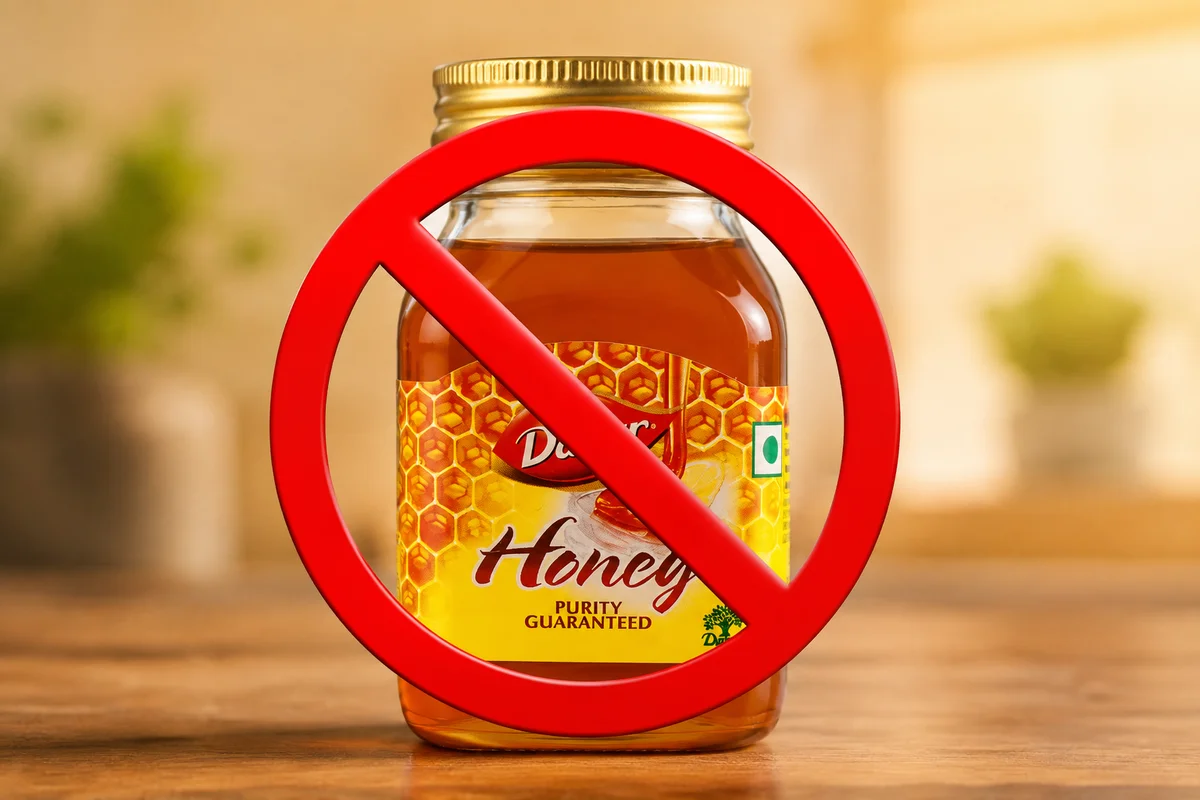
India’s food safety regulator’s action against Dabur India Ltd over certain “100%” marketing claims has taken a significant turn. The Food Safety and Standards Authority of India (FSSAI) had directed the company to stop selling food products carrying claims such as “100% Natural,” “100% Pure,” “100% Purity Guaranteed” and “100% Organic”, arguing that such absolute claims could be ambiguous, difficult to verify and potentially misleading. The company challenged the order before the Delhi High Court, which granted interim relief and stayed the prohibition order until the next hearing.
The dispute is now being examined through the judicial process, making the case relevant for both consumers and the wider FMCG industry. The original action covered products including honey, apple cider vinegar, virgin coconut oil, sesame oil, cow ghee, coconut water and coconut milk. The key issue is whether the claims used on these products comply with India's food advertising and claims regulations.
Loading chart...
| Particulars | Latest Details |
|---|---|
| Company | Dabur India Ltd |
| Regulator | FSSAI |
| Original action | Prohibition Order |
| Main issue | “100%” marketing claims |
| Products involved | Honey, ghee, oils, apple cider vinegar, coconut water, coconut milk and others |
| Latest development | Delhi High Court interim stay |
| Court | Delhi High Court |
| Next hearing | August 24, 2026 |
| Status | Matter remains under judicial consideration |
The immediate regulatory dispute centres on the use of absolute claims that could influence how consumers perceive the purity, natural composition or organic status of a product. The court's intervention has temporarily changed the position, but it has not finally decided whether the disputed claims comply with the applicable regulations.
FSSAI said several food products listed on the company's website were promoted using claims including “100% Natural,” “100% Pure,” “100% Purity Guaranteed,” “100% Organic” and “100% Tender Coconut Water.” The regulator's concern was that such statements could create an absolute impression about the nature, purity or composition of a food product without an adequately clear or verifiable basis.
The important point for consumers is that the action concerns labelling, advertising and marketing claims. It should not be read as a blanket declaration that the affected products are unsafe for consumption. The regulatory question is whether the manner in which certain products were described and marketed complied with India's food advertising rules and whether consumers could potentially be misled by absolute claims.
| Product Category | Marketing Claim Flagged |
|---|---|
| Honey | 100% Natural / 100% Pure / 100% Organic |
| Apple Cider Vinegar | 100% Organic |
| Virgin Coconut Oil | 100% Pure |
| Sesame Oil | 100% Pure |
| Cow Ghee | 100% Pure |
| Coconut Water | 100% Tender Coconut Water |
| Coconut Milk | 100% Purity |
The original prohibition order covered these products and other food products carrying similar absolute “100%” claims. This raised a broader question about how FMCG companies use words such as “pure”, “natural” and “organic” in consumer-facing advertising and packaging.
For the company, the issue extends beyond individual product descriptions. It potentially requires closer examination of product pages, packaging language, certification references and other consumer-facing material to ensure that marketing claims remain within the regulatory framework.
Apart from the “100%” claims, the regulator also raised concerns over certain Dabur products. FSSAI said Dabur Himalayan Organic Apple Cider Vinegar and Dabur Organic Honey were displaying the Jaivik Bharat Logo without what the regulator considered a valid FSSAI organic endorsement.
The regulator also objected to the “100% Purity” claim used for Dabur Hommade Coconut Milk, stating that such an absolute purity claim was not permitted for compound food products under the applicable advertising and claims framework.
| Product | Observation |
|---|---|
| Dabur Organic Honey | Jaivik Bharat logo without valid endorsement, according to FSSAI |
| Himalayan Organic Apple Cider Vinegar | Jaivik Bharat logo without valid endorsement, according to FSSAI |
| Dabur Hommade Coconut Milk | “100% Purity” claim flagged for compound food |
These observations added another layer to the dispute because the matter was not limited solely to the wording of “100%” claims. The regulator also questioned whether certain certification-related representations and product descriptions were being used appropriately.
Under the original order, FSSAI directed the company to immediately stop selling the identified food products carrying the disputed “100%” claims. The regulator also asked the company to examine other products carrying similar claims and submit an Action Taken Report within 15 days detailing the corrective measures taken.
The situation has since changed following the Delhi High Court's interim intervention. The stay means the original prohibition order is currently subject to the court proceedings rather than operating without restriction. The final regulatory position will depend on the subsequent hearings and the response filed by FSSAI.
The biggest development has been the intervention of the Delhi High Court. After Dabur India challenged the prohibition order, the court granted interim relief and stayed the FSSAI directive. The court raised a preliminary concern over whether such a prohibitory order should have been passed without first providing the company an adequate opportunity to be heard.
The court issued notice to FSSAI and directed the regulator to respond to the petition. The interim stay is set to continue until the next hearing on August 24, 2026. Importantly, the stay does not represent a final ruling on whether the disputed “100%” claims comply with food advertising regulations.
The company challenged the FSSAI action primarily on procedural and legal grounds. It argued that the prohibition order was issued without providing an adequate opportunity to respond through a proper show-cause process and hearing.
The Delhi High Court's interim observations have provided temporary relief while the matter is examined further. However, the court has not finally determined whether FSSAI's concerns regarding the claims are valid. That distinction remains important because the stay concerns the operation of the prohibition order while the underlying dispute remains before the court.
When the original action was announced, Dabur India said it had received the regulator's notice and was reviewing the content referred to in the order. The company subsequently moved the Delhi High Court to challenge the prohibition order and seek relief against the immediate restrictions.
The company's position is now being considered alongside FSSAI's response. The next stage of the case will therefore be important in determining whether the interim relief continues and whether the regulator is required to follow an additional procedural process before taking further action.
The next important date is August 24, 2026, when the matter is scheduled to come up before the Delhi High Court. The proceedings could provide greater clarity on the regulator's authority, the process followed before issuing the prohibition order and the company's challenge to the restrictions.
For investors and consumers, the key developments to watch include:
The dispute highlights a wider issue around how food products are presented to consumers in India. Terms such as “100% Pure,” “100% Natural” and “100% Organic” can influence purchasing decisions because consumers may associate them with higher quality, purity or health benefits.
At the same time, the Delhi High Court's intervention highlights the importance of procedural safeguards during regulatory enforcement. The case therefore involves both consumer protection and regulatory due process. Consumers should look beyond promotional language and consider ingredients, certifications, product information and other disclosures provided on packaging.
For investors, the immediate issue is primarily regulatory rather than a direct change to the company's underlying operations. The original FSSAI order created concerns around product labelling, compliance and potential brand impact, while the court stay has reduced the immediate pressure created by the prohibition order.
Investors may therefore track the court proceedings alongside Dabur India's broader financial performance, FMCG demand, rural consumption, margins and brand performance. The eventual outcome could determine whether additional changes are required to product claims or marketing practices.
Dabur India is one of India's major consumer goods companies, with businesses spanning healthcare, personal care, home care, food and beverages. The company has a broad portfolio of established consumer brands and significant exposure to India's fast-moving consumer goods market.
Its food and wellness portfolio includes categories such as honey, ghee, juices, beverages and other health-oriented products. Given its scale and established brand presence, regulatory developments involving its products can attract significant attention from both consumers and investors. The current FSSAI dispute, however, specifically concerns certain product claims and labelling practices and should not be interpreted as a finding that the company's overall product portfolio is unsafe.
The latest position is that the Delhi High Court has granted interim relief against the FSSAI prohibition order, with the next hearing scheduled for August 24, 2026. The stay has temporarily prevented the original prohibition order from operating in full while the court considers the company's challenge and the regulator's response.
The underlying questions surrounding the disputed “100%” claims therefore remain open. The outcome could have implications beyond the company itself, particularly for how FMCG businesses use claims relating to purity, natural ingredients and organic status. For the industry, the case could become an important reference point for future food marketing and labelling practices.
Financial journalist specializing in market analysis, stock research, and investment trends. Dedicated to providing accurate, timely insights for informed decision-making.
Credentials: Experienced financial journalist with expertise in equity markets and economic analysis
The information provided in this article is for educational and informational purposes only and should not be construed as financial, investment, or legal advice. welomoney does not provide personalized investment recommendations.
For detailed terms and conditions, please read our Disclaimer and Terms of Service.

BEML shares gained after the company secured a major NHSRCL order for the Mumbai Ahmedabad high speed rail corridor.

Sonaselection India IPO subscription status shows category-wise bidding from retail investors, NIIs and QIBs.

Indian IT stocks are under pressure as investors track US interest rates, global technology sentiment and client spending.

Tata Chemicals shares came under pressure amid fresh Tata Sons developments. Check why the stock fell, its Tata Sons stake and key factors investors...

ONGC shares fell as crude oil prices eased and energy stocks faced pressure. Check the key factors behind the decline, OPaL concerns and what...