Loading market data...
Sun, 20 Sept 2026
05:31:28 pm
Sun, 20 Sept 2026
05:31:28 pm
Synopsis
Explore the latest BSE news, Q1 FY27 financial performance, valuation concerns, brokerage views, regulatory developments, and the key factors influencing investor sentiment and the stock's recent movement.
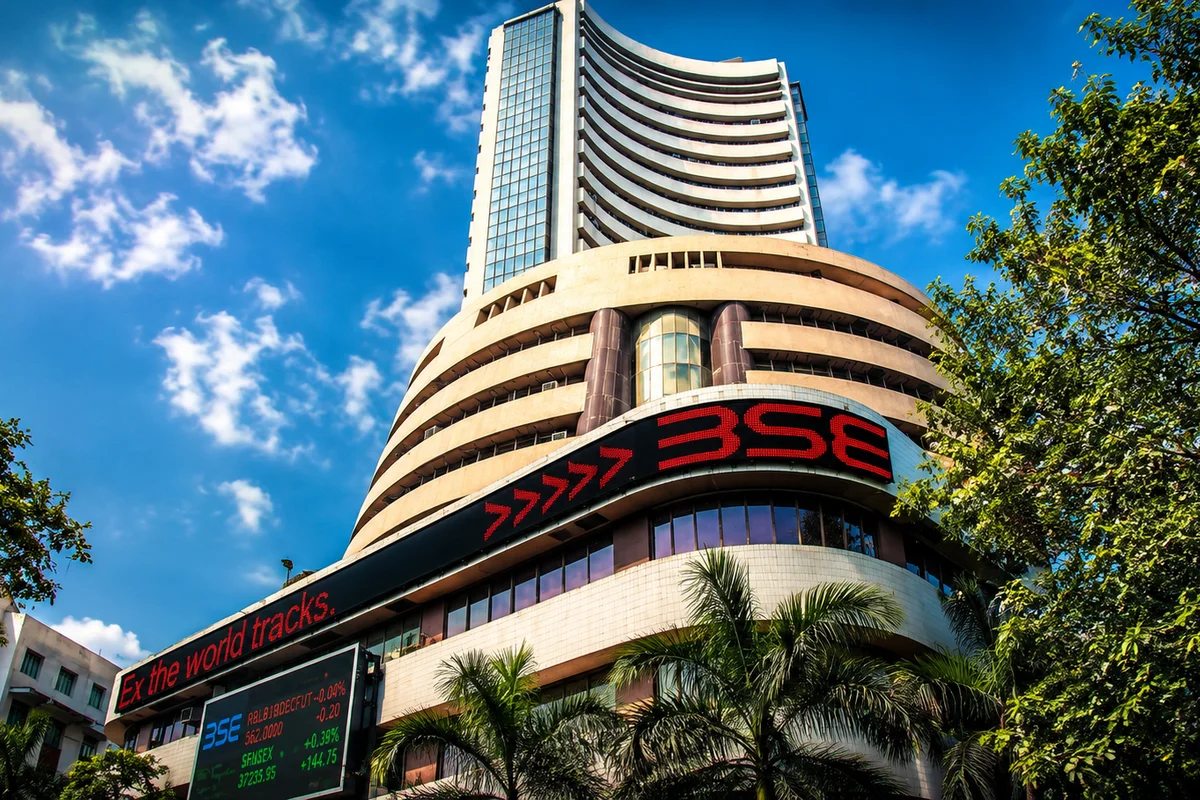
BSE Ltd. shares declined nearly 3% in Thursday's trading session as investors resorted to profit-booking following the company's stellar rally over the past several months. Although the exchange operator reported another strong quarter with healthy year-on-year earnings growth, the stock came under pressure as traders chose to lock in gains after the sharp appreciation seen in recent months. The decline also reflected growing caution among analysts, who believe much of the company's near-term growth expectations have already been priced into the stock. Concerns surrounding elevated valuations, softer sequential growth and the possibility of regulatory changes impacting derivatives trading volumes further weighed on investor sentiment, leading to broad-based selling despite the company's solid financial performance.
| Particulars | Details |
|---|---|
| Company | BSE Ltd. |
| Share Price Movement | Down nearly 3% |
| Trading Price | Around ₹3,435 |
| Primary Reason | Profit Booking |
| Market Sentiment | Cautious |
| Key Concerns | Valuation, Sequential Growth, Regulatory Changes |
The biggest reason behind today's decline appears to be profit booking rather than any weakness in the company's underlying business. BSE has been among the strongest-performing financial sector stocks over the past year, delivering exceptional returns as rising trading activity, higher derivatives volumes and improving earnings significantly boosted investor confidence. Following this remarkable rally, the stock started trading at a relatively rich valuation, prompting several investors to secure gains after the latest quarterly results. Such corrections are common after sharp rallies, particularly when a company has consistently outperformed the broader market and expectations have already become optimistic.
Several market participants also noted that the stock was trading at a premium valuation compared to many financial services companies. While the company's long-term fundamentals remain healthy, elevated valuations often make stocks more sensitive to even minor disappointments or cautious commentary from brokerages. As a result, some institutional and short-term investors preferred reducing exposure after the earnings announcement, creating temporary selling pressure despite the company's continued operational strength.
Although BSE reported impressive year-on-year growth in revenue and profitability during Q1 FY27, some analysts observed that the pace of growth moderated when compared with the exceptionally strong March 2026 quarter. While the exchange continued benefiting from healthy trading activity and higher market participation, sequential improvements in core revenue and profitability were relatively modest, leading some investors to adopt a more cautious stance after the results.
The market generally rewards companies that consistently exceed already high expectations, especially those trading at premium valuations. In BSE's case, the latest financial performance remained fundamentally strong, but the absence of another major earnings surprise encouraged traders to lock in profits. Brokerages also indicated that future earnings growth may increasingly depend on sustained trading activity, new product launches and continued expansion of the derivatives segment rather than extraordinary quarter-on-quarter gains.
| Factor | Impact on Stock |
|---|---|
| Profit Booking | Short-Term Selling Pressure |
| Premium Valuation | Investors Locked in Gains |
| Moderate Sequential Growth | Cautious Market Sentiment |
| Regulatory Uncertainty | Pressure on Valuation |
| Brokerage Commentary | Mixed Investor Confidence |
Another factor influencing investor sentiment is the possibility of future regulatory changes affecting India's derivatives market. Market participants continue monitoring potential policy changes that could influence trading volumes, margin requirements and overall participation in the futures and options segment. Since derivatives contribute significantly to exchange revenues, any regulatory action that affects trading activity could influence future earnings expectations for exchange operators, including BSE.
While no immediate adverse regulatory change has materially altered the company's business outlook, analysts remain cautious about incorporating aggressive volume growth assumptions into their forecasts. This has prompted some brokerages to revise or reassess their price targets, even though they continue acknowledging the company's strong competitive position within India's expanding capital markets ecosystem.
Despite today's correction, BSE continues to benefit from several long-term structural growth drivers. Rising retail investor participation, increasing demat account penetration, expanding mutual fund investments and continued growth in India's capital markets are expected to support trading volumes over the long term. The exchange has also strengthened its presence across equity, derivatives, mutual fund distribution and market infrastructure services, creating multiple revenue streams beyond traditional cash market trading.
The company's continued investments in technology, product innovation and market expansion are expected to support sustainable growth over the coming years. As India's financial markets continue deepening and investor participation increases, exchange operators like BSE remain well positioned to benefit from higher transaction volumes, increasing listings and expanding capital market activity, even though short-term volatility may continue to influence the share price.
Going forward, investors will closely monitor derivatives trading volumes, management commentary on business growth, upcoming regulatory developments and future quarterly earnings. Market participants will also watch whether the company can maintain its strong profitability while expanding new business segments and sustaining healthy trading activity across its platforms.
Although the stock witnessed profit-booking after its recent rally, the broader long-term outlook continues to depend on India's growing capital markets ecosystem, increasing investor participation and BSE's ability to strengthen its position across multiple exchange businesses. As a result, today's decline appears to reflect short-term valuation adjustments rather than a meaningful change in the company's long-term growth story.
BSE Ltd. shares declined mainly due to profit-booking after a sharp rally over the past few months. Investors also turned cautious because of premium valuations, relatively moderate sequential growth, and concerns that future regulatory changes could impact derivatives trading volumes.
BSE reported another strong quarter with healthy year-on-year growth in revenue and net profit, supported by robust trading activity and higher participation in the capital markets. However, some analysts noted that growth compared with the previous quarter was relatively moderate, which influenced near-term market sentiment.
The long-term growth outlook for BSE Ltd. is supported by increasing retail investor participation, rising demat accounts, higher derivatives trading volumes, new product launches, stronger mutual fund distribution, and continued expansion of India's capital markets.
Investor sentiment has been influenced by discussions around potential SEBI regulatory changes related to derivatives trading and market activity. While no major regulatory action has significantly altered BSE's business model, investors remain cautious about the possible impact on future trading volumes and earnings growth.
The latest decline appears to be largely driven by short-term profit-booking and valuation concerns rather than weakness in the company's business fundamentals. Long-term investors will continue monitoring trading volumes, regulatory developments, future quarterly earnings, and BSE's ability to sustain growth across its exchange and market infrastructure businesses.

Financial journalist specializing in market analysis, stock research, and investment trends. Dedicated to providing accurate, timely insights for informed decision-making.
Credentials: Experienced financial journalist with expertise in equity markets and economic analysis
The information provided in this article is for educational and informational purposes only and should not be construed as financial, investment, or legal advice. welomoney does not provide personalized investment recommendations.
For detailed terms and conditions, please read our Disclaimer and Terms of Service.

BEML shares gained after the company secured a major NHSRCL order for the Mumbai Ahmedabad high speed rail corridor.

Sonaselection India IPO subscription status shows category-wise bidding from retail investors, NIIs and QIBs.

Indian IT stocks are under pressure as investors track US interest rates, global technology sentiment and client spending.

Tata Chemicals shares came under pressure amid fresh Tata Sons developments. Check why the stock fell, its Tata Sons stake and key factors investors...

ONGC shares fell as crude oil prices eased and energy stocks faced pressure. Check the key factors behind the decline, OPaL concerns and what...