Loading market data...
Tue, 20 Oct 2026
04:58:58 pm
Tue, 20 Oct 2026
04:58:58 pm

Rudransh Sangwan
Published at: August 27, 2026, 7:42 AM
Synopsis
Tata Group faces a major funding challenge as Tata Electronics, Air India, Agratas and Tata Digital require billions in investment. Check Tata Group stocks, Tata Sons' financial strength and key risks.
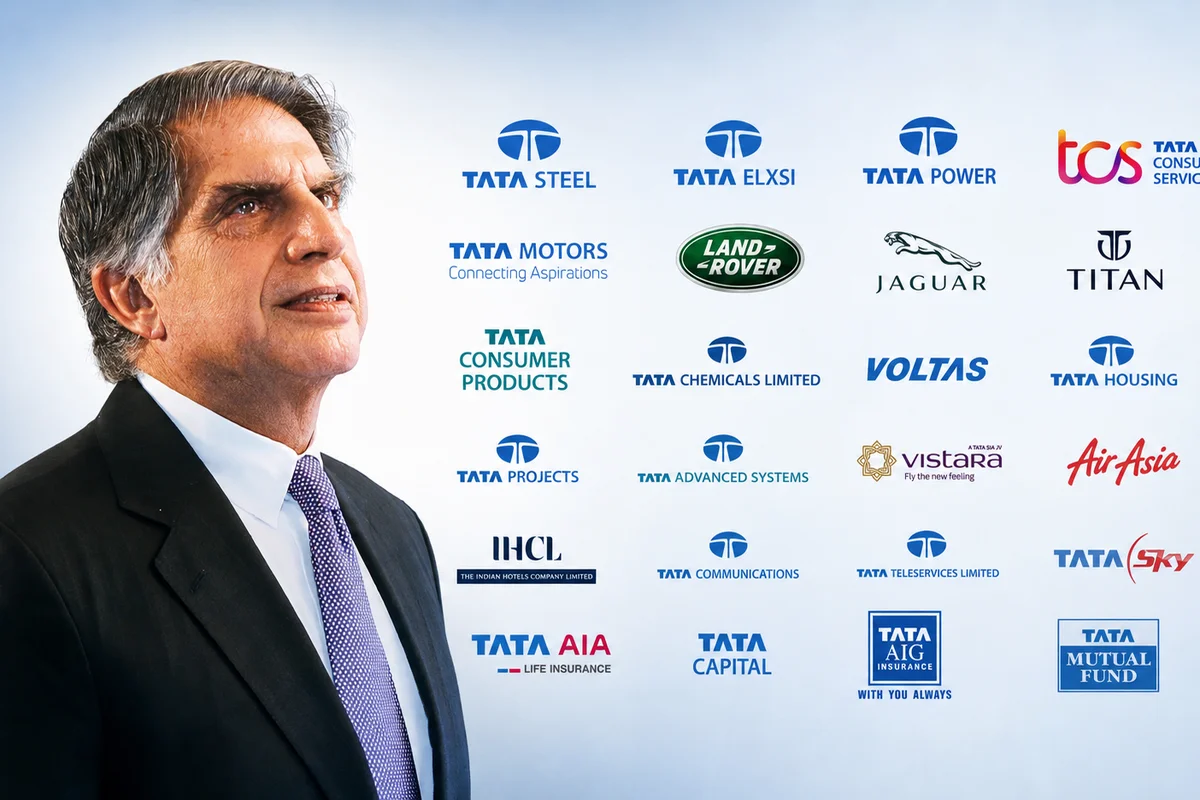
The Tata Group is entering one of its most capital intensive investment cycles, spanning semiconductors, aviation, batteries, automobiles, steel, power, hotels and artificial intelligence infrastructure. The investments will be funded through a mix of internal cash, debt, government incentives and external investors.
At the centre is Tata Sons, which ended FY26 with ₹21,841 crore of net cash, no borrowings and listed investments worth about ₹11.68 trillion. It generated ₹25,544 crore of operating cash flow while continuing to invest in subsidiaries and joint ventures.
Tata Electronics is developing a ₹91,000 crore semiconductor fab at Dholera, Gujarat, along with a ₹27,000 crore assembly and testing facility in Assam. Tata Sons' investment in Tata Electronics stood at ₹9,961 crore at the end of FY26, while the company reported ₹1.31 trillion revenue and a ₹1,611 crore loss, highlighting the funding needs of its expansion.
Air India continues to require significant capital for aircraft, fleet refurbishment, technology, training and network expansion. Tata Sons has described the airline's transformation as a five- to 10-year journey, while Air India and Air India Express reported a combined FY26 loss of ₹22,238 crore and the airline is seeking around $1.5 billion in fresh equity from Tata Sons and Singapore Airlines.
Agratas is developing battery-cell manufacturing capacity in India and the UK, with the Tata Group committing more than £4 billion to its Somerset facility. Tata Sons' investment in the Indian Agratas entity rose to ₹3,464 crore in FY26, while Agratas reported ₹45 crore revenue and a ₹1,101 crore loss, meaning further capital may be needed before meaningful cash flows emerge.
Tata Digital operates Tata Neu and businesses including BigBasket and Tata 1mg, while expanding into payments, lending, insurance and other financial services. Tata Sons' investment stood at ₹22,902.66 crore, with another ₹2,970 crore in share-application money, while Tata Digital's revenue reached ₹35,990 crore but its loss widened to ₹4,974 crore, keeping profitability as a key challenge.
Loading chart...
Tata Consultancy Services is one of the group's mature businesses, generating operating cash flows that can support expansion through internal accruals, borrowings and project finance, reducing its dependence on Tata Sons compared with newer ventures such as Tata Electronics and Agratas.
Loading chart...
Following the demerger, Tata Motors Passenger Vehicles (TMPV) and Tata Motors Commercial Vehicles (TMCV) operate as separate listed businesses, with TMPV outlining around ₹33,000-35,000 crore of investment between FY26 and FY30, while TMCV reported ₹20,667 crore revenue and ₹2,560 crore consolidated profit in Q1 FY27.
Loading chart...
Tata Steel has significant investment requirements across capacity, technology and efficiency, but its established operations provide recurring cash flows to support expansion, while Indian Hotels, which operates the Taj portfolio, can similarly fund growth through operating performance and access to capital.
Loading chart...
Loading chart...
Tata Power is investing across power generation, transmission, distribution and clean energy, with its established operations allowing expansion to be funded through internal cash generation, borrowings and project financing while newer Tata ventures continue to require greater shareholder support.
Tata Sons has ₹21,841 crore of net cash, no borrowings and a large portfolio of listed investments, while government incentives, strategic partners, external equity and project finance can reduce its direct funding burden; however, Air India, Tata Electronics, Agratas and Tata Digital together reported losses of nearly ₹30,000 crore in FY26, making capital allocation increasingly important.
The Tata Group's challenge is mainly about managing a multi-year capital cycle across businesses with different cash-flow profiles, with investors likely to watch semiconductor execution, Air India's turnaround, Agratas' commercial progress, Tata Digital's path to profitability and the investment requirements of the group's established businesses.
| Tata Group Stock | Sector | Market Cap (Cr) | P/E Ratio | 3-Year Returns |
|---|---|---|---|---|
| Tata Investment Corporation Ltd | Asset Management | ₹36,080 Cr | 88.47 | 239.73% |
| Nelco Ltd | Communication & Technology | ₹1,564 Cr | -846.30 | 21.63% |
| Tata Chemicals Ltd | Diversified Chemicals | ₹18,064 Cr | 51.31 | -24.37% |
| Tata Motors Commercial Vehicles Ltd | Automobile | ₹1,61,710 Cr | 68.19 | 30.00% |
| Voltas Ltd | Home Electronics & Appliances | ₹47,647 Cr | 96.67 | 67.74% |
| Indian Hotels Company Ltd | Hotels, Resorts & Cruise Lines | ₹93,882 Cr | 43.36 | 98.65% |
| Tata Motors Passenger Vehicles Ltd | Automobile | ₹1,32,621 Cr | 1.55 | -25.14% |
| Tata Steel Ltd | Iron & Steel | ₹2,64,713 Cr | 29.01 | 95.93% |
| Tata Consultancy Services Ltd | IT Services & Consulting | ₹9,34,064 Cr | 19.02 | -16.64% |
| Tata Power Company Ltd | Power Transmission & Distribution | ₹1,36,585 Cr | 27.28 | 123.77% |
| Titan Company Ltd | Jewellery, Watches & Lifestyle | ₹4,01,839 Cr | 84.32 | 74.38% |
| Trent Ltd | Retail-Apparel | ₹1,45,961 Cr | 90.10 | 210.56% |
| Tata Elxsi Ltd | Software Services | ₹28,604 Cr | 49.28 | -28.66% |
| Tata Consumer Products Ltd | FMCG | ₹1,10,208 Cr | 74.90 | 62.37% |
| Tata Communications Ltd | Telecom Services | ₹43,350 Cr | 24.38 | 28.53% |
| Tejas Networks Ltd | Telecommunication Equipment | ₹7,550 Cr | -8.31 | -33.87% |
| Tata Metaliks Ltd | Iron & Steel | — | — | — |
The Tata Group is entering a major investment cycle across semiconductors, aviation, batteries, automobiles, power and digital businesses, creating a need to fund several capital-intensive projects at the same time.
The biggest funding requirements are concentrated in Air India, Tata Electronics, Agratas and Tata Digital, which are still investing heavily or building scale.
Tata Sons ended FY26 with ₹21,841 crore of net cash and no borrowings, along with listed investments worth around ₹11.68 trillion.
Yes. Tata Sons reported ₹31,961 crore profit after tax in FY26, while revenue reached ₹42,367 crore.
Tata Sons' financial strength comes mainly from its large portfolio of listed and unlisted Tata Group investments. Its listed investments were valued at about ₹11.68 trillion at the end of FY26.
No, Tata Sons is not currently listed on the NSE or BSE.
There is no confirmed Tata Sons IPO date at present. Its potential listing remains a major topic among investors.
Retail investors cannot directly buy Tata Sons shares on the NSE or BSE because it is unlisted. Investors can instead get exposure to the Tata ecosystem through listed companies such as TCS, Tata Motors, Tata Power, Tata Steel, Titan, Trent and Indian Hotels.
Major listed Tata Group stocks include TCS, Tata Motors, Tata Power, Tata Steel, Titan, Trent, Indian Hotels and Tata Consumer Products**, among others.
There is no single best Tata stock for every investor. TCS, Tata Motors, Tata Power, Tata Steel, Titan, Trent and Indian Hotels are among the major Tata stocks investors commonly track.
Investors commonly compare TCS, Titan, Trent, Tata Power, Tata Motors and Tata Steel for long-term exposure to different Tata businesses, with valuation, growth and risk being key factors.
TCS, Tata Motors, Tata Power, Tata Steel, Titan, Trent and Indian Hotels are among the major Tata companies followed by investors.
There is no single Tata Group share price because each listed Tata company trades separately. Investors need to check individual stocks such as TCS, Tata Motors, Tata Power, Tata Steel, Titan and Trent.
Tata stock performance varies with market conditions and company-specific developments. Tata Power has recently attracted attention following developments in its Kleros arbitration dispute.
Tata Power shares came under pressure after the Singapore International Commercial Court dismissed the company's challenge against a roughly $490 million arbitration award. The company has indicated that it plans to appeal.
Air India is seeking around $1.5 billion in fresh equity funding from Tata Sons and Singapore Airlines as the airline continues its transformation and faces significant losses.
Air India and Air India Express together reported a ₹22,238 crore loss in FY26, making the airline one of the largest funding requirements within the Tata Group.
Air India's losses and continuing transformation costs are an important funding challenge for Tata Sons, with the turnaround expected to take several years.
Tata Electronics is central to the group's semiconductor strategy and is developing large-scale semiconductor manufacturing and assembly facilities.
Tata Electronics reported a ₹1,611 crore loss in FY26 while continuing to invest heavily in its semiconductor and electronics businesses.
Agratas is Tata Group's battery business, developing battery-cell manufacturing capacity in India and the UK. It requires significant upfront investment before its projects generate meaningful revenue.
Tata Digital remains loss-making. Its FY26 revenue reached ₹35,990 crore, while its loss widened to ₹4,974 crore.
The group is targeting long-term opportunities in semiconductors, electric vehicles, batteries, aviation, clean energy, artificial intelligence and digital commerce.
Tata Sons currently has a strong balance sheet, but funding several major businesses simultaneously will require a mix of internal cash, external equity, government incentives, borrowings and project finance.
The impact will vary by company. Established businesses can generate operating cash flows, while newer ventures such as Tata Electronics, Agratas and Tata Digital require more upfront capital.
Key risks include high capital expenditure, losses at newer businesses, Air India's funding requirements, execution delays, valuation concerns and the ability of new ventures to generate sustainable cash flows.
Investors may watch TCS, Tata Motors, Tata Power, Tata Steel, Titan, Trent, Indian Hotels and Tata Consumer Products, while also tracking developments at Tata Electronics, Air India, Agratas and Tata Digital.
The current situation is better described as a capital-allocation and funding challenge rather than an immediate liquidity crisis. Tata Sons has substantial cash and investments, but several businesses require capital simultaneously.
The key factors are Air India's turnaround, Tata Electronics' semiconductor execution, Agratas' battery production, Tata Digital's path to profitability and the cash generation of established Tata companies.
Financial journalist specializing in market analysis, stock research, and investment trends. Dedicated to providing accurate, timely insights for informed decision-making.
Credentials: Experienced financial journalist with expertise in equity markets and economic analysis
The information provided in this article is for educational and informational purposes only and should not be construed as financial, investment, or legal advice. welomoney does not provide personalized investment recommendations.
For detailed terms and conditions, please read our Disclaimer and Terms of Service.
L&T has begun preliminary work on the New Tashkent International Airport project after receiving a limited notice to proceed.
DLF share price has 41% upside, according to HSBC’s target. Compare Jefferies, CLSA and other broker views on sales, cash flow and valuations.
Divi's Laboratories shares rose 1.01% to Rs 9,242.50 after a positive EU opinion on Eli Lilly's weight loss drug Foundayo. See the growth outlook.
Awfis revenue target exceeds Rs 1,800 crore for FY27, with flexible workspace demand supporting growth. Expansion and execution remain key to watch.
L&T has won a contract worth over Rs 15,000 crore. The client, project scope and execution timeline remain undisclosed, leaving its revenue impact...