Loading market data...
Sat, 03 Oct 2026
08:28:39 pm
Sat, 03 Oct 2026
08:28:39 pm
Synopsis
PM Modi Semiconductor News: Prime Minister Narendra Modi inaugurates the CG Semi OSAT semiconductor facility in Sanand, Gujarat, saying India's semiconductor ecosystem will create jobs, drive economic growth, and strengthen the country's AI and electronics manufacturing ambitions.
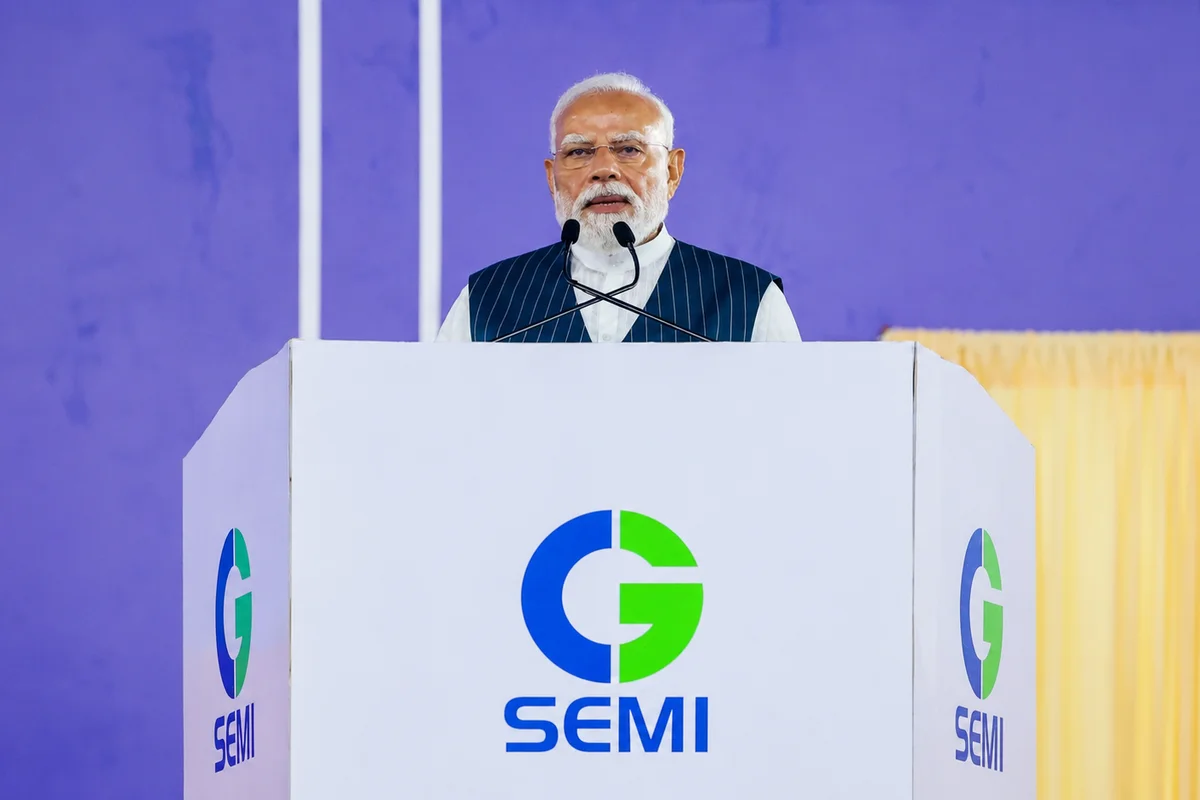
Prime Minister Narendra Modi inaugurated the CG Semi Outsourced Semiconductor Assembly and Test (OSAT) facility in Sanand, Gujarat, reaffirming India's commitment to becoming a global semiconductor manufacturing hub. During the inauguration, the Prime Minister said the country's expanding semiconductor ecosystem will create countless jobs, strengthen manufacturing, and accelerate India's journey towards becoming a developed nation by 2047.
The facility, developed under the India Semiconductor Mission, marks another major milestone in India's semiconductor ambitions. It will undertake semiconductor chip assembly, packaging, and testing while supplying chips to customers in both domestic and international markets, including Japan.
PM Modi highlighted that India is not only building semiconductor plants but also creating complete semiconductor clusters across the country, which will support innovation, employment, and long-term economic growth.
The Sanand semiconductor facility has been designed to become one of India's key chip manufacturing and testing centres.
| Particulars | Details |
|---|---|
| Facility | CG Semi OSAT Plant |
| Location | Sanand, Gujarat |
| Mission | India Semiconductor Mission |
| Initial Capacity | 20 Crore Chips Annually |
| Target Capacity | 500 Crore Chips Annually |
| Commercial Production | Started |
| Export Markets | India, Japan & Global Customers |
Loading chart...
The company plans to gradually scale production from 20 crore chips annually to over 500 crore chips per year, equivalent to nearly 1.5 crore chips every day.
Addressing the gathering, the Prime Minister said India is developing a complete semiconductor value chain covering chip design, fabrication, assembly, packaging, and testing. He described the current phase as the beginning of a new industrial revolution that will generate employment opportunities across manufacturing, electronics, artificial intelligence, and advanced technology sectors.
He noted that the project reflects the government's vision of "Design in India" and "Make in India", adding that semiconductor manufacturing will become a key pillar of India's future economic growth.
PM Modi urged India's youth to prepare for emerging technologies such as Artificial Intelligence (AI), robotics, and semiconductor manufacturing, stating that the next technology revolution will create enormous career opportunities.
He encouraged young innovators to develop new ideas while assuring government support, emphasizing that India's youth will play a central role in powering the country's future technology ecosystem.
The Sanand facility has been developed through partnerships with companies from Japan and Thailand, showcasing India's growing collaboration with global technology leaders.
The Prime Minister described the project as a model of international cooperation that combines technology, trust, and manufacturing expertise while strengthening India's semiconductor supply chain.
PM Modi also highlighted the growing participation of skilled Indian workers, especially women, in semiconductor manufacturing.
Several employees working at the facility received advanced semiconductor manufacturing training overseas before joining production operations in India, demonstrating the country's increasing focus on developing a globally competitive technology workforce.
India's semiconductor industry is entering a transformative growth phase as the government continues investing heavily in domestic chip manufacturing under the India Semiconductor Mission. Rising demand for semiconductors across smartphones, electric vehicles, consumer electronics, data centres, artificial intelligence, and industrial automation is creating long-term opportunities for manufacturers.
The commissioning of the Sanand OSAT facility strengthens India's position in the global semiconductor supply chain while reducing dependence on imports. As more semiconductor clusters become operational, the sector is expected to generate significant employment, attract foreign investment, and support the growth of India's electronics manufacturing ecosystem.
Investors should closely monitor:
These factors are expected to play a crucial role in shaping India's long-term semiconductor ecosystem.
| Highlights | Details |
|---|---|
| Facility | CG Semi OSAT |
| Location | Sanand, Gujarat |
| Mission | India Semiconductor Mission |
| Initial Capacity | 20 Crore Chips Per Year |
| Target Capacity | 500 Crore Chips Per Year |
| Commercial Production | Commenced |
| Key Focus | Chip Assembly, Packaging & Testing |
| Growth Drivers | AI, Electronics, EVs & Semiconductor Manufacturing |
Prime Minister Narendra Modi inaugurated the CG Semi OSAT semiconductor facility in Sanand, Gujarat.
The facility will initially manufacture 20 crore chips annually, with plans to scale production to 500 crore chips per year.
It is the Government of India's flagship initiative to develop a complete domestic semiconductor ecosystem covering chip design, manufacturing, assembly, testing, and packaging.
The plant strengthens India's semiconductor manufacturing capabilities, supports electronics production, creates skilled jobs, and enhances India's role in the global semiconductor supply chain.

Financial journalist specializing in market analysis, stock research, and investment trends. Dedicated to providing accurate, timely insights for informed decision-making.
Credentials: Experienced financial journalist with expertise in equity markets and economic analysis
The information provided in this article is for educational and informational purposes only and should not be construed as financial, investment, or legal advice. welomoney does not provide personalized investment recommendations.
For detailed terms and conditions, please read our Disclaimer and Terms of Service.
NSE shares fell after listing at Rs 1,800, dropping to 12th by market value. Experts identify Rs 1,760 support and Rs 1,795 resistance.

Goldman Sachs retains its Buy rating on IndiGo with a Rs 5,900 target, citing international growth, cost leadership and better FY28 profitability.

Kirloskar Oil Engines posted 16% Q1 FY27 revenue growth, while margins missed estimates. Motilal Oswal cut earnings estimates and raised its target...

Landmark Cars shares rose 12% to Rs 535.80 after adding BYD and M&M outlets, taking its network to 143 locations, with EV sales at 30% of Q1FY27 new...

Tata Motors’ subsidiary acquired 26,000 shares in Mateshwari E-Smart Mobility for ₹2.6 lakh.