Loading market data...
Tue, 29 Sept 2026
07:41:46 pm
Tue, 29 Sept 2026
07:41:46 pm

Rudransh Sangwan
Published at: August 11, 2026, 7:19 AM
Synopsis
Hospital stocks Apollo Hospitals and Max Healthcare fall after a Parliamentary committee recommends capping room rates and surgery prices. Check stock prices, valuations, recent returns and possible regulatory impact.
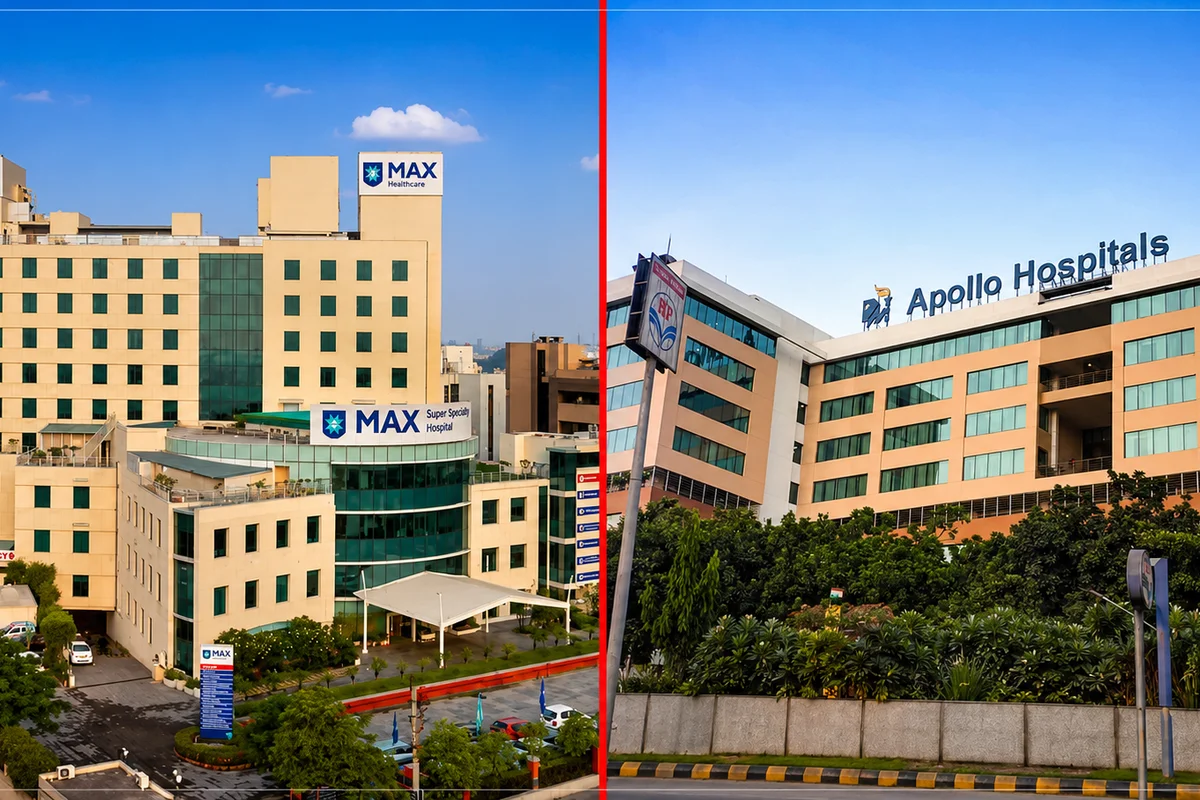
Hospital stocks came under pressure on Tuesday after a Parliamentary committee recommended capping room rates and surgery prices, raising concerns over the possible impact of pricing controls on private healthcare companies. Apollo Hospitals and Max Healthcare were among the hospital stocks trading lower during the session as investors assessed the potential effect of the recommendations on hospital revenues, margins and future pricing power. Apollo Hospitals was trading at ₹8,729, down 2.15%, while Max Healthcare was at ₹1,044, down 2.41%.
The reaction comes as both companies trade at elevated valuation multiples and have delivered different stock performance across recent periods. Apollo Hospitals has a market capitalisation of ₹1,25,512 crore and a P/E of 67.1, while Max Healthcare has a market capitalisation of ₹1,01,631 crore and a P/E of 68.5. Apollo has gained 20.33% over one year and 115% over five years, while Max Healthcare has declined 17.36% over one year but delivered a 243.82% return over five years. Any future pricing regulation could therefore become an important factor for investors tracking the hospital sector.
Apollo Hospitals shares were trading at ₹8,729, down 2.15% on August 11. The stock has a 52 week high of ₹9,327 and a 52 week low of ₹6,680. Apollo Hospitals has a market capitalisation of ₹1,25,512 crore and trades at a P/E of 67.1. Its book value is ₹659, dividend yield is 0.22%, ROCE is 17.4% and ROE is 21.2%. The stock has gained 21% over six months and 20.33% over one year, while its five year return stands at 115%.
Loading chart...
| Metric | Apollo Hospitals |
|---|---|
| Current price | ₹8,729 |
| 52 week high | ₹9,327 |
| 52 week low | ₹6,680 |
| Market cap | ₹1,25,512 crore |
| P/E | 67.1 |
| Book value | ₹659 |
| Dividend yield | 0.22% |
| ROCE | 17.4% |
| ROE | 21.2% |
| Face value | ₹5 |
Apollo Hospitals was established in 1983 by Dr. Prathap C Reddy and has operations across hospitals, pharmacies, primary care, diagnostics and other retail healthcare services. Its healthcare services business accounted for 50% of FY26 business mix and the company had a total capacity of 10,970 beds across 78 hospitals in India and overseas. Of these, 9,481 beds are in 49 owned hospitals, while 699 beds are in Day Surgery and Cradles facilities and 790 beds are in six managed hospitals.
The digital health and pharmacy distribution business accounted for 43% of FY26 business mix. Apollo HealthCo operates 7,289 active pharmacy stores across 22 states and five Union Territories, with a presence in 1,200 cities and towns. Apollo 24x7 has more than 47 million registered users and around 9 lakh daily active users. Retail health and diagnostics accounted for 7% of FY26 business mix, with Apollo Health and Lifestyle operating 2,501 diagnostic centres, 167 dialysis centres, 280 dental centres and 316 clinics.
| Period | Return |
|---|---|
| 1 day | -2.02% |
| 5 days | -0.96% |
| 1 month | -1.20% |
| 6 months | +21.00% |
| 1 year | +20.33% |
| 5 years | +115.00% |
The proposed caps on room rates and surgery prices are important for Apollo because hospital services form a large part of its overall business. If pricing restrictions are implemented across services where Apollo currently has greater pricing flexibility, revenue per patient and margins could come under pressure. The actual impact will depend on the final scope of any regulation, the categories of procedures covered and the pricing limits eventually introduced. At this stage, the supplied information only refers to the Parliamentary committee recommendation and does not indicate that a price cap has already been implemented.
Apollo's diversified healthcare model could also be relevant when assessing the possible impact. Alongside hospitals, the company has a large pharmacy, digital health and diagnostics presence. Investors will therefore need to monitor the treatment of different healthcare businesses under any future regulatory framework.
Max Healthcare shares were trading at ₹1,044, down 2.41% on August 11. The stock has a 52 week high of ₹1,302 and a 52 week low of ₹903. Max Healthcare has a market capitalisation of ₹1,01,631 crore and a P/E of 68.5. Its book value stands at ₹110, dividend yield at 0.19%, ROCE at 14.7% and ROE at 14.7%. The stock has gained 2.20% over six months and declined 17.36% over one year, while its five year return stands at 243.82%.
Loading chart...
| Metric | Max Healthcare |
|---|---|
| Current price | ₹1,044 |
| 52 week high | ₹1,302 |
| 52 week low | ₹903 |
| Market cap | ₹1,01,631 crore |
| P/E | 68.5 |
| Book value | ₹110 |
| Dividend yield | 0.19% |
| ROCE | 14.7% |
| ROE | 14.7% |
| Face value | ₹10 |
Max Healthcare Institute is engaged in healthcare services through primary care clinics, multi speciality hospitals and super speciality hospitals. Its operations include medical services, clinical services, radiology, pathology and related healthcare activities. The supplied company information describes Max Healthcare as India's largest hospital chain by market capitalisation and the second largest hospital company by revenue and EBITDA.
Its large hospital network means changes to room rates and procedure pricing could become an important factor for the company if the committee's recommendations lead to formal regulation. The impact would depend on the final rules and whether they apply uniformly across hospital categories and services.
| Period | Return |
|---|---|
| 1 day | -2.71% |
| 5 days | -5.13% |
| 1 month | -5.78% |
| 6 months | +2.20% |
| 1 year | -17.36% |
| 5 years | +243.82% |
The proposed restrictions could affect Max Healthcare if room charges or surgery prices are capped below existing market rates. Any reduction in pricing flexibility could affect revenue growth or margins depending on the services covered. However, the current recommendation does not provide enough information to quantify the potential financial impact on Max Healthcare. Investors will need to watch whether the proposal moves towards a formal policy and how private hospitals are treated under the final framework.
The market reaction is linked to concerns that price controls could reduce pricing flexibility across private hospitals. Room charges and surgery prices can form an important part of hospital billing, particularly for premium and specialised healthcare facilities. A regulatory cap could therefore change revenue assumptions if the permitted rates are below current charges.
For Apollo Hospitals and Max Healthcare, the next stage will depend on the details of any government action following the committee recommendation. Until those details are available, the stock price reaction reflects market expectations and concerns rather than a confirmed earnings impact.
Both companies have large healthcare operations and are trading at high P/E multiples, but their recent stock performance differs. Apollo has gained 20.33% over one year and 115% over five years, while Max Healthcare has fallen 17.36% over one year despite a much larger 243.82% gain over five years. Their current P/E ratios are also similar, at 67.1 for Apollo and 68.5 for Max Healthcare.
| Metric | Apollo Hospitals | Max Healthcare |
|---|---|---|
| Current price | ₹8,729 | ₹1,044 |
| 52 week high | ₹9,327 | ₹1,302 |
| 52 week low | ₹6,680 | ₹903 |
| Market cap | ₹1,25,512 crore | ₹1,01,631 crore |
| P/E | 67.1 | 68.5 |
| ROCE | 17.4% | 14.7% |
| ROE | 21.2% | 14.7% |
| 1 year return | +20.33% | -17.36% |
| 5 year return | +115.00% | +243.82% |
Investors tracking Apollo Hospitals and Max Healthcare will need to follow further developments around the Parliamentary committee's recommendations. The scope of any proposed room rate and surgery price caps, the services covered and the pricing levels eventually permitted will determine the potential effect on hospital companies. Both stocks also trade at P/E ratios above 67, making future earnings growth and margin performance important factors alongside regulatory developments.
The fall in hospital stocks reflects concerns over the possible impact of price regulation on private healthcare companies. Apollo Hospitals has a diversified healthcare model covering hospitals, pharmacies and diagnostics, while Max Healthcare has a large hospital focused business. Neither the final regulatory framework nor its financial impact has been established from the supplied information. Investors can therefore track government action, pricing rules and subsequent company disclosures before assessing how the recommendations could affect revenues and margins.
Hospital stocks are under pressure after a Parliamentary committee recommended capping room rates and surgery prices. Investors are assessing whether potential pricing restrictions could affect hospital revenues and margins.
Apollo Hospitals and Max Healthcare were among the stocks trading lower. Apollo Hospitals was down 2.15% at ₹8,729, while Max Healthcare was down 2.41% at ₹1,044 based on the supplied market data.
Apollo Hospitals shares fell after the committee recommendation raised concerns about possible restrictions on hospital room rates and surgery prices. The potential impact on revenue and margins is being assessed by the market.
Max Healthcare shares declined as investors reacted to the possibility of pricing controls on private hospitals. Any future cap on room charges or surgery prices could affect revenue assumptions if the permitted rates are lower than current prices.
The Parliamentary committee recommended capping room rates and surgery prices in hospitals. The supplied information does not indicate that these price caps have already been implemented.
Potentially, depending on the final rules and the services covered. Apollo has a large hospital business, so restrictions on room rates could affect revenue per patient if the regulated rates are below existing charges.
Potentially. Max Healthcare operates multi speciality and super speciality hospitals, so any restrictions on procedure pricing could affect revenue and margins depending on the final regulatory framework.
Apollo Hospitals was trading at ₹8,729 on August 11, 2026, according to the supplied market data.
Max Healthcare was trading at ₹1,044 on August 11, 2026, according to the supplied market data.
Apollo Hospitals has a supplied 52 week high of ₹9,327 and a 52 week low of ₹6,680.
Max Healthcare has a supplied 52 week high of ₹1,302 and a 52 week low of ₹903.
Apollo Hospitals has a market capitalisation of approximately ₹1,25,512 crore based on the supplied data.
Max Healthcare has a market capitalisation of approximately ₹1,01,631 crore based on the supplied data.
Apollo Hospitals has delivered a 115% return over five years based on the supplied stock performance data.
Max Healthcare has delivered a 243.82% return over five years based on the supplied stock performance data.
Apollo Hospitals has gained 20.33% over one year based on the supplied data.
Max Healthcare has declined 17.36% over one year based on the supplied data.
Apollo Hospitals has a supplied P/E ratio of 67.1.
Max Healthcare has a supplied P/E ratio of 68.5.
No such implementation is stated in the supplied information. The report concerns a Parliamentary committee recommendation, and the final scope and implementation of any pricing rules would depend on subsequent government action.
Investors can watch for further government announcements, the scope of any proposed room rate and surgery price caps, the services covered and subsequent disclosures from Apollo Hospitals and Max Healthcare regarding revenue and margins.
Financial journalist specializing in market analysis, stock research, and investment trends. Dedicated to providing accurate, timely insights for informed decision-making.
Credentials: Experienced financial journalist with expertise in equity markets and economic analysis
The information provided in this article is for educational and informational purposes only and should not be construed as financial, investment, or legal advice. welomoney does not provide personalized investment recommendations.
For detailed terms and conditions, please read our Disclaimer and Terms of Service.
NSE shares fell after listing at Rs 1,800, dropping to 12th by market value. Experts identify Rs 1,760 support and Rs 1,795 resistance.

Goldman Sachs retains its Buy rating on IndiGo with a Rs 5,900 target, citing international growth, cost leadership and better FY28 profitability.

Kirloskar Oil Engines posted 16% Q1 FY27 revenue growth, while margins missed estimates. Motilal Oswal cut earnings estimates and raised its target...

Landmark Cars shares rose 12% to Rs 535.80 after adding BYD and M&M outlets, taking its network to 143 locations, with EV sales at 30% of Q1FY27 new...

Tata Motors’ subsidiary acquired 26,000 shares in Mateshwari E-Smart Mobility for ₹2.6 lakh.